Stock Analysis · Academy Sports Outdoors Inc (ASO)
Overview
Academy Sports + Outdoors, Inc. is a U.S. retailer focused on sporting goods, outdoor recreation, and related apparel and footwear. The company sells products through a chain of large-format stores and a digital channel (e-commerce), serving customers who participate in activities such as team sports, fitness, hunting, fishing, camping, and general outdoor lifestyles.
Revenue is primarily generated from selling merchandise to consumers. In simple terms, the business earns money on the difference between what it pays suppliers for products and what it sells those products for, after covering operating costs such as store labor, rent, distribution, and marketing.
Public filings describe the business as merchandise-driven across sporting goods, outdoor, and apparel/footwear categories, sold through stores and online. Exact percentage splits by category/channel can vary by year and are typically detailed in the company’s annual report.
Over the recent fiscal years shown, total revenue has gradually declined (from about $6.77B in FY2022 to about $5.93B in FY2025), while net income also stepped down (from about $671M to about $418M). This points to a period where demand and/or pricing power normalized compared with earlier years, while operating costs remained a meaningful part of the expense structure.
Key Figures
| Metric | Value | Industry ⓘ |
|---|---|---|
| Date | Feb 08, 2026 | |
| Context | ||
| Sector | Consumer Cyclical | |
| Industry | Specialty Retail | |
| Market Cap ⓘ | $3.94B | |
| Beta ⓘ | 1.25 | |
| Fundamental | ||
| P/E Ratio ⓘ | 10.87 | 23.78 |
| Profit Margin ⓘ | 6.27% | 6.27% |
| Revenue Growth ⓘ | 3.00% | 5.20% |
| Debt to Equity ⓘ | 64.66% | 103.28% |
| PEG ⓘ | 0.65 | |
| Free Cash Flow ⓘ | $253.59M | |
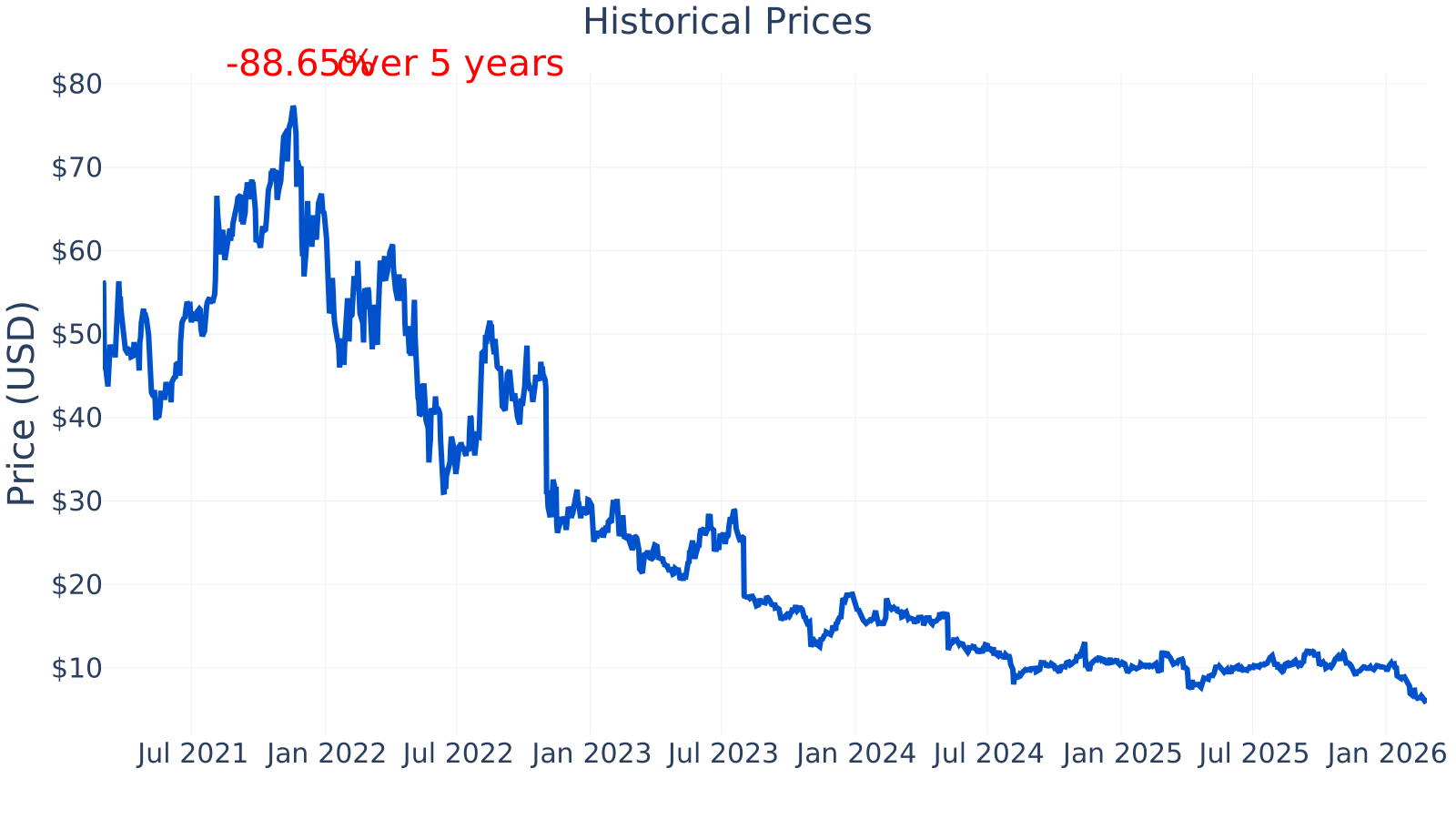
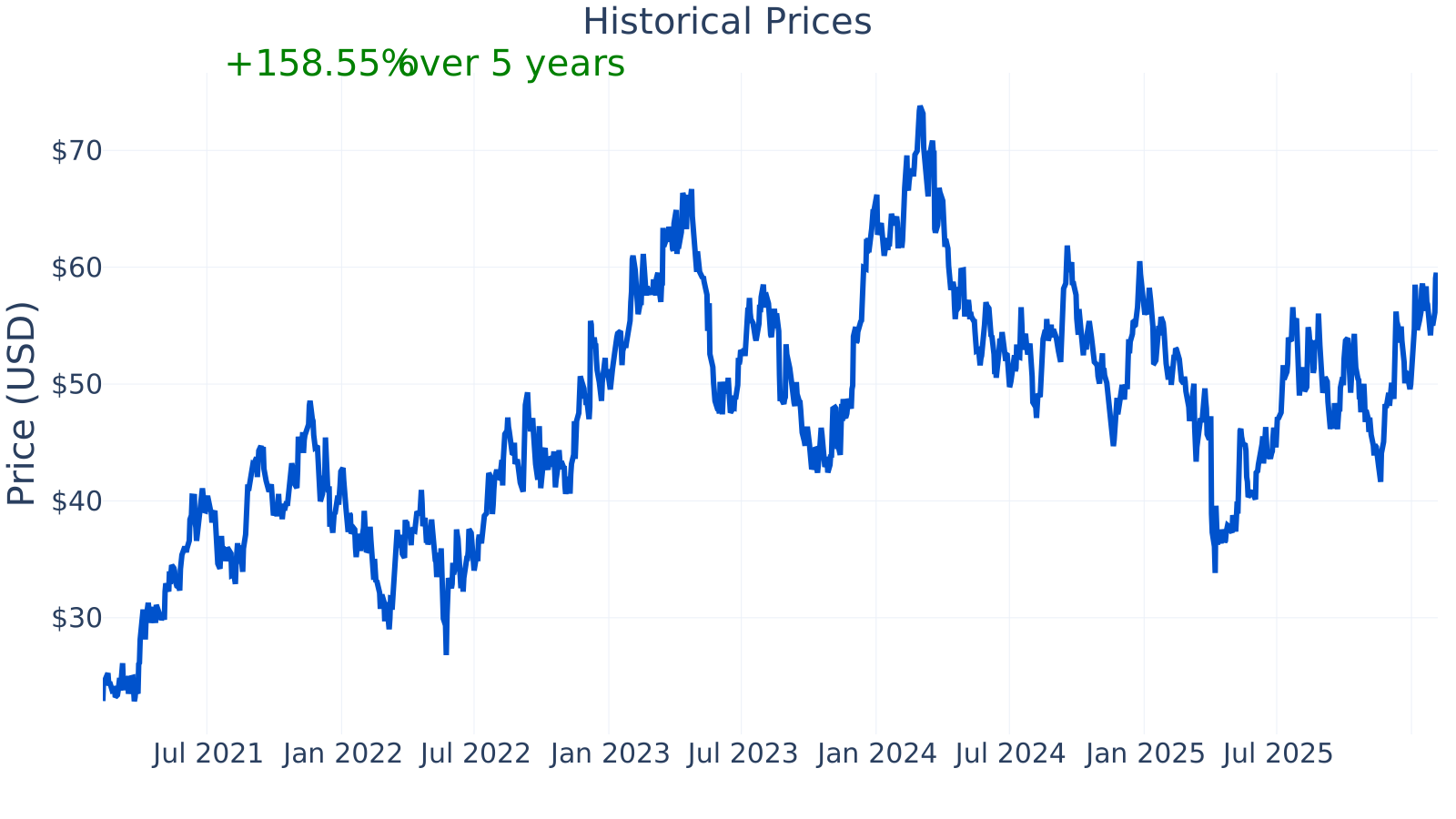
Academy Sports + Outdoors has a market capitalization of about $3.94B and a beta of about 1.25, which indicates the stock has historically moved more than the overall market (higher volatility). The P/E ratio is about 10.87 versus an industry median near 23.78, while profit margin is about 6.27%, in line with the industry median shown. Year-over-year revenue growth is about 3.0% versus an industry median around 5.2%. Debt-to-equity is about 64.7% versus an industry median around 103.3%, suggesting lower leverage than many peers. Trailing twelve-month free cash flow is about $254M, and the PEG ratio shown is about 0.65 (a valuation ratio that relates P/E to growth assumptions).
Growth (Medium)
Sporting goods and outdoor retail tends to be a steady, long-running consumer category rather than a fast-expanding “hyper-growth” industry. Demand is influenced by participation trends (fitness and outdoor activities), product replacement cycles, and consumer spending. It can also be cyclical: during weaker economic periods, shoppers may delay discretionary purchases or trade down to lower-priced items.
For Academy Sports + Outdoors, a practical way to think about growth is a mix of (1) opening or optimizing stores, (2) improving what each store generates (sales per store), (3) growing digital sales and omnichannel services (like fulfillment options), and (4) managing merchandising and inventory to protect profitability. The company’s long-term trajectory depends on executing these levers while competing on price, assortment, convenience, and customer experience.
The year-over-year revenue growth pattern has been uneven: strong positive growth in 2021 and early 2022, followed by multiple quarters of negative comparisons, then a return to modest positive growth more recently (about 3% in the latest reading). This “upswing then normalization” pattern is common in retailers after unusually strong demand periods.
Free cash flow (cash left after operating needs and capital spending) has remained positive but has trended down from earlier highs: roughly $1.09B (FY2021 period shown) to around $327M (FY2024–FY2025), with the latest trailing twelve-month figure near $254M. For a retailer, sustained positive free cash flow can support reinvestment in stores, technology, and the balance sheet, but the downward trend highlights the importance of stable operating performance and disciplined inventory management.
Risks (Medium)
This article is for informational purposes only and does not constitute financial advice. Some content is AI-generated. See Disclaimer