Stock Analysis · AXT Inc (AXTI)
Overview
AXT, Inc. (AXTI) is a semiconductor materials company. In simple terms, it makes specialized “starting materials” (compound semiconductor substrates) that other companies use to manufacture electronic and optical components. These components are commonly used in areas like high-speed communications, lasers and sensing, and other advanced electronics where standard silicon is not always the best fit.
The company’s business is primarily built around designing, growing, and manufacturing these compound semiconductor substrates, along with related materials and services that support customer production needs. Demand for these substrates tends to be linked to broader semiconductor industry cycles, customer inventory patterns, and the pace of adoption for end-markets that use compound semiconductors.
Public filings typically describe revenue by product families and/or customer/end-market groupings, but the exact percentage breakdown can vary by reporting period. Without inserting estimates, the largest revenue drivers are generally:
- Compound semiconductor substrates (the core product line, typically the majority of sales)
- Related materials and services (supporting offerings that are smaller than the core substrate business)
The longer-term income statement picture shows that revenue and gross profit have been volatile. Revenue was higher in 2021–2022 (about $137.4M–$141.1M) and then lower in 2023–2025 (about $75.8M–$99.4M), while operating results shifted from positive operating income in 2021–2022 to operating losses in 2023–2025. This pattern is consistent with a business exposed to cyclical demand and fixed-cost absorption (when volumes drop, profitability can fall quickly).
Key Figures
| Metric | Value | Industry ⓘ |
|---|---|---|
| Date | May 04, 2026 | |
| Context | ||
| Sector | Technology | |
| Industry | Semiconductor Equipment & Materials | |
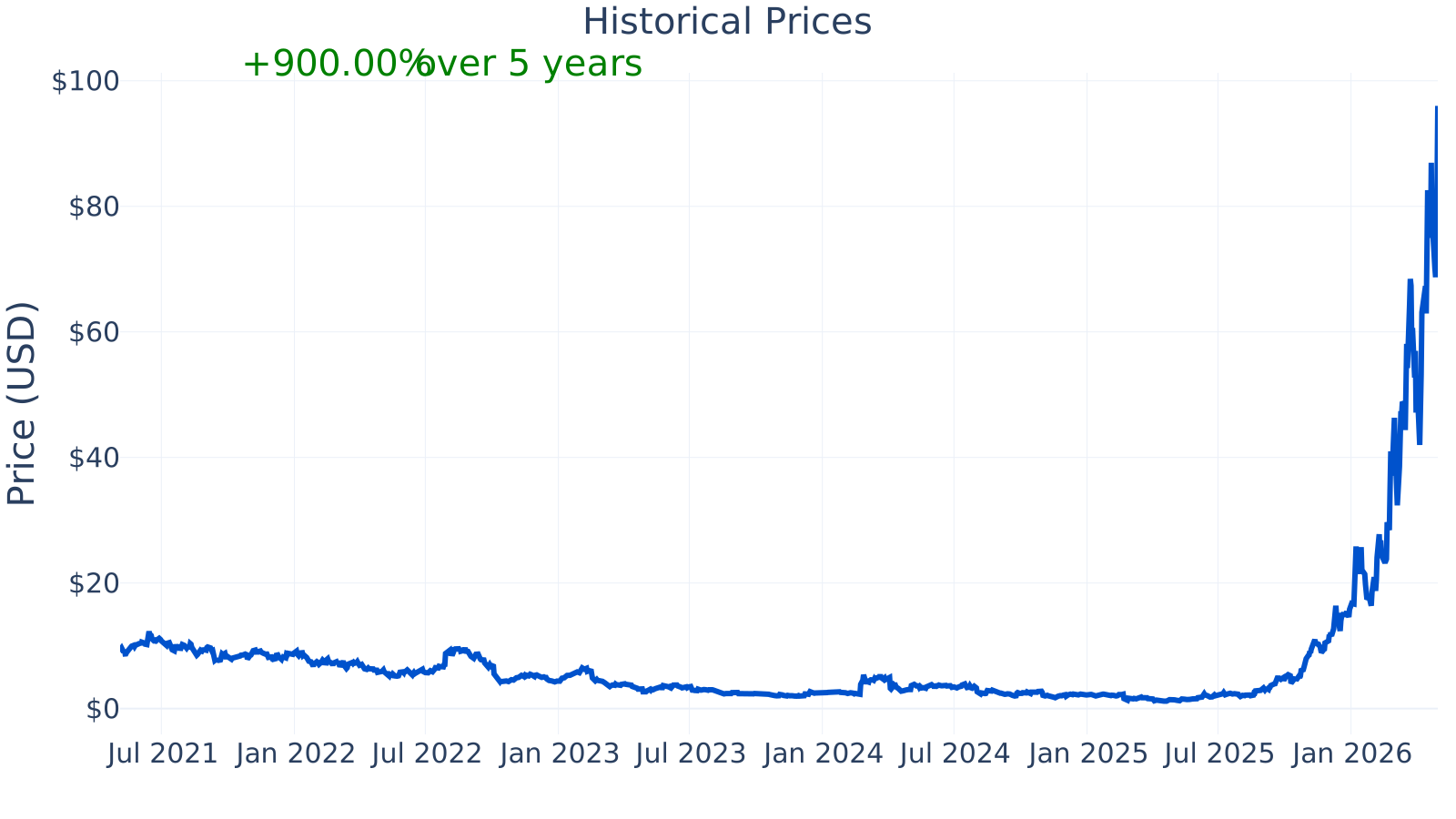
| Market Cap ⓘ | $6.28B | |
| Beta ⓘ | 1.51 | |
| Fundamental | ||
| P/E Ratio ⓘ | N/A | 48.78 |
| Profit Margin ⓘ | -14.69% | 8.18% |
| Revenue Growth ⓘ | 39.10% | 11.50% |
| Debt to Equity ⓘ | 25.53% | 26.74% |
| PEG ⓘ | 12.09 | |
| Free Cash Flow ⓘ | -$18.78M | |
AXT’s market capitalization is about $6.28B, and its beta of 1.51 suggests the stock has historically moved more than the broader market (higher volatility). The company’s latest profit margin is -14.7%, below the industry median of about 8.2%, which aligns with a period of losses. On the growth side, the latest year-over-year revenue growth is 39.1%, above the industry median of about 11.5%, showing a rebound in sales versus the prior-year quarter. Financial leverage looks moderate with debt-to-equity around 25.5%, close to the industry median (~26.7%). Free cash flow over the trailing twelve months is -$18.8M, indicating the business has recently consumed cash rather than generating it.
Growth (Medium)
AXT operates in the broader semiconductor ecosystem, which has long-term demand drivers tied to digitalization and connectivity. Within that, compound semiconductors are often associated with performance-focused applications (for example, higher-frequency communications and specialized optical/electronic uses). This creates potential for structural growth over long horizons, but the path is not usually smooth because customer spending can be cyclical and sensitive to supply-chain inventory corrections.
A practical way to think about AXT’s growth outlook is that it depends on two things happening together: (1) end-market adoption that requires compound semiconductors, and (2) AXT maintaining competitive manufacturing quality, yields, and cost control so it can participate profitably when demand rises.
Recent revenue growth has been uneven across quarters, including periods of steep declines and then rebounds. The most recent data point shows 39.1% year-over-year growth, which is a strong bounce relative to the industry median, but the history also highlights that growth has not been steady and can reverse.
Free cash flow has remained negative over the periods shown (from about -$34.1M to -$8.5M, and most recently -$18.8M on a trailing basis). Even though there was improvement from 2022 to 2025 in the values displayed, sustained negative free cash flow can limit flexibility (for example, how much the company can invest without raising capital) unless profitability improves or working capital dynamics change.
Risks (High)
The most important risk is profitability and operating leverage. AXT’s margins have moved from positive levels earlier in the period to sustained losses more recently. In manufacturing businesses with meaningful fixed costs (equipment, facilities, engineering), lower volumes can quickly pressure gross margin and operating income.
The profit margin trend shows a shift from roughly 9%–11% in 2021–2022 to negative territory starting in 2023, reaching deeply negative levels before improving somewhat to about -14.7% most recently. This remains well below the industry median (around 8%), underscoring that AXT has recently been operating at a disadvantage versus typical peers in profitability.
Another major risk is semiconductor cycle exposure. Customer purchasing can be lumpy, and demand can swing based on inventory corrections, new product ramps, or shifts in end-market spending. The revenue and earnings pattern across 2021–2025 illustrates how quickly conditions can change.
Leverage appears moderate based on debt-to-equity of about 25.5%, roughly in line with the industry median. However, the chart also shows debt-to-equity rose meaningfully from very low levels earlier in the period to higher levels later on before easing back. In periods of losses and negative cash flow, even moderate leverage can matter because it reduces room for error if the downturn lasts longer than expected.
On competitive positioning, AXT competes in specialized semiconductor materials where factors like substrate quality, consistency, customer qualification cycles, manufacturing yields, and long-term reliability matter. These characteristics can create switching costs once a material is qualified in a customer’s process, but competition is still meaningful because customers often multi-source when possible. Public filings typically discuss competition from other compound semiconductor substrate manufacturers (including larger, diversified semiconductor materials suppliers and other specialists). AXT is not universally “the leader” across all compound substrates; it is better viewed as a specialist participant whose results depend on execution, customer mix, and market cycles.
Valuation
Traditional valuation using a price-to-earnings (P/E) ratio becomes difficult when earnings are negative or very small. That is reflected in the P/E series showing 0 values in more recent periods (a common display convention when P/E is not meaningful). In earlier periods when earnings were positive, AXT’s P/E moved from about 59 (2021) down into the teens at points in 2022–2023, at times below the industry median and at other times above it.
Given the current context—recent net losses, negative trailing free cash flow, and volatile revenue—valuation tends to hinge less on a stable earnings multiple and more on expectations for a return to sustained profitability, the durability of end-market demand, and confidence that margins can normalize. The provided PEG ratio of 12.09 is also difficult to interpret cleanly during periods of unstable earnings and changing growth rates, because small changes in assumptions can swing the ratio.
Conclusion
AXT is a specialized semiconductor materials company with exposure to compound semiconductors, an area that can benefit from long-term technology adoption trends. At the same time, recent financial performance shows substantial cyclicality: revenue declined sharply after 2022, profitability turned negative, and free cash flow has remained below zero.
The main long-term question for the business is whether the recent rebound in revenue growth can translate into consistent gross profit expansion and a sustained return to positive operating income, while maintaining disciplined balance-sheet management. The charts highlight both sides: signs of recovery in year-over-year revenue growth alongside ongoing margin pressure and cash outflows.
Sources:
- U.S. Securities and Exchange Commission — EDGAR Database (AXT, Inc. filings: Forms 10-K, 10-Q, 8-K)
- AXT, Inc. — Investor Relations materials (Company filings and press releases as posted by AXT)
- Wikipedia — “AXT, Inc.” (basic company background)
This article is for informational purposes only and does not constitute financial advice. Some content is AI-generated. See Disclaimer