Stock Analysis · Ast Spacemobile Inc (ASTS)
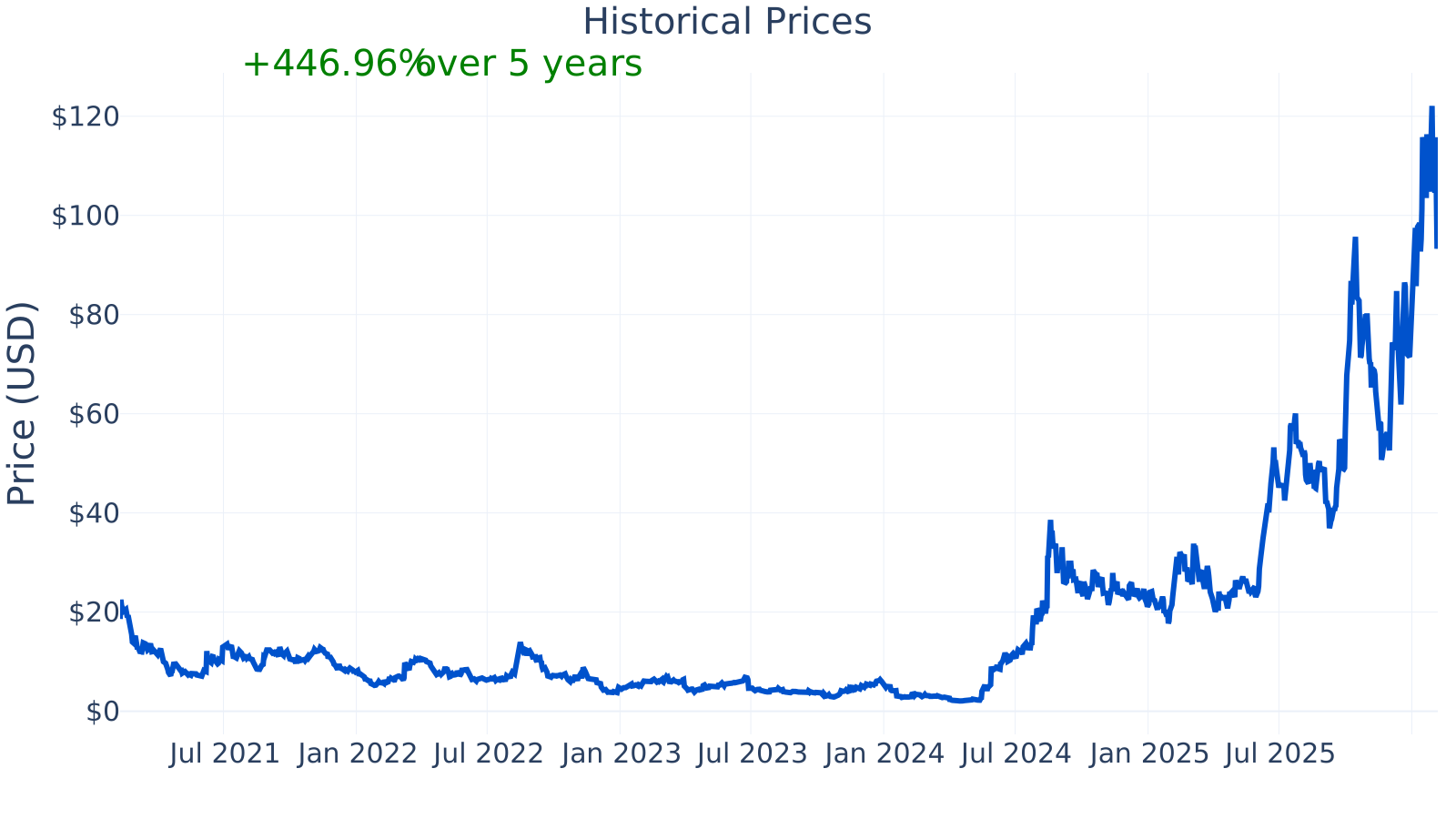
Overview
AST SpaceMobile, Inc. (ASTS) is a U.S.-based company building a space-based cellular broadband network. The core concept is to use satellites as “cell towers in space,” allowing ordinary mobile phones (without specialized satellite hardware) to connect in areas with weak or no terrestrial coverage. The company’s long-term business model centers on working with mobile network operators (MNOs) so the satellite network can complement existing ground networks, especially for rural coverage, maritime areas, and emergency connectivity.
Because the company is still in a build-out and early commercialization phase, revenue has historically been relatively small compared with its spending on research, development, and building capability. In recent filings, the company describes future revenue as expected to come mainly from providing satellite-enabled connectivity through partnerships with MNOs and related service arrangements, but the financial statements to date reflect limited scale.
Main sources of revenue are not disclosed as a stable, mature mix with clear percentages in the provided financials (and can vary materially by period), but the company’s filings generally describe revenue as coming from early-stage service/partner-related activities rather than large-scale recurring subscriber revenue.
The company’s operating expenses have been dominated by research and development and other operating costs consistent with building and testing a new network, while net income has remained negative in the periods shown.
Key Figures
| Metric | Value | Industry ⓘ |
|---|---|---|
| Date | Feb 07, 2026 | |
| Context | ||
| Sector | Technology | |
| Industry | Communication Equipment | |
| Market Cap ⓘ | $37.40B | |
| Beta ⓘ | 2.71 | |
| Fundamental | ||
| P/E Ratio ⓘ | N/A | 39.43 |
| Profit Margin ⓘ | N/A | 4.65% |
| Revenue Growth ⓘ | 1239.90% | 14.10% |
| Debt to Equity ⓘ | 58.24% | 59.08% |
| PEG ⓘ | N/A | |
| Free Cash Flow ⓘ | -$916.00M | |
As of the latest metrics shown, AST SpaceMobile’s market capitalization is about $37.4B and the stock has a high beta (~2.71), meaning it has historically been much more volatile than the overall market. Profitability is currently not established (profit margin shown as 0% on the summary table, and negative in the historical series), and free cash flow over the trailing twelve months is about -$916M, which is typical for a capital-intensive build-out stage. Revenue growth is shown as very high in the latest period (~1,239.9% year-over-year), but early-stage companies can show extreme growth rates due to a small starting revenue base and uneven timing of revenue recognition.
Growth (High)
The industry backdrop is tied to two large themes: (1) persistent coverage gaps for mobile connectivity worldwide and (2) rising demand for resilient communications (including disaster recovery and remote operations). Satellite-based connectivity is not new, but AST SpaceMobile’s approach targets direct-to-device connectivity using standard phones, which—if executed at scale—could expand the addressable market beyond specialty satellite handsets and terminals.
Strategically, the model of partnering with existing mobile network operators can make sense for expansion because it can reduce the need to build a consumer brand from scratch and can integrate with existing subscriber relationships and distribution. In this structure, the company’s growth depends on moving from testing and limited service arrangements into broader commercial coverage and recurring usage at meaningful scale.
The revenue growth pattern shown is uneven and includes very large percentage changes. For long-term analysis, this kind of series is often less about the exact percentage in a single quarter and more about whether revenue becomes repeatable and expands alongside network capability.
Free cash flow has remained negative and has generally become more negative over the periods shown (from about -$73M in early 2021 to about -$362M by early 2025 on the chart). This reflects ongoing investment and operating burn; a key long-term question is whether spending translates into a scalable service with improving unit economics as the network matures.
Risks (Very High)
This article is for informational purposes only and does not constitute financial advice. Some content is AI-generated. See Disclaimer


