Stock Analysis · A10 Network (ATEN)
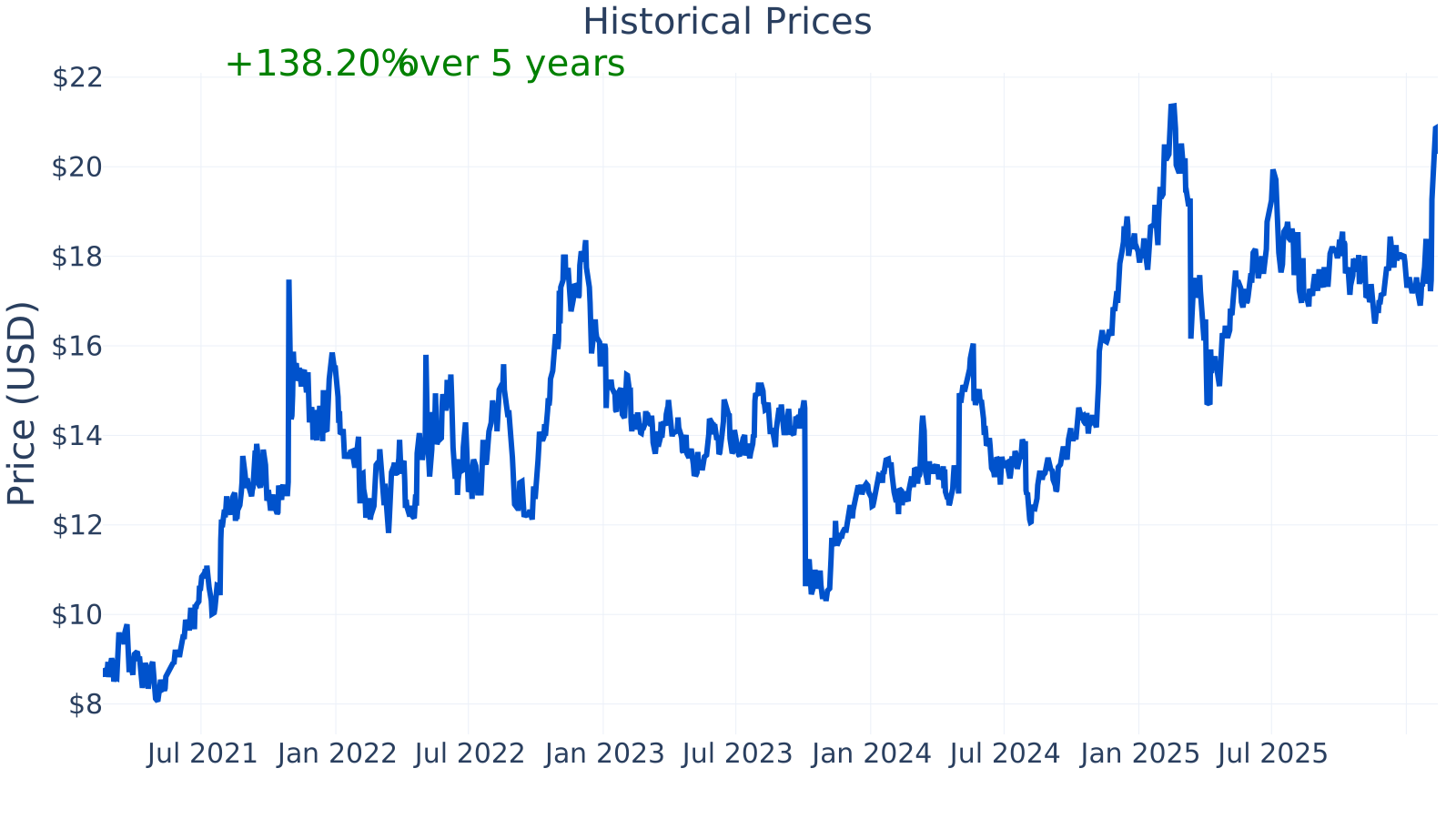
Overview
A10 Networks (ATEN) is a technology company focused on helping organizations keep their applications and networks available, fast, and protected. In simple terms, its products sit in front of business-critical applications (in data centers, cloud environments, or hybrid setups) to help manage traffic, reduce downtime, and defend against certain types of cyberattacks—especially high-volume attacks that can overwhelm a service.
The company sells a mix of software and appliances (specialized hardware running its software), along with ongoing support and maintenance. This “initial sale + ongoing support” model is common in infrastructure software, because customers typically need updates, technical assistance, and security coverage over time.
Based on company reporting categories used in filings, revenue is generally organized around:
- Product revenue (software subscriptions and/or appliances, depending on the customer deployment)
- Support and other services (maintenance, support contracts, and related services)
Public filings should be used to confirm the most recent split by percentage, since the exact mix can change over time with subscription adoption and refresh cycles.
Across the periods shown, total revenue moves within a relatively tight range (roughly the mid-$200M level), while spending on research and development remains a meaningful and persistent cost line. Net income is positive in each year shown, but it fluctuates, which suggests profitability can vary with revenue mix, operating costs, and items such as taxes and interest expense.
Key Figures
| Metric | Value | Industry ⓘ |
|---|---|---|
| Date | Feb 16, 2026 | |
| Context | ||
| Sector | Technology | |
| Industry | Software - Infrastructure | |
| Market Cap ⓘ | $1.48B | |
| Beta ⓘ | 1.24 | |
| Fundamental | ||
| P/E Ratio ⓘ | 36.32 | 25.13 |
| Profit Margin ⓘ | 14.50% | 6.91% |
| Revenue Growth ⓘ | 8.30% | 15.25% |
| Debt to Equity ⓘ | 103.42% | 19.82% |
| PEG ⓘ | -10.86 | |
| Free Cash Flow ⓘ | $64.77M | |
A10 Networks’ market capitalization is about $1.48B, placing it in the small-cap range where share prices can be more sensitive to business updates and market sentiment. The stock’s beta of ~1.24 indicates it has historically moved more than the broader market on average. The company’s P/E ratio is ~36.3 versus an industry median near 25.1, while its profit margin is ~14.5%, above the industry median near 6.9%. Recent year-over-year revenue growth is ~8.3%, below the industry median near 15.3%. The debt-to-equity is ~103%, notably above the industry median near 20%. Trailing twelve-month free cash flow is about $64.8M.
Growth (medium)
A10 Networks operates in infrastructure areas tied to long-term demand trends: more applications being delivered online, rising expectations for uptime and performance, and an increasing need to withstand disruptive cyber activity. These trends can support steady demand for products that manage application traffic and mitigate certain high-volume threats.
That said, growth can be uneven because parts of the business may be influenced by customer budget cycles, hardware refresh timing, and the pace at which customers move toward subscription models.
The year-over-year revenue growth pattern shown is mixed: strong positive growth in several earlier quarters, a period of declines in 2023, and a return to mostly positive growth more recently (ending around ~8% in the latest point shown). This kind of stop-and-go growth often points to a business that can expand, but not always in a straight line.
Free cash flow stays positive across the timeline shown, ranging roughly from the high $30M area to the mid $60M area. Consistently positive free cash flow can matter for long-term durability because it gives a company flexibility to reinvest in product development, withstand weaker quarters, or return capital—without relying as heavily on external financing.
Potential catalysts (in the neutral, factual sense) typically include wider adoption of subscriptions and software-based deployments, expansion within existing accounts through upgrades and renewals, and increased demand for resilience and security features as application usage grows.
Risks (medium)
This article is for informational purposes only and does not constitute financial advice. Some content is AI-generated. See Disclaimer


