Stock Analysis · AMC Entertainment Holdings Inc (AMC)
Overview
AMC Entertainment Holdings Inc. operates movie theaters and related entertainment venues. Its business is built around showing films in multiplex theaters and earning additional income from the in-theater experience (especially food and beverages). AMC’s results are closely tied to the volume and timing of major film releases, attendance levels, and how much guests spend per visit.
In practical terms, AMC earns revenue from a mix of ticket sales and “in-theater” spending, plus smaller adjacent streams. Based on the company’s reporting categories used in its filings, the main revenue sources are typically:
- Admissions (ticket sales)
- Food & beverage (concessions)
- Other theater revenues (items such as premium formats, online fees, and other on-site revenues)
Across the last several years shown below, total revenue increased sharply from 2021 into 2023 and then softened in 2024, reflecting a recovery phase followed by a more uneven box office environment.
Looking across the same multi-year income flow, AMC’s revenue improved materially from 2021 to 2023–2025 levels, and operating income moved closer to break-even in some years. However, interest expense remains a large, recurring cost (hundreds of millions of dollars per year in the periods shown), which has been a key reason net income stayed negative despite higher revenue.
Key Figures
| Metric | Value | Industry ⓘ |
|---|---|---|
| Date | Apr 20, 2026 | |
| Context | ||
| Sector | Communication Services | |
| Industry | Entertainment | |
| Market Cap ⓘ | $1.08B | |
| Beta ⓘ | 2.01 | |
| Fundamental | ||
| P/E Ratio ⓘ | N/A | 54.38 |
| Profit Margin ⓘ | -13.04% | 3.44% |
| Revenue Growth ⓘ | -1.40% | 7.65% |
| Debt to Equity ⓘ | -429.39% | 80.15% |
| PEG ⓘ | 12.22 | |
| Free Cash Flow ⓘ | -$365.90M | |
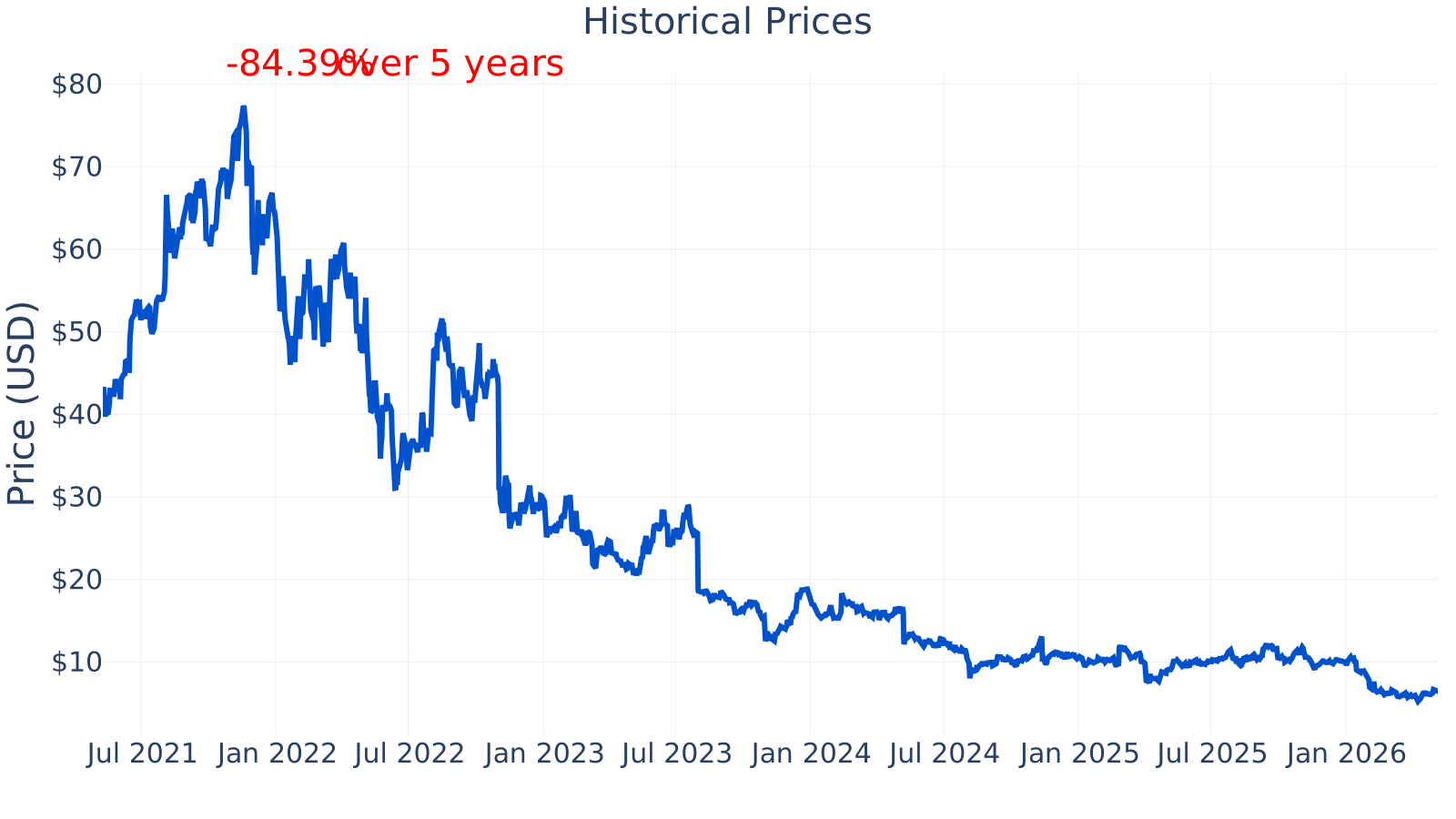
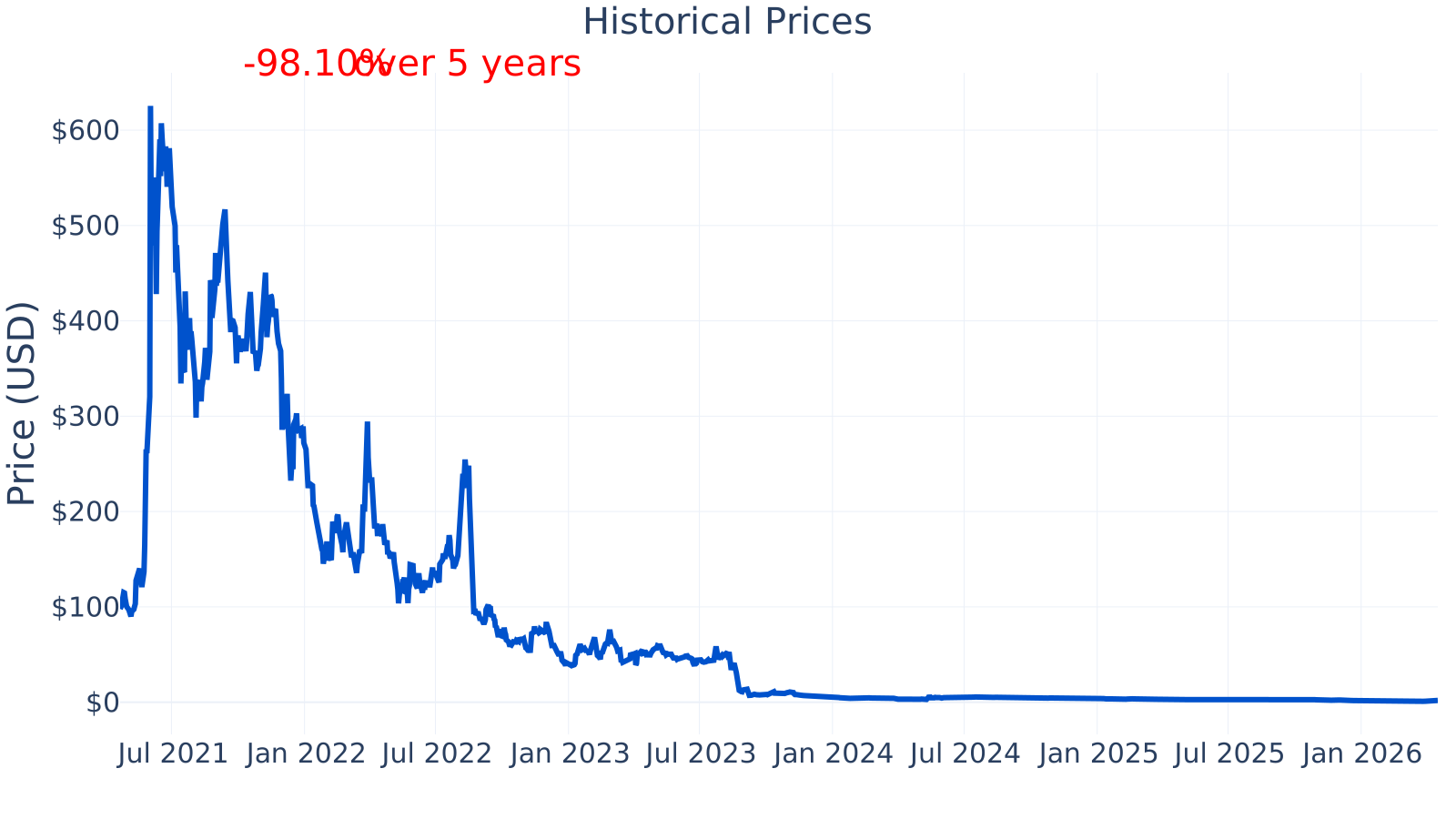
AMC’s market capitalization is about $1.08 billion, and its beta of ~2.01 signals the stock has historically moved more than the broader market (higher volatility). The latest profit margin is about -13.04%, below the industry median of about +3.44%, indicating the company is still losing money on a net basis. Year-over-year revenue growth is about -1.40%, versus an industry median near +7.65%. Free cash flow over the trailing twelve months is about -$365.9 million, meaning cash generated after operating needs and capital spending is currently negative. The debt-to-equity metric is shown as -429% (negative), which commonly happens when accounting equity is negative; in that case, this ratio becomes harder to interpret in the usual “leverage comparison” way and generally points to balance-sheet strain rather than a normal capital structure.
Growth (Medium)
The theatrical exhibition industry is mature rather than fast-growing, and demand can be cyclical. Attendance depends on the strength of the film slate, consumer discretionary spending, and competition from at-home entertainment. That said, theaters can benefit when there is a consistent pipeline of major releases and when premium experiences (large-format screens, recliner seating, enhanced sound, dine-in concepts) encourage higher spending per guest.
The year-over-year revenue growth pattern is volatile. After very large rebound-style growth rates earlier in the period shown, more recent quarters include several declines, ending near -1.4% most recently. This kind of swing is consistent with a business that is heavily influenced by release schedules and attendance variability.
Free cash flow has remained negative across the periods shown (hundreds of millions of dollars outflow each year in the chart). For a theater operator with meaningful fixed costs (leases, staffing, utilities) and ongoing capital needs (maintenance and upgrades), sustained negative free cash flow can limit flexibility and may increase reliance on refinancing, asset sales, or issuing securities to fund operations and obligations.
Potential catalysts for improved performance generally include a stronger and more consistent film release calendar, higher attendance, improved per-patron spending, and successful cost control. Because interest expense is structurally significant for AMC, another possible catalyst would be balance-sheet improvement that reduces financing costs over time (for example, through refinancing on better terms or debt reduction), though outcomes depend on market conditions and the company’s ability to execute.
Risks (Very High)
AMC faces several notable risks that can matter more for long-term outcomes than short-term box office variability. A central issue is the company’s financial structure: when a business carries high financing costs, improvements in theater performance may not fully translate into bottom-line profitability because interest expense absorbs a substantial share of operating gains.
The debt-to-equity series is negative throughout the period shown, ending around -429% most recently, while the industry median is around 80%. A negative value typically reflects negative shareholders’ equity (liabilities exceeding assets on the balance sheet), which is a meaningful sign of balance-sheet stress. In that situation, conventional leverage comparisons become less straightforward, but the practical takeaway is that the company has less margin for error if results weaken.
AMC’s profit margin has improved from extremely negative levels earlier in the series but remains negative at about -13.04% most recently, compared with an industry median near +4.42%. This indicates the company, on average, still has difficulty converting revenue into net profit, even after the post-2021 recovery period.
Competitive dynamics are another risk factor. Movie exhibition is competitive and largely driven by location quality, customer experience, premium offerings, and local market presence. AMC is one of the largest theater chains, but it competes with other major operators and regional chains. Key competitors in the U.S. market include Cinemark and Regal (a major circuit owned by Cineworld), along with numerous regional operators. Large scale can help with supplier relationships, marketing reach, and spreading fixed costs, but it does not fully shield the business from demand fluctuations or industry-wide shifts in consumer habits.
Additional long-term risks include: (1) changes in moviegoing behavior and substitution toward streaming/home entertainment, (2) sensitivity to economic slowdowns (moviegoing is discretionary), (3) lease obligations and fixed operating costs that can pressure results when attendance drops, and (4) potential dilution risk if the company raises capital by issuing additional equity-linked securities (the specifics depend on future financing actions described in filings).
Valuation
AMC’s P/E ratio is not shown in the chart (displayed as 0 in the time series provided), which commonly happens when a company has negative earnings: the P/E ratio becomes not meaningful because the “E” (earnings) is below zero. In those cases, valuation often shifts toward other reference points (such as revenue, cash flow, and balance-sheet capacity) rather than a classic earnings multiple comparison.
From a fundamentals-only perspective, two items dominate the context for interpreting the stock’s valuation: (1) profitability remains negative (profit margin around -13%), and (2) free cash flow is negative (around -$366 million TTM). When both earnings and free cash flow are negative, the current price is typically more sensitive to expectations about a future turnaround, changes in financing costs, and the stability of theater attendance than to traditional valuation multiples.
Conclusion
AMC is a large movie theater operator whose revenue is primarily tied to ticket sales and in-theater spending. The company experienced a meaningful rebound in revenue compared with 2021 levels, but profitability remains negative and free cash flow remains negative in the periods shown. A major ongoing constraint is the scale of interest expense, which has continued to weigh on net results even when operating performance improves.
For a long-term assessment, the core points to weigh are the maturity and cyclicality of the theatrical business, AMC’s ability to sustain attendance and per-guest spending, and the company’s balance-sheet pressure (including negative equity as implied by the negative debt-to-equity readings). The overall picture is a business with potential for operating improvement during strong film cycles, but with elevated financial and execution risk given current profitability and cash flow dynamics.
Sources:
- SEC EDGAR — AMC Entertainment Holdings, Inc. filings (Form 10-K, Form 10-Q)
- AMC Entertainment Holdings, Inc. — Investor Relations materials and SEC filing exhibits
- Wikipedia — “AMC Theatres” (basic company background and history)
This article is for informational purposes only and does not constitute financial advice. Some content is AI-generated. See Disclaimer