Stock Analysis · Acm Research Inc (ACMR)
Overview
ACM Research, Inc. (ACMR) designs and sells specialized equipment used by semiconductor manufacturers to clean, process, and prepare silicon wafers during chip production. In simple terms, it builds machines that help chipmakers remove contamination and perform precise wet-chemical steps so that tiny circuits can be reliably formed on wafers. The company also provides related services and spare parts that support its installed base of equipment.
ACM Research’s revenue is primarily tied to semiconductor manufacturing spending. Based on how the business is described in company filings, the main revenue sources typically include:
- Tool/equipment sales (the largest driver): sales of single-wafer and batch wafer cleaning and processing systems.
- Spare parts and consumables: ongoing items used to keep tools running.
- Services: installation, maintenance, and support.
The recent multi-year financial profile shows a company scaling from a few hundred million dollars in annual revenue to a higher level while continuing to invest heavily in product development and commercialization.
From 2021 to 2024, total revenue expanded from about $260M to about $782M, while net income rose from about $38M to about $104M. Over the same period, operating expenses increased meaningfully, including research and development (R&D) growing from roughly $34M (2021) to roughly $105M (2024), consistent with a company prioritizing product breadth and competitiveness as it scales.
Key Figures
| Metric | Value | Industry ⓘ |
|---|---|---|
| Date | Feb 08, 2026 | |
| Context | ||
| Sector | Technology | |
| Industry | Semiconductor Equipment & Materials | |
| Market Cap ⓘ | $4.05B | |
| Beta ⓘ | 1.48 | |
| Fundamental | ||
| P/E Ratio ⓘ | 36.33 | 47.44 |
| Profit Margin ⓘ | 13.30% | 9.40% |
| Revenue Growth ⓘ | 32.00% | 9.90% |
| Debt to Equity ⓘ | 20.73% | 20.73% |
| PEG ⓘ | N/A | |
| Free Cash Flow ⓘ | -$11.82M | |
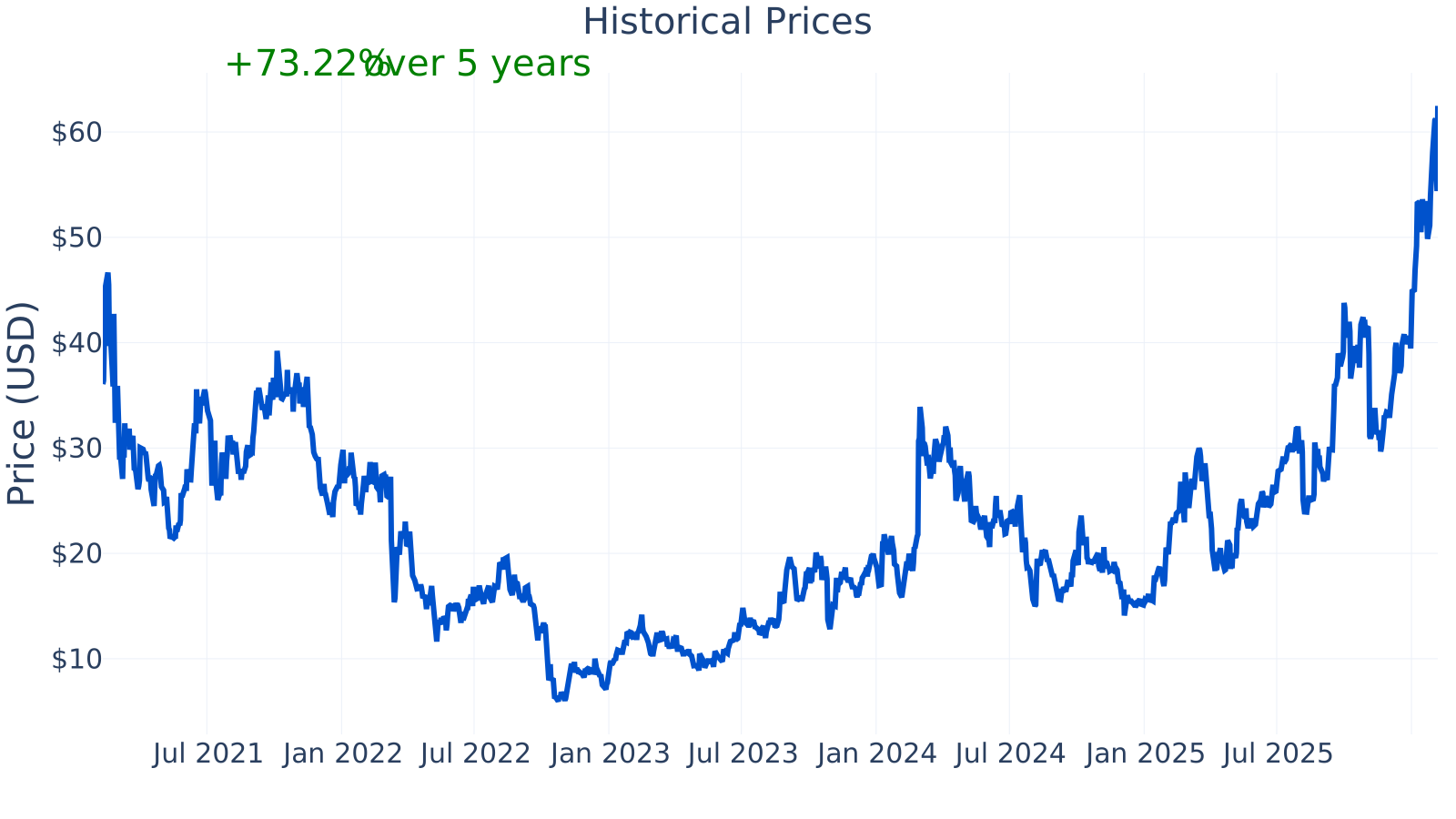
At the latest snapshot, ACM Research has a market capitalization of about $4.1B and a beta of ~1.48, which indicates the stock has tended to move more than the broader market (higher volatility). The company’s P/E ratio is ~36.3 versus an industry median of ~47.4. Profit margin is about 13.3% versus an industry median near 9.4%. Year-over-year revenue growth is about 32% versus an industry median near 9.9%. Debt-to-equity is about 20.7%, in line with the industry median shown.
Growth (medium)
ACM Research operates in the semiconductor equipment industry, which tends to benefit over the long run from rising chip complexity and higher wafer volumes needed for data centers, AI-related compute, smartphones, automotive electronics, and industrial applications. Even though the chip equipment cycle can be uneven year to year, the underlying need for more advanced and reliable manufacturing processes generally increases over time, which supports sustained demand for critical process tools such as cleaning and wet processing equipment.
The company’s recent growth has been strong but not perfectly smooth, which is typical in semiconductor-related markets. Quarterly year-over-year revenue growth has ranged from very high expansion in some periods to slower growth in others; the most recent figure shown is about 32%, which is well above the industry median (~9.9%). A key point for long-term monitoring is whether growth remains durable as the company becomes larger and as customers adjust capital spending.
Free cash flow (cash generated after operating needs and capital spending) has been volatile. The trend shown includes several years of negative free cash flow, followed by a swing to positive territory in the period ending 2025-03-31 (about +$90M). This pattern can happen when a company is scaling: working capital needs (inventory, receivables) and expansion spending can temporarily consume cash even when reported earnings are positive. Over time, more consistent positive free cash flow can be an important confirmation that growth is translating into self-funding operations.
Potential catalysts for future growth are primarily tied to (1) continued semiconductor manufacturing capacity additions, (2) technology transitions that increase the importance of precise cleaning and process steps, and (3) the company’s ability to broaden its product lineup and deepen relationships with major chipmakers and foundries.
Risks (high)
This article is for informational purposes only and does not constitute financial advice. Some content is AI-generated. See Disclaimer