Stock Analysis · ACV Auctions Inc (ACVA)
Overview
ACV Auctions Inc. (ACVA) operates a digital marketplace focused on wholesale used-vehicle transactions between automotive dealers. In simple terms, it helps dealers buy and sell used cars to each other more efficiently by using an app-based auction process and a set of supporting services. The company’s model aims to make wholesale transactions faster and more transparent by combining online auctions with vehicle condition information and logistics options.
In its SEC filings, ACV describes revenue that is primarily tied to marketplace activity (when vehicles are sold through its platform) and additional services that support those transactions. Common examples include fees connected to running an auction sale, plus services that can include transportation and other value-added offerings around the transaction (the exact product labels and mix can shift over time).
Main revenue sources (typically ordered from largest to smaller, based on the company’s business description in filings):
- Marketplace / auction-related fees (fees generated when vehicles are transacted on the platform)
- Transportation and logistics-related revenue (moving vehicles as part of the wholesale process)
- Other value-added services tied to wholesale transactions (service offerings that support trust, speed, or convenience)
The business is closely linked to used-vehicle wholesale volumes and dealer behavior. That means results can be influenced by broader auto cycles (vehicle supply, used-vehicle prices, interest rates, and dealer profitability) as well as ACV’s ability to expand its dealer network and increase transaction volume per dealer.
From 2021 to 2025, total revenue increased substantially (from about $358 million to about $760 million). Over the same period, operating losses narrowed somewhat (operating income improved from about -$77 million in 2021 to about -$55 million in 2025), but the company still reported a net loss in each year shown. Operating expenses also rose meaningfully as the company scaled.
Key Figures
| Metric | Value | Industry ⓘ |
|---|---|---|
| Date | Feb 27, 2026 | |
| Context | ||
| Sector | Consumer Cyclical | |
| Industry | Auto & Truck Dealerships | |
| Market Cap ⓘ | $851.10M | |
| Beta ⓘ | 1.63 | |
| Fundamental | ||
| P/E Ratio ⓘ | N/A | 19.15 |
| Profit Margin ⓘ | -8.71% | 2.54% |
| Revenue Growth ⓘ | 15.10% | 3.90% |
| Debt to Equity ⓘ | 44.22% | 157.49% |
| PEG ⓘ | N/A | |
| Free Cash Flow ⓘ | $51.50M | |
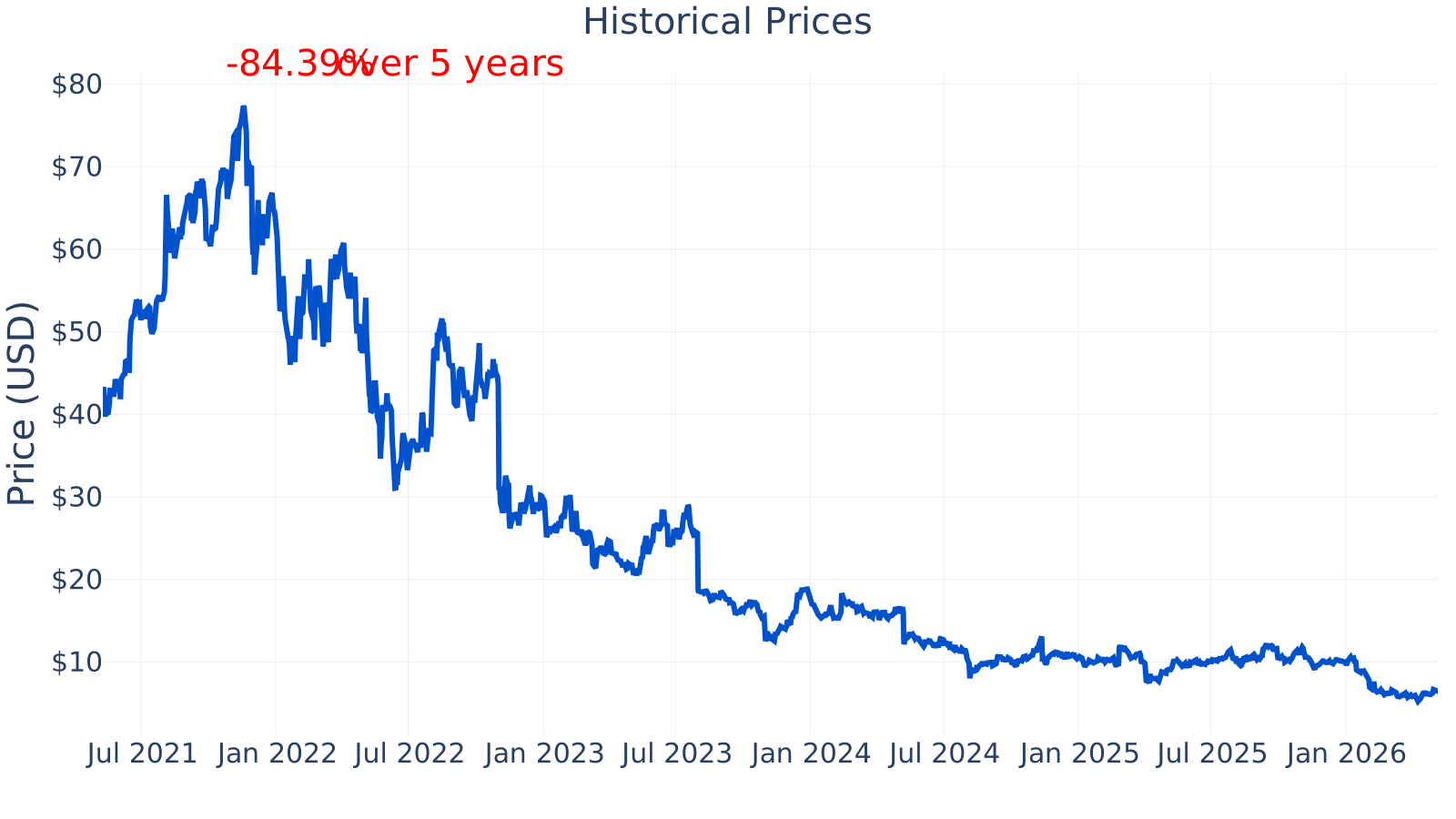
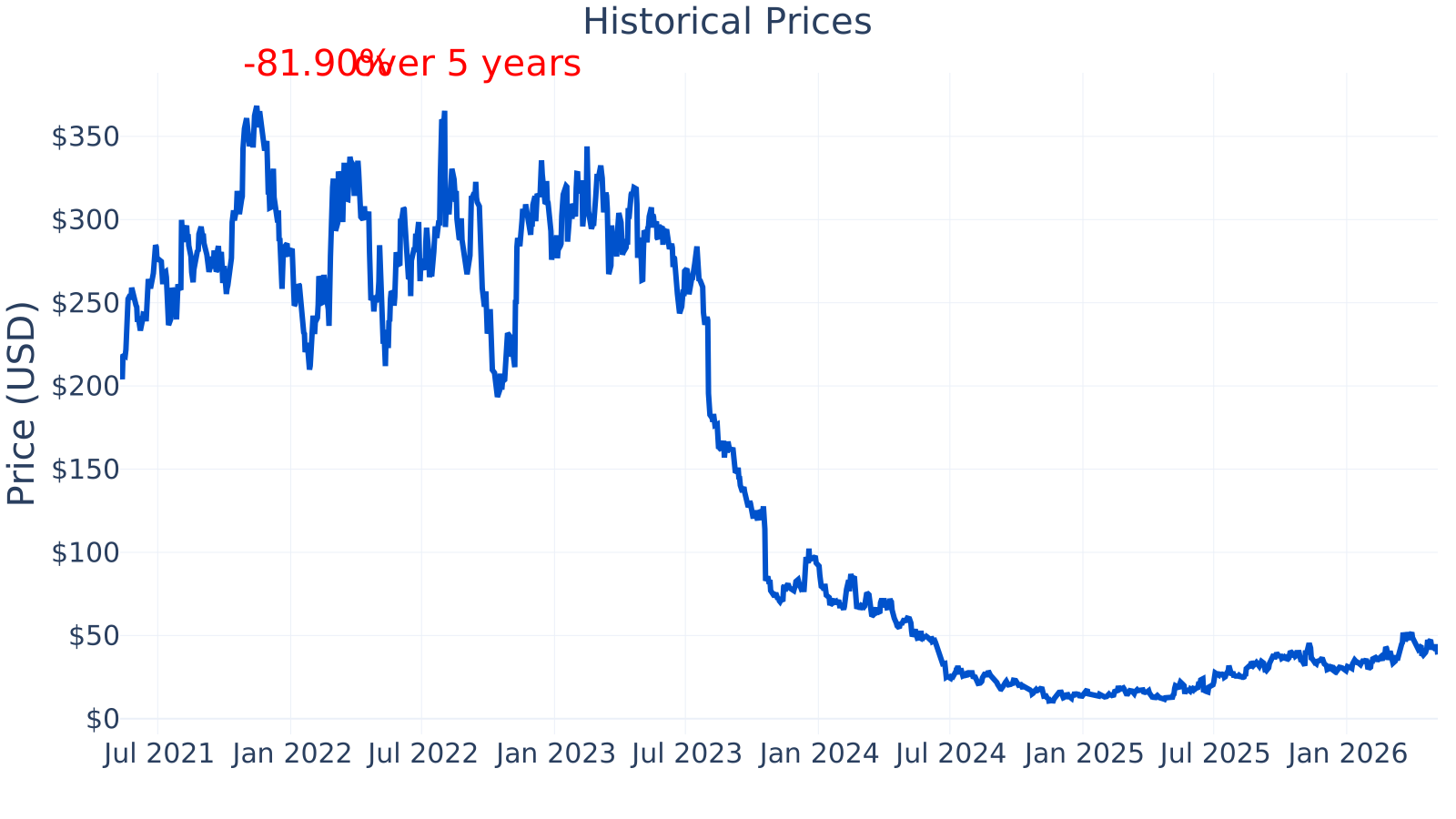
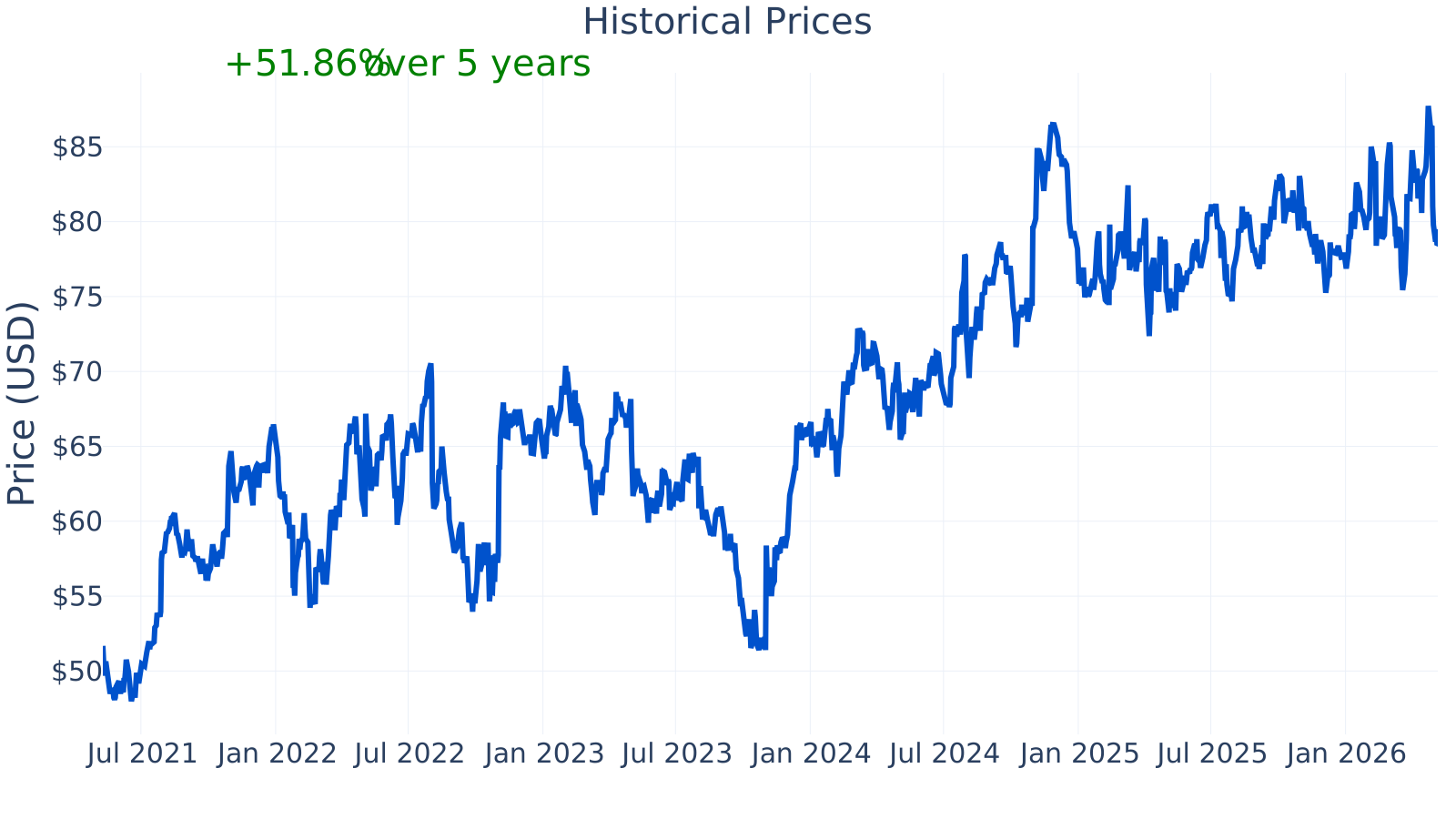
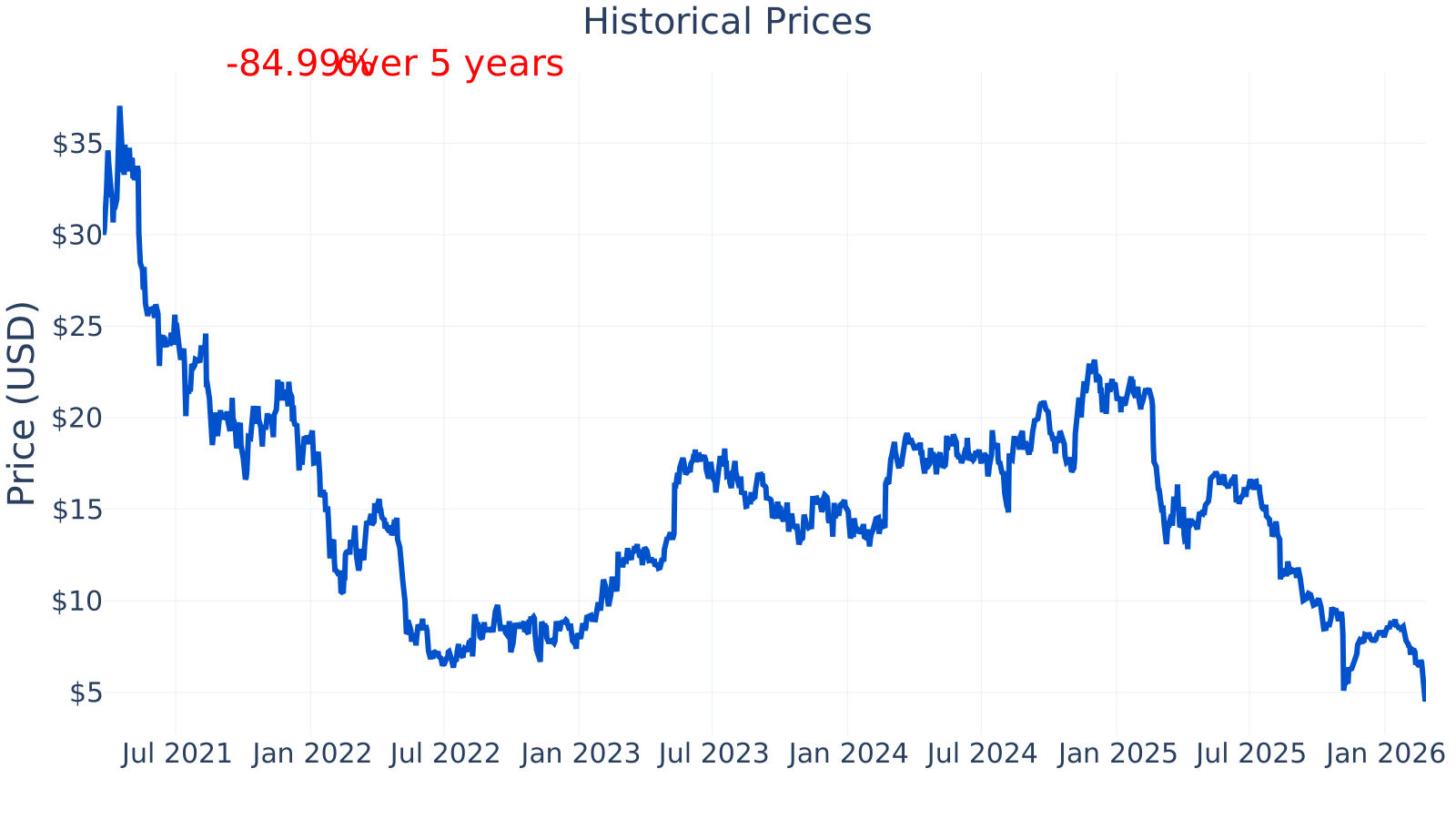
ACV Auctions’ market capitalization is about $851 million. The stock’s beta of ~1.63 indicates the share price has historically tended to move more than the broader market (higher volatility).
Profitability remains a key item to watch: the company’s latest profit margin shown is about -8.7%, compared with an industry median around +2.3%. On the other hand, growth is running ahead of the industry median: revenue growth year over year is about 15.1% versus an industry median near 3.9%.
Leverage appears lower than many peers in this industry grouping: debt-to-equity is about 44% versus an industry median around 157%. Free cash flow over the trailing twelve months is shown as about $51.5 million, which can be an important signal of improving cash discipline, though it should be interpreted alongside the business’s ongoing net losses and the reasons cash flow improved.
Growth (Medium)
ACV participates in the wholesale used-vehicle ecosystem, where dealers regularly source inventory from other dealers. The long-term direction of the industry includes continued digitization of buying and selling workflows, with more activity moving online and processes becoming more data-driven. A marketplace that reduces friction (time, uncertainty about vehicle condition, and logistics complexity) can be positioned to benefit if dealers continue adopting digital channels.
Strategically, ACV’s approach centers on increasing marketplace liquidity (more dealers and more vehicles) while layering services that make transactions easier to complete. This “marketplace + services” structure can support growth if it increases repeat usage and expands revenue per transaction, but it also requires ongoing execution in areas like customer acquisition, service quality, and operational efficiency.
The year-over-year revenue growth trend shows a sharp slowdown from very high growth in 2021 to more moderate growth later, followed by stronger re-acceleration during parts of 2024, and then a moderation again into 2025 (ending around the mid-teens). This pattern is consistent with a business that is scaling but still exposed to changing market conditions in auto wholesale volumes and pricing.
Free cash flow has been volatile over time, including periods of negative free cash flow, with a more recent shift to positive levels (about $53 million in 2025 on the chart). Sustained positive free cash flow can reduce financing pressure, but the durability of this improvement matters, especially given the company is still operating at a net loss in the annual figures shown in the overview section.
Potential catalysts described in company materials and typical for this type of platform include expansion into additional dealer geographies, improved conversion of dealers from trial to repeat use, higher attach rates of ancillary services (such as transportation), and continued product enhancements that strengthen trust and efficiency in online wholesale transactions.
Risks (High)
ACV’s core activity is connected to the health of the used-vehicle market and dealer economics. If dealer demand weakens, wholesale volumes decline, or pricing volatility rises, transaction activity and related service revenue can be affected. This cyclicality is a structural risk for most businesses tied to auto retail and wholesale.
Another key risk is profitability execution. While losses have narrowed compared with earlier periods, the company is still not profitable by net income, and scaling a marketplace often involves balancing growth investments (sales, marketing, operations, technology) with the need to improve margins. If operating expenses rise faster than revenue for an extended period, the path to consistent profitability can become longer and more uncertain.
The profit margin trend remains negative across the period shown, improving from roughly -20% to -26% in 2021–2022 to about -8.7% most recently. That improvement suggests better operating leverage and/or cost management, but the company is still below the industry median (positive low-single-digit margin), indicating a remaining gap versus more established, profitable peers.
Balance-sheet risk is often evaluated through leverage and liquidity. Lower leverage can provide flexibility during downturns, but it does not eliminate the risk that a company may need to fund operations if losses persist or working-capital needs rise.
Debt-to-equity increased over time to about 44% most recently, but it remains below the industry median (about 157%). This suggests ACV is less levered than many companies in this peer group, though the direction of change (rising from very low levels) is still worth monitoring.
Competition is another major factor. In U.S. wholesale used-vehicle auctions, large and established players and other digital platforms compete on buyer/seller reach, pricing, service quality, and logistics capabilities. Competitors can include major wholesale auction operators with significant scale, along with other online-focused remarketing platforms. ACV’s competitive positioning depends on its ability to grow liquidity on its marketplace, maintain strong dealer relationships, and deliver reliable vehicle information and services. While it is a recognized participant in digital wholesale, the presence of larger incumbents means leadership is contested and customer switching costs may be limited if competing platforms offer comparable economics or convenience.
Valuation
A common valuation tool is the price-to-earnings (P/E) ratio, but it is often not meaningful for companies with negative net income. In the P/E chart shown, ACV’s P/E appears as 0 across periods, which typically happens when earnings are negative or otherwise not suitable for calculating a conventional P/E. In contrast, the industry median P/E shown fluctuates over time and is approximately 19.1 in the latest metrics table.
Because the company is not yet profitable on a net income basis, valuation tends to be discussed more in terms of business fundamentals (revenue growth rate, margin trajectory, cash generation, and competitive position) rather than a standard earnings multiple. The current market capitalization (about $851 million) reflects how the market is weighing ACV’s growth profile (revenue growth above the industry median) against its remaining profitability gap (negative margins) and the cyclical and competitive risks described above.
Conclusion
ACV Auctions operates a digital wholesale marketplace for used vehicles, aiming to make dealer-to-dealer transactions more efficient while adding supporting services. Over the period shown, the company grew revenue substantially and has improved profitability metrics, but it continues to report negative profit margins compared with an industry median that is positive. Recent positive free cash flow is a notable development, although it has not yet translated into consistent net profitability in the annual results shown.
The long-term outlook for digital adoption in wholesale workflows can support the company’s growth strategy, but the business remains exposed to auto-cycle swings and strong competition from larger, established wholesale auction operators and other digital platforms. As a result, the central long-term questions are whether ACV can continue expanding transaction volume and services while consistently narrowing losses and moving toward sustainable profitability.
Sources:
- SEC EDGAR — ACV Auctions, Inc. filings (Form 10-K, Form 10-Q, Form 8-K)
- ACV Auctions, Inc. Investor Relations — Company materials and press releases
- Wikipedia — “ACV Auctions” (basic company background)
This article is for informational purposes only and does not constitute financial advice. Some content is AI-generated. See Disclaimer