Stock Analysis · Elastic NV (ESTC)
Overview
Elastic N.V. is a software company best known for products built around the “Elastic Stack” (originally centered on Elasticsearch). In simple terms, its technology helps organizations collect large amounts of machine-generated information (like application logs, infrastructure metrics, and security signals), search through it quickly, and turn it into something useful for troubleshooting, monitoring, and cybersecurity.
Elastic sells its products primarily as subscription software (often delivered as a cloud service), typically used by IT teams, software developers, and security teams. The company also maintains open-source roots, but its business model is based on paid subscriptions that include advanced features, enterprise capabilities, and support.
In its financial reporting, Elastic groups revenue mainly by how customers consume the product (cloud vs. other subscriptions), rather than by product line. Based on company filings, the main sources of revenue are:
- Subscription revenue (includes Elastic Cloud and self-managed subscriptions): the large majority of revenue (Elastic reports subscriptions as the dominant category).
- Professional services and other: a much smaller portion of revenue compared with subscriptions.
Business model in one sentence: recurring subscription revenue from organizations that need search, observability (monitoring), and security tools at scale.
The income flow highlights a recurring pattern for many software companies focused on growth: revenue and gross profit have expanded over time, while operating profit has been pressured by sizable operating expenses (notably research and development and go-to-market spending). Net income has been volatile across years, influenced in part by items like taxes and interest, even as operating income has moved closer to break-even in the most recent period shown.
Key Figures
| Metric | Value | Industry ⓘ |
|---|---|---|
| Date | Feb 08, 2026 | |
| Context | ||
| Sector | Technology | |
| Industry | Software - Application | |
| Market Cap ⓘ | $6.28B | |
| Beta ⓘ | 0.95 | |
| Fundamental | ||
| P/E Ratio ⓘ | N/A | 27.79 |
| Profit Margin ⓘ | -6.79% | 6.02% |
| Revenue Growth ⓘ | 15.90% | 15.80% |
| Debt to Equity ⓘ | 66.29% | 25.15% |
| PEG ⓘ | 4.17 | |
| Free Cash Flow ⓘ | $302.34M | |
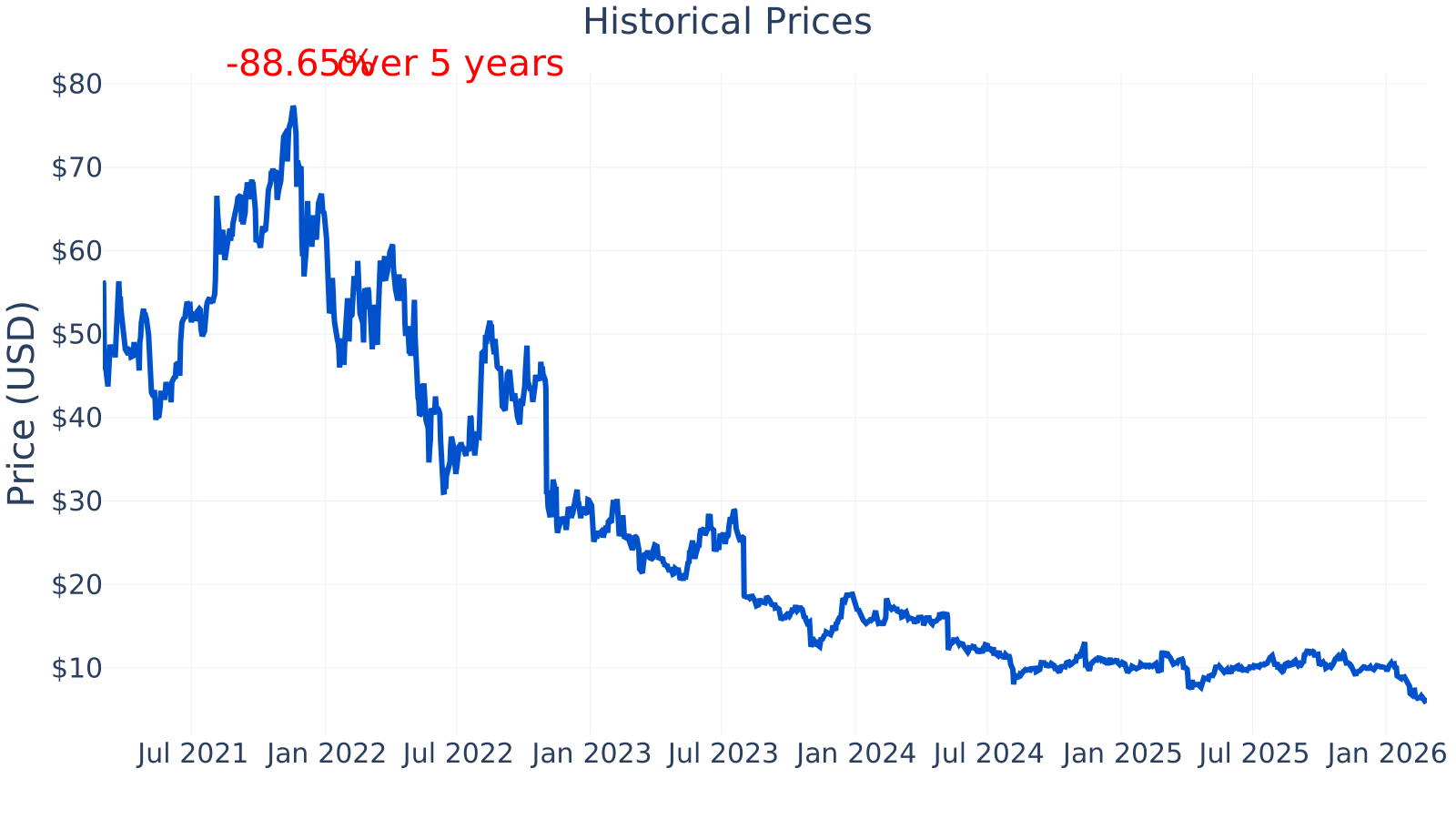
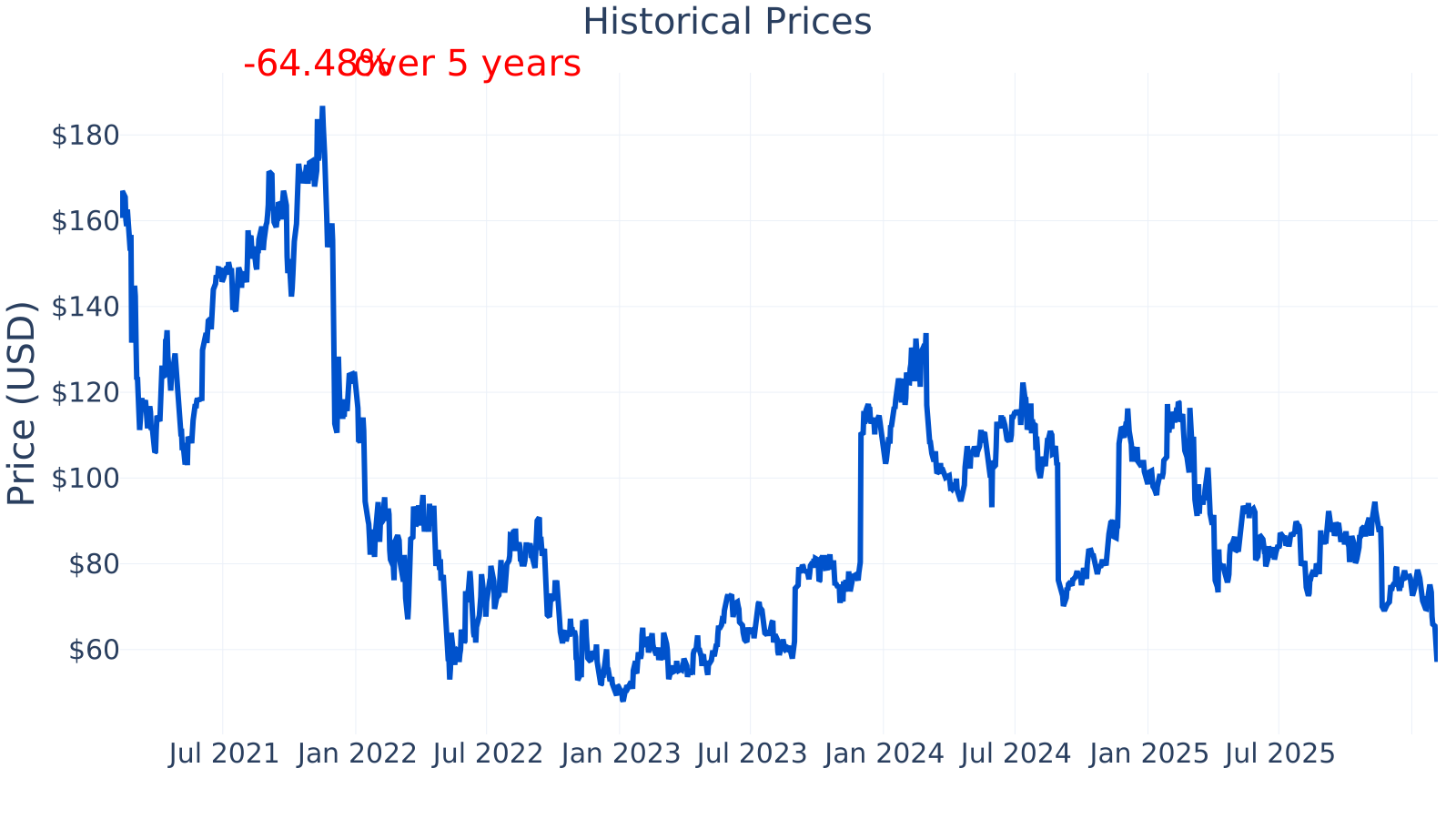
Elastic’s market capitalization is about $6.3B, placing it in the mid-cap range. The stock’s beta (~0.95) suggests its price has historically moved roughly in line with the broader market. The company’s year-over-year revenue growth (~15.9%) is close to the displayed industry median (~15.8%), indicating growth that is broadly comparable to many application software peers. Profitability is currently a weak point: the latest profit margin is about -6.8%, below the industry median shown (~6.0%). On leverage, debt-to-equity is ~66%, above the industry median shown (~25%), meaning Elastic uses more balance-sheet leverage than many peers in this dataset. Despite accounting losses, Elastic shows meaningful cash generation with trailing twelve-month free cash flow around $302M.
Growth (Medium)
Elastic operates in large, durable areas of enterprise software: search (for apps and websites), observability (monitoring and troubleshooting modern systems), and security analytics. These needs tend to expand as organizations build more software, move infrastructure to cloud environments, and generate more operational and security telemetry. In that sense, Elastic’s end markets are supported by long-term digitalization trends.
A key strategic element is the company’s positioning around a single underlying data layer that can serve multiple use cases (search, monitoring, and security). When this works, it can help with “platform” adoption: customers may start with one use case and expand into others over time, increasing subscription value without switching vendors.
The revenue growth trend shows a clear slowdown from very high growth rates earlier in the period (around the 40–50% range) toward the mid-teens more recently (around ~16–20%). This pattern is common as a company scales, but it also means future results depend more heavily on execution (expanding within existing customers, winning competitive deals, and sustaining demand) than on “early-stage” growth dynamics.
Free cash flow has improved significantly over the period shown, rising from near break-even levels to roughly $237M and then $302M (TTM). For long-term analysis, this improvement matters because it indicates the business has been able to convert a portion of revenue into cash even while reported net income has been inconsistent.
Risks (High)
This article is for informational purposes only and does not constitute financial advice. Some content is AI-generated. See Disclaimer