Stock Analysis · Royal Caribbean Cruises Ltd (RCL)
Overview
Royal Caribbean Cruises Ltd. (RCL) is a global cruise company that operates vacation experiences centered on ocean cruising. It owns and operates cruise brands and sells trips that bundle transportation (the ship), lodging, dining, entertainment, and destinations into a single product. The company’s operations are capital-intensive: it invests in building and maintaining ships, then aims to keep them highly utilized and priced appropriately across different seasons and itineraries.
Across the business, revenue generally comes from two broad buckets: (1) ticket revenue (the cruise fare) and (2) onboard and other revenue (such as beverage packages, dining upgrades, shore excursions, casino, retail, internet, and other services). In its financial reporting, Royal Caribbean has historically described revenue in these two categories rather than a long list of separate lines, and the mix can vary by itinerary, capacity, and customer demand.
Main sources of revenue (from largest to lowest, in the company’s typical reporting format):
- Passenger ticket revenue (cruise fares)
- Onboard and other revenue (spend during the trip and related items)
A helpful way to understand the business model is that Royal Caribbean earns money twice: first when the ticket is sold, and then again when guests spend onboard or purchase extras tied to the cruise experience.
From 2021 to 2025, total revenue rises sharply (about $1.5B in 2021 to about $17.9B in 2025). Over the same period, operating income shifts from a large loss (around -$4.0B in 2021) to a sizable profit (around $5.3B in 2025). Interest expense remains meaningful across the years, reflecting the importance of financing costs in this industry.
Key Figures
| Metric | Value | Industry ⓘ |
|---|---|---|
| Date | Feb 07, 2026 | |
| Context | ||
| Sector | Consumer Cyclical | |
| Industry | Travel Services | |
| Market Cap ⓘ | $94.90B | |
| Beta ⓘ | 1.87 | |
| Fundamental | ||
| P/E Ratio ⓘ | 22.28 | 21.78 |
| Profit Margin ⓘ | 23.80% | 10.37% |
| Revenue Growth ⓘ | 13.20% | 10.60% |
| Debt to Equity ⓘ | 225.52% | 96.47% |
| PEG ⓘ | 1.38 | |
| Free Cash Flow ⓘ | $1.24B | |
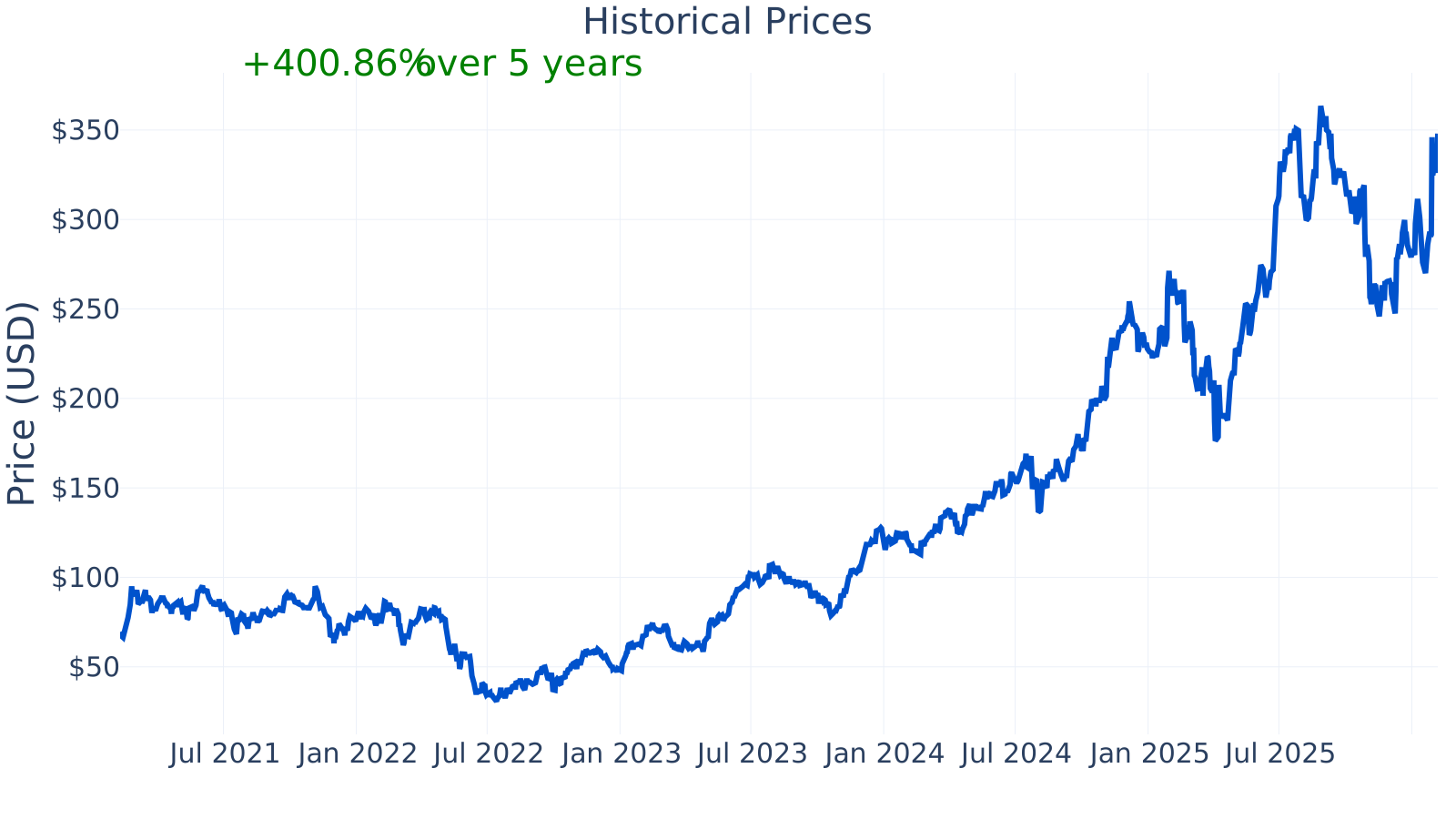
Royal Caribbean’s market capitalization is about $94.9B, and its beta of 1.87 indicates the stock has historically moved more than the broader market (higher volatility). The latest P/E ratio is about 22.28, close to the industry median of 21.78. Profit margin is about 23.8%, above the industry median of about 10.4%, while year-over-year revenue growth is about 13.2% versus an industry median near 10.6%. Debt-to-equity is about 226%, which is higher than the industry median near 96%. Trailing twelve-month free cash flow is about $1.24B, and the PEG ratio is about 1.38 (a metric that relates valuation to expected growth assumptions).
Growth (Medium)
Cruising is part of the broader leisure travel market, which tends to be driven over time by consumer discretionary spending, demographic trends (including retirees and multi-generational travel), and the appeal of bundled vacations. Demand can be cyclical, but the industry has historically used capacity growth (new ships), itinerary expansion, and onboard spending opportunities as key levers to grow.
Royal Caribbean’s strategy for growth is closely tied to (1) operating a modern fleet that can command premium pricing, (2) expanding and optimizing itinerary offerings, and (3) increasing onboard revenue through experiences and add-ons. Because a ship has high fixed costs, profitability can improve meaningfully when occupancy and pricing are strong, which makes execution and demand conditions especially important.
The year-over-year revenue growth rate is volatile in the earlier period (reflecting a sharp downturn and recovery), then moderates in more recent quarters. The latest year-over-year revenue growth is about 13.2%, which is somewhat above the industry median near 10.6%, suggesting Royal Caribbean has recently grown slightly faster than many peers in the same industry grouping.
Free cash flow improves significantly over time, moving from large negative levels (about -$6.5B in 2021 and -$4.1B in 2022) to positive territory (about $0.72B in 2023), then rising further (about $2.11B by 2025). For a capital-intensive business, sustained positive free cash flow can matter because it can support debt reduction, fleet investment, and financial flexibility.
Risks (High)
This article is for informational purposes only and does not constitute financial advice. Some content is AI-generated. See Disclaimer