Stock Analysis · SharkNinja Inc (SN)
Overview
SharkNinja Inc is a consumer products company best known for small household appliances sold under the Shark and Ninja brands. Its products are designed for everyday use in the home—most notably floor care (such as vacuums) and kitchen appliances (such as blenders, air fryers, and related cooking devices). The business model generally combines in-house product development with outsourced manufacturing and broad distribution through major retailers and e-commerce channels.
From a revenue standpoint, SharkNinja’s operations are typically discussed around its two major product families (brands/categories) and by geography. In plain terms, the company’s sales are driven by consumers replacing or upgrading home appliances and by the company launching new product lines that gain shelf space and online visibility.
Main revenue sources (high-level, as commonly presented in company reporting):
- Cleaning / floor care appliances (Shark brand)
- Kitchen and cooking appliances (Ninja brand)
- Other home-related small appliances and accessories
- Geographies: sales in the United States and internationally (typically disclosed in filings)
The company’s recent scale can also be seen through its income statement structure: revenue has expanded over the past several years, while spending on operating items (including product development and marketing) has also risen as the company pushes new products and categories.
Looking across the multi-year flow of revenue into profit, total revenue increased from about $3.7B (2021–2022) to about $6.4B (2025). Net income also rose meaningfully over the same period (about $331M in 2021 to about $701M in 2025), indicating improving overall profitability despite ongoing investments in operating expenses.
Key Figures
| Metric | Value | Industry ⓘ |
|---|---|---|
| Date | Feb 16, 2026 | |
| Context | ||
| Sector | Consumer Cyclical | |
| Industry | Furnishings, Fixtures & Appliances | |
| Market Cap ⓘ | $18.50B | |
| Beta ⓘ | 1.36 | |
| Fundamental | ||
| P/E Ratio ⓘ | 32.36 | 20.06 |
| Profit Margin ⓘ | 10.96% | 4.29% |
| Revenue Growth ⓘ | 17.60% | 0.30% |
| Debt to Equity ⓘ | 6.74% | 87.31% |
| PEG ⓘ | 2.16 | |
| Free Cash Flow ⓘ | $399.38M | |
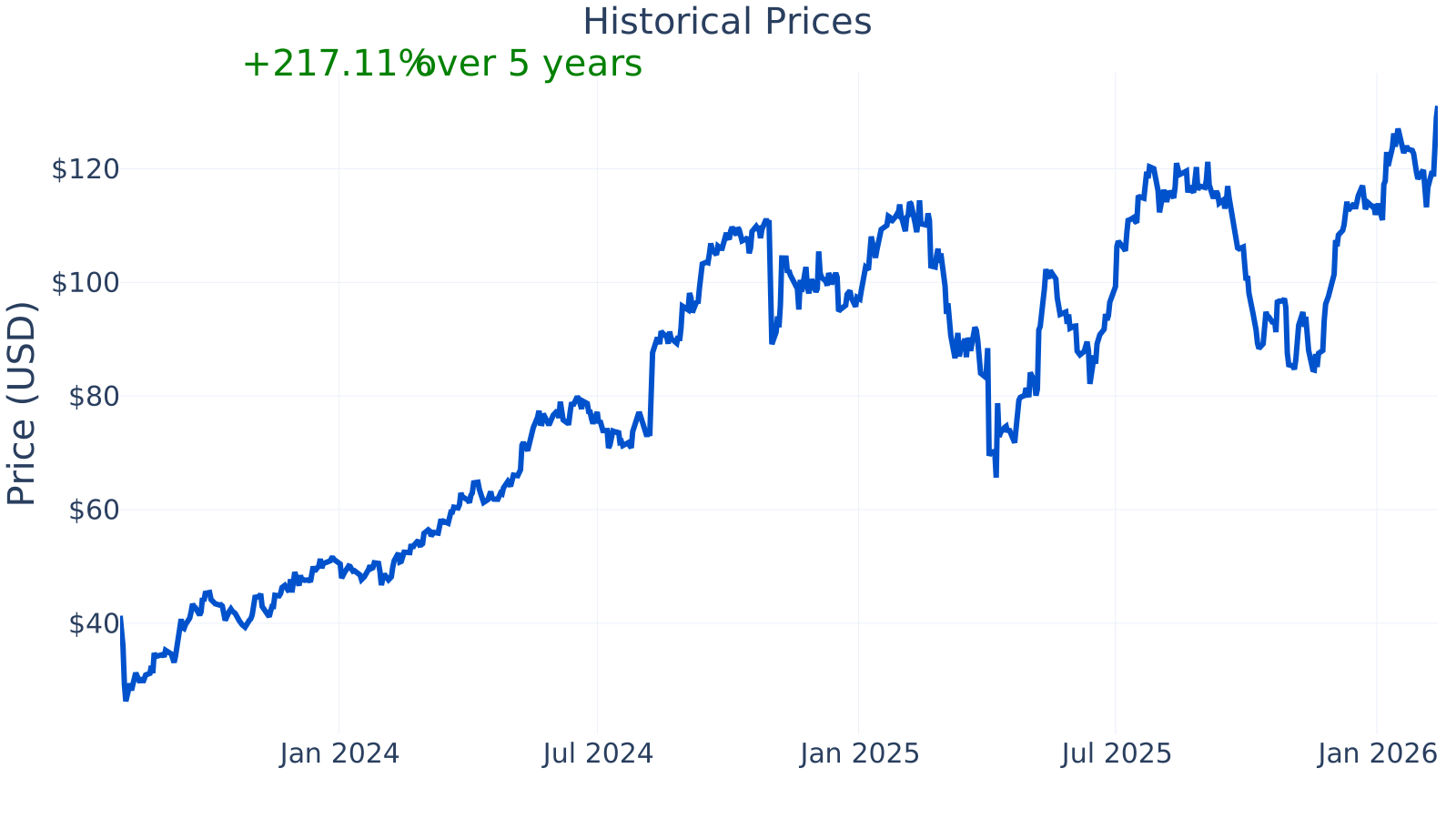
SharkNinja’s market capitalization is about $18.5B, and the stock’s beta of ~1.36 suggests it has tended to move more than the broader market. Profitability and growth stand out versus the industry median: the company’s profit margin is ~11.0% (vs. industry median ~4.3%) and its year-over-year revenue growth is ~17.6% (vs. industry median ~0.3%). Leverage looks comparatively modest with debt-to-equity ~6.7% versus an industry median near 87.3%. Free cash flow over the trailing twelve months is about $399M.
Growth (medium)
SharkNinja operates in the large, mature market for household appliances, where growth often comes less from overall category expansion and more from innovation, brand strength, and distribution. In that context, the company’s strategy centers on regularly launching new products and expanding into adjacent appliance categories—an approach that can support growth even when the broader appliance market is not booming.
The year-over-year revenue growth trend shows strong expansion in mid-to-late 2024 (around 30%+ at points), then a step-down to the mid-teens through 2025, ending near 17.6%. A slowdown from very high growth rates is not unusual as the company gets larger; what matters going forward is whether product launches and category expansion can keep growth above typical appliance peers.
Free cash flow (a rough measure of cash generated after operating needs and capital spending) increased from about $100M (TTM ending 2024-03-31) to about $189M (TTM ending 2025-03-31), and the latest trailing twelve months level is shown as about $399M in the key metrics. If sustained, rising free cash flow can provide flexibility for product investment, working capital needs, and balance-sheet choices.
Potential catalysts that can influence longer-term growth (in either direction) typically include: continued success of new product platforms, international expansion execution, maintaining premium brand positioning, and retailer/e-commerce momentum during key shopping seasons.
Risks (medium)
This article is for informational purposes only and does not constitute financial advice. Some content is AI-generated. See Disclaimer