Stock Analysis · Ichor Holdings Ltd (ICHR)
Overview
Ichor Holdings Ltd (ICHR) operates in the semiconductor supply chain. In simple terms, it makes high-purity fluid delivery subsystems and related components that help semiconductor equipment move, measure, and control the specialized gases and chemicals used during chip manufacturing. These parts are designed to handle extremely clean and precise processes, because tiny contaminants can damage chip yields.
The company’s revenue is primarily generated by selling these engineered subsystems and components to manufacturers of semiconductor capital equipment (the companies that build the machines used by chipmakers). This typically includes both higher-value integrated subsystems and a mix of complementary parts and services that support installed equipment over time.
Based on its business description in company filings, revenue is generally concentrated in:
- Gas and chemical delivery subsystems and related integrated assemblies (core product lines sold to semiconductor equipment customers)
- Components, spares, and value-added manufacturing/services supporting those subsystems and customer programs
Public filings often emphasize customer and program concentration more than a simple “by-product” revenue split, and exact percentages can vary by year and customer mix.
Across the years shown, total revenue rose from about $1.10B (2021) to $1.28B (2022), then fell to $0.81B (2023) before improving to $0.85B (2024) and $0.95B (2025). Over the same period, profitability weakened materially: net income shifted from positive in 2021–2022 to losses in 2023–2025, indicating that cost structure, pricing/mix, and industry conditions have had a large impact.
Key Figures
| Metric | Value | Industry ⓘ |
|---|---|---|
| Date | Feb 16, 2026 | |
| Context | ||
| Sector | Technology | |
| Industry | Semiconductor Equipment & Materials | |
| Market Cap ⓘ | $1.61B | |
| Beta ⓘ | 1.87 | |
| Fundamental | ||
| P/E Ratio ⓘ | N/A | 48.26 |
| Profit Margin ⓘ | -5.57% | 8.62% |
| Revenue Growth ⓘ | -4.20% | 12.90% |
| Debt to Equity ⓘ | 6.46% | 20.73% |
| PEG ⓘ | 0.54 | |
| Free Cash Flow ⓘ | $10.62M | |
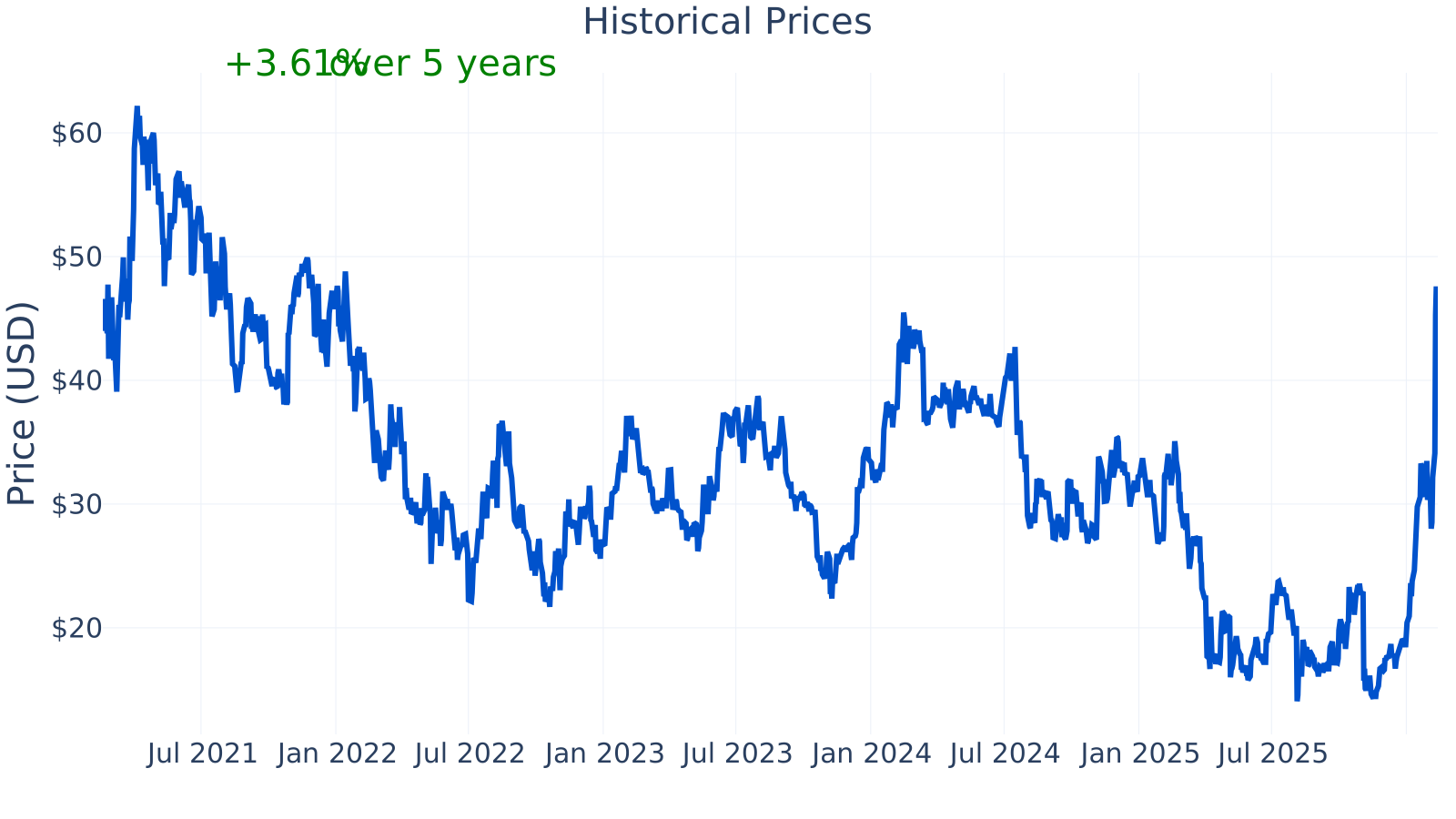
Ichor is a mid-cap company at about $1.61B market capitalization. The stock’s beta of ~1.87 indicates it has historically moved more than the broader market (both up and down), which is common for businesses tied to semiconductor equipment cycles.
On fundamentals versus the median of its industry group, recent indicators show pressure: profit margin of about -5.6% (industry median ~8.6%) and year-over-year revenue growth of about -4.2% (industry median ~12.9%). At the same time, leverage appears comparatively modest, with debt-to-equity around 6.5% versus an industry median near 20.7%. Trailing twelve-month free cash flow is about $10.6M, positive but relatively small in relation to revenue scale.
Growth (Medium)
Ichor operates in the semiconductor equipment and materials ecosystem, which tends to benefit over long periods from structural demand for chips (data centers, AI workloads, automotive electronics, industrial automation, and connected devices). However, this part of the sector is also known for pronounced cycles: when chipmakers and foundries reduce capital spending, equipment demand can drop quickly, affecting suppliers like Ichor.
Strategically, Ichor’s positioning is tied to providing high-spec, contamination-sensitive fluid delivery solutions to advanced manufacturing tools. Over time, as chipmaking processes become more complex, the need for reliable and precise subsystems can support continued demand for specialized suppliers. Potential catalysts typically come from:
- Recovery in wafer-fab equipment spending after downcycles
- Share gains or program wins with major equipment manufacturers
- New technology transitions that increase subsystem complexity and content per tool
The year-over-year growth pattern shown is cyclical. After strong growth in 2021–2022, growth turned sharply negative through 2023, then improved through much of 2024 and 2025 before slipping back slightly negative in the latest period shown (about -4.2%). This kind of swing is consistent with an industry that expands and contracts with customer capital investment cycles.
Free cash flow has also been uneven: strongly positive in 2021, negative in 2022, then positive again from 2023 onward, with a lower level most recently (about $10.6M TTM). For long-term business durability, sustained positive free cash flow over a full cycle often matters because it supports reinvestment and balance sheet flexibility during downturns.
Risks (High)
This article is for informational purposes only and does not constitute financial advice. Some content is AI-generated. See Disclaimer