Stock Analysis · Grab Holdings Ltd (GRAB)
Overview
Grab Holdings Ltd (GRAB) is a consumer technology company focused on Southeast Asia. Through its “superapp,” it connects users with everyday services such as ride-hailing and deliveries, and it also operates financial services. The business model is largely platform-based: Grab facilitates transactions between consumers, drivers/merchants/partners, and (in some cases) financial institutions, and it earns fees for enabling that activity.
Grab reports its business in three main segments in its public filings:
- Deliveries (food and parcel deliveries)
- Mobility (ride-hailing and related transport services)
- Financial Services (payments and other financial products offered via its ecosystem)
Public filings describe these segments, but a single simple, current “revenue mix by %” is not provided here. In general terms, revenue is tied to commissions/fees from mobility and deliveries, plus revenue from financial services activities (which can include transaction-related fees and other financial product economics, depending on how products are structured and accounted for).
Over the 2021–2025 period shown, the company’s revenue expands materially (from about $0.7B in 2021 to about $3.37B in 2025), while operating results improve from large losses to a positive operating profit in 2025. Interest expense also appears much lower than in 2021, which can materially affect bottom-line results.
Key Figures
| Metric | Value | Industry ⓘ |
|---|---|---|
| Date | Feb 23, 2026 | |
| Context | ||
| Sector | Technology | |
| Industry | Software - Application | |
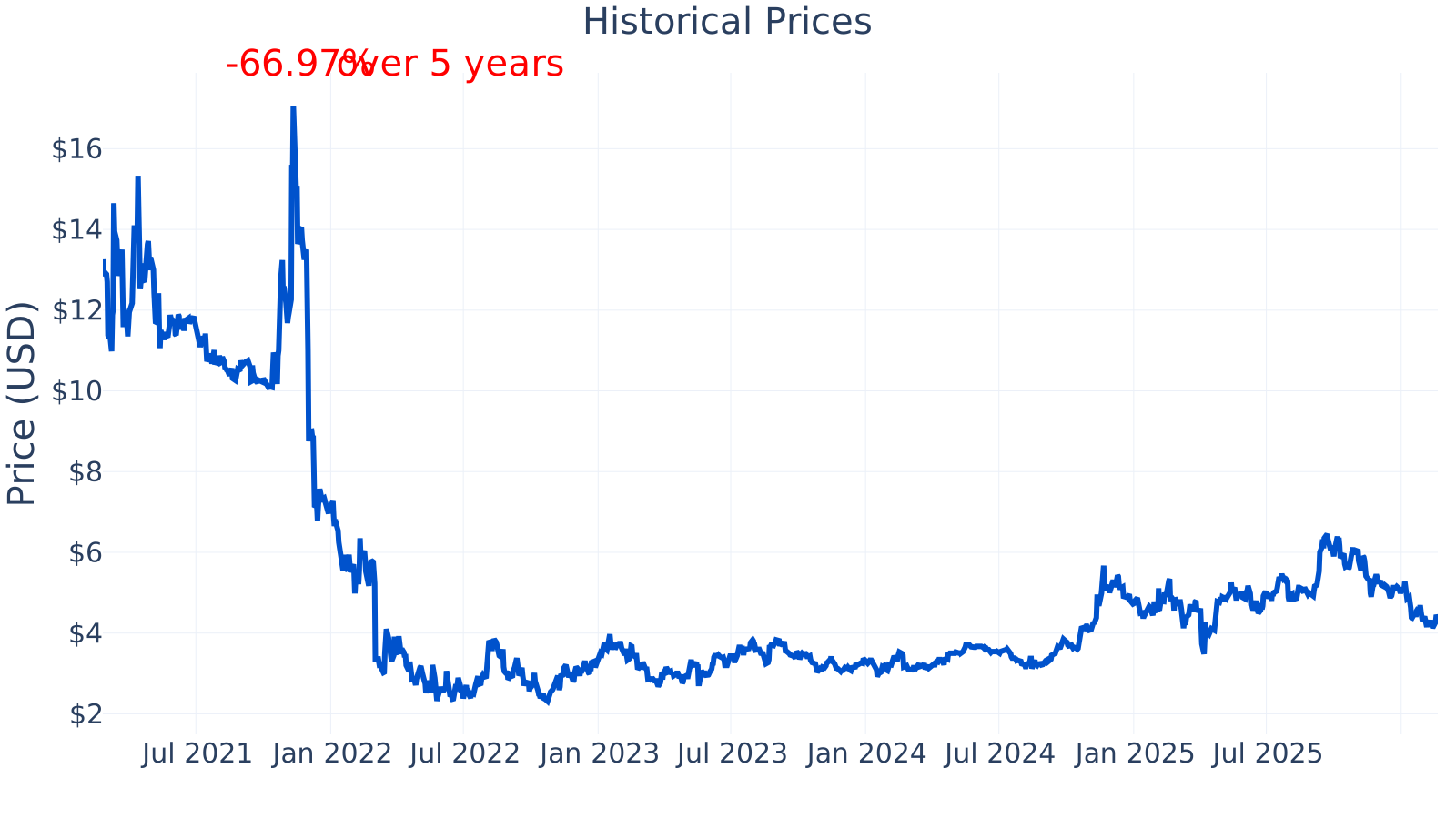
| Market Cap ⓘ | $17.91B | |
| Beta ⓘ | 0.93 | |
| Fundamental | ||
| P/E Ratio ⓘ | 73.00 | 25.48 |
| Profit Margin ⓘ | 7.95% | 7.23% |
| Revenue Growth ⓘ | 18.60% | 15.70% |
| Debt to Equity ⓘ | 30.51% | 25.08% |
| PEG ⓘ | 0.96 | |
| Free Cash Flow ⓘ | -$2.00M | |
Grab’s market capitalization is about $17.9B and its beta is about 0.93 (historically, this is close to the overall market’s volatility). The latest profit margin shown is about 7.95% (industry median about 7.23%), and revenue growth year-over-year is about 18.6% (industry median about 15.7%). Debt-to-equity is about 30.5% versus an industry median around 25.1%. The P/E ratio shown is about 73 versus an industry median around 25.5. Free cash flow over the trailing twelve months is approximately -$2M (near break-even, slightly negative).
Growth (Medium)
Grab operates in large, multi-year themes across Southeast Asia: digitization of everyday commerce, rising on-demand delivery adoption, and broader use of cashless payments and app-based financial services. These areas can expand as income levels rise, urbanization increases, and more commerce shifts to mobile.
A core part of Grab’s strategy is ecosystem-driven: increasing user engagement across mobility and deliveries, then using that activity to support financial services. In practice, that can mean more frequent app usage, better matching of supply (drivers/couriers/merchants) with demand, and potentially higher value per user over time if multiple services are used in the same app.
The year-over-year revenue growth rate shown is positive in the most recent periods and is around the high-teens recently (about 18.6% in the latest figure). Earlier periods show much higher growth rates, which often happens when a company rebounds from a depressed base or scales rapidly; more recent readings look more “normalized” compared with the earlier spikes.
The trailing twelve-month free cash flow trend improves substantially over time, moving from large negatives in 2021–2023 to positive territory by 2024 and strongly positive around early 2025 (about $853M in the point shown), before the latest metric table shows free cash flow near break-even (about -$2M). This pattern suggests that cash generation can swing meaningfully with working capital movements, investment pace, and profitability—so it is useful to watch across multiple periods rather than a single quarter.
Risks (High)
This article is for informational purposes only and does not constitute financial advice. Some content is AI-generated. See Disclaimer