Stock Analysis · GigaCloud Technology Inc (GCT)
Overview
GigaCloud Technology Inc. is a B2B company that helps businesses buy and move large products (for example, furniture, appliances, and fitness equipment). Its platform connects manufacturers and brands—many of them located in Asia—with resellers such as retailers, e-commerce sellers, and other business buyers, with logistics services designed for “bulky” items. In simple terms, GigaCloud aims to make it easier for businesses to source big-ticket inventory and get it delivered efficiently.
The business model is built around a marketplace-style platform plus services that support transactions, including logistics and fulfillment capabilities. The company reports revenue primarily from what it calls its platform-related services. Public filings should be used to confirm the latest revenue split by category and geography, since this mix can change over time.
Main sources of revenue (as described in company filings, in descending order):
- Service revenue from the company’s B2B marketplace/platform (the core of the business)
- Other platform-related services that support transactions (for example, logistics/fulfillment-related services tied to the platform)
The company’s recent income structure shows a business with high costs directly tied to revenue (typical for logistics-heavy models), while operating profit depends heavily on scale, efficiency, and maintaining healthy pricing for services.
From 2021 to 2025, total revenue increased substantially (about $414.2M to about $1.29B). Over the same period, net income rose from about $29.3M to about $137.4M, indicating that profitability expanded as the business scaled. Research and development spending increased from a low base (about $0.0M in 2021 to about $10.8M in 2025), which suggests more investment in the platform over time.
Key Figures
| Metric | Value | Industry ⓘ |
|---|---|---|
| Date | Mar 17, 2026 | |
| Context | ||
| Sector | Technology | |
| Industry | Software - Infrastructure | |
| Market Cap ⓘ | $1.57B | |
| Beta ⓘ | 2.23 | |
| Fundamental | ||
| P/E Ratio ⓘ | 11.41 | 27.17 |
| Profit Margin ⓘ | 10.65% | 7.12% |
| Revenue Growth ⓘ | 22.60% | 15.80% |
| Debt to Equity ⓘ | 96.61% | 24.92% |
| PEG ⓘ | 0.37 | |
| Free Cash Flow ⓘ | $182.79M | |
GigaCloud’s market capitalization is about $1.57B, placing it in the small- to mid-cap range. The stock’s beta of ~2.24 indicates that the share price has historically moved more than the broader market (higher volatility).
On profitability, the latest profit margin is ~10.65%, above the industry median shown here (~7.12%). Growth is also higher than the industry median in this snapshot: year-over-year revenue growth is ~22.6% versus an industry median of ~15.8%.
Balance-sheet leverage is a standout metric: debt-to-equity is ~96.6%, which is notably higher than the industry median shown (~24.9%). Free cash flow over the trailing twelve months is about $182.8M, indicating meaningful cash generation relative to the company’s size.
Growth (Medium)
GigaCloud operates at the intersection of e-commerce enablement and logistics for oversized goods. That area can grow as more commerce shifts online and as businesses look for ways to source products and manage delivery with fewer intermediaries. Unlike “lightweight” parcel shipping, bulky-item logistics is operationally complex (warehousing, freight, damage returns, last-mile delivery scheduling). Complexity can be a barrier to entry, but it can also make execution harder to scale consistently.
A key question for long-term business expansion is whether the platform becomes more useful as it grows. In marketplace models, more sellers can attract more buyers, and vice versa. If that dynamic holds, growth can be supported by network effects. Another long-term driver is operational efficiency: when a logistics-heavy platform grows, it may be able to improve utilization (for example, of warehouses and transportation lanes), which can support better margins.
The revenue growth trend shows very high year-over-year growth through much of 2023 and 2024 (including periods above 70% and even near/above 100%), followed by a clear slowdown in 2025 (mostly single digits to low 20s, ending around 22.6%). This pattern can happen when a company moves from a smaller base (where growth rates can look extreme) into a larger revenue scale, or when demand normalizes after a period of unusually strong expansion.
Free cash flow has increased from about $59.1M (2022) to about $138.3M (2025), with the latest trailing-twelve-month figure at about $182.8M. For a business that depends on logistics capabilities, cash generation is particularly important because warehouses, technology, and working capital can require ongoing funding as the company expands.
Risks (High)
Several risks matter for understanding GigaCloud’s long-term profile. First, the business is tied to physical goods movement, which can be affected by freight costs, warehousing costs, delivery performance, and broader supply-chain conditions. If shipping and storage costs rise faster than the company can pass them through, profitability could be pressured.
Second, customer and supplier concentration can be an important risk in marketplace models (for example, if a small number of large buyers or sellers account for a meaningful share of volume). The magnitude of this risk should be checked directly in the company’s 10-K risk factors and customer concentration disclosures.
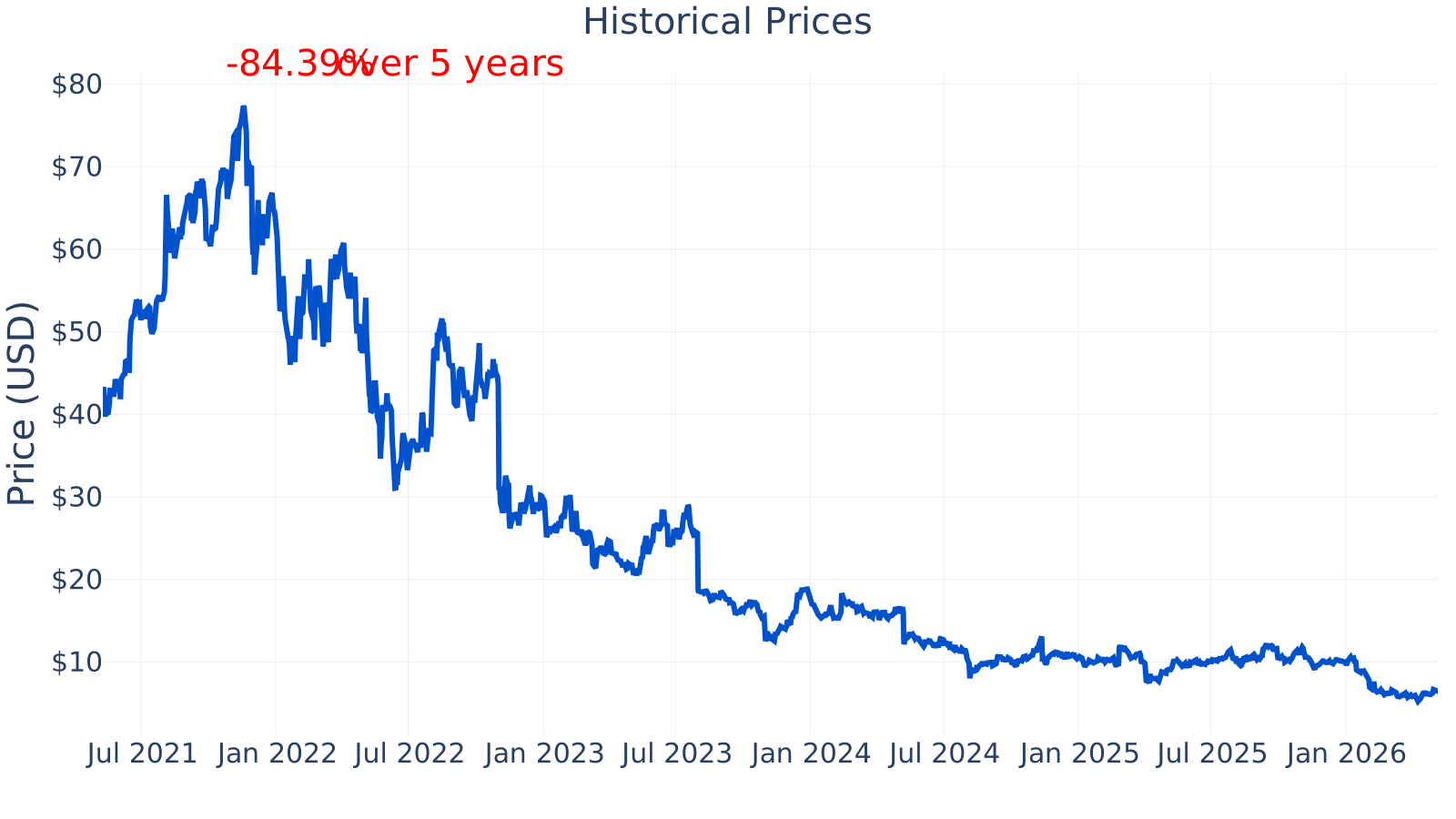
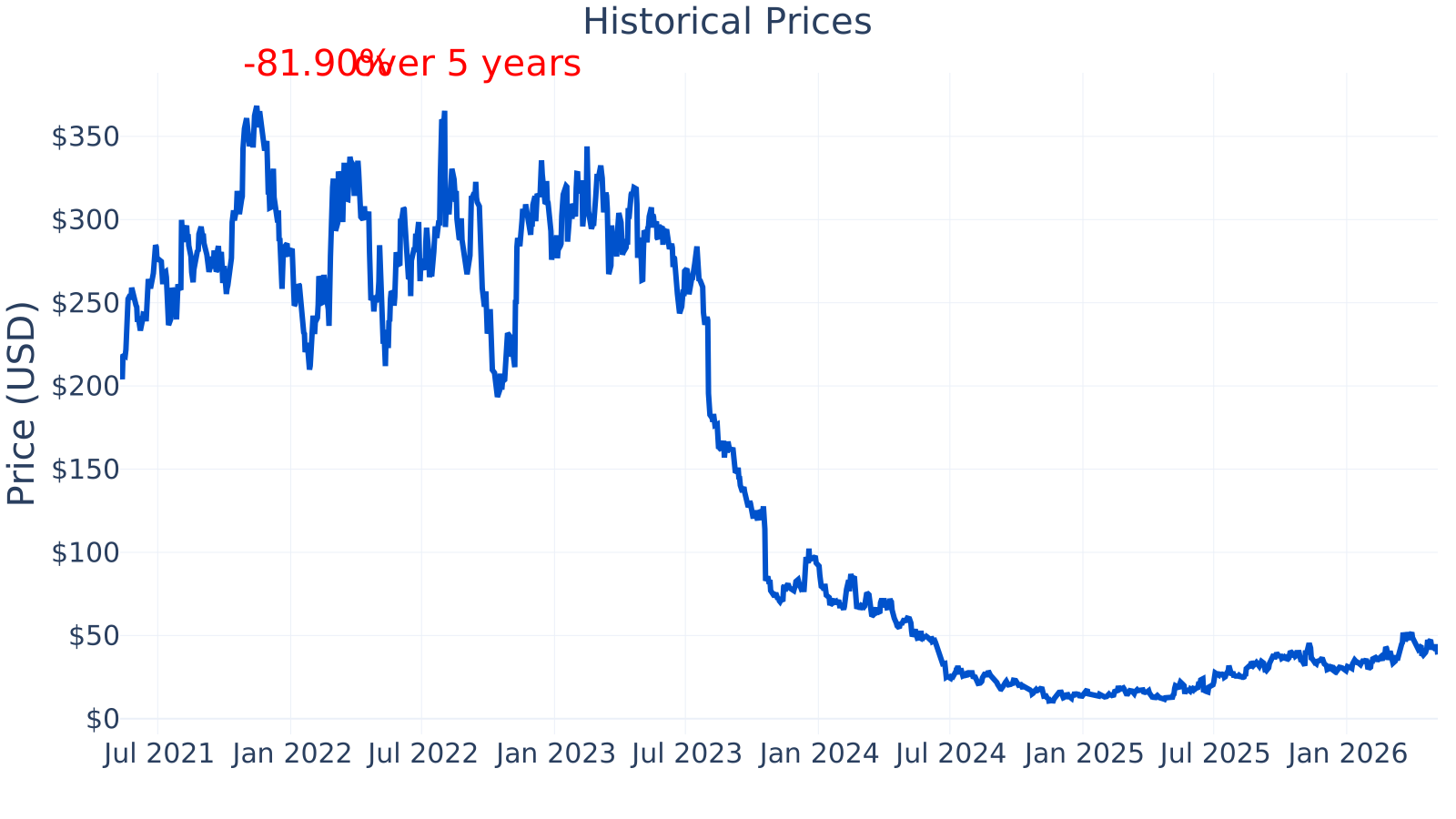
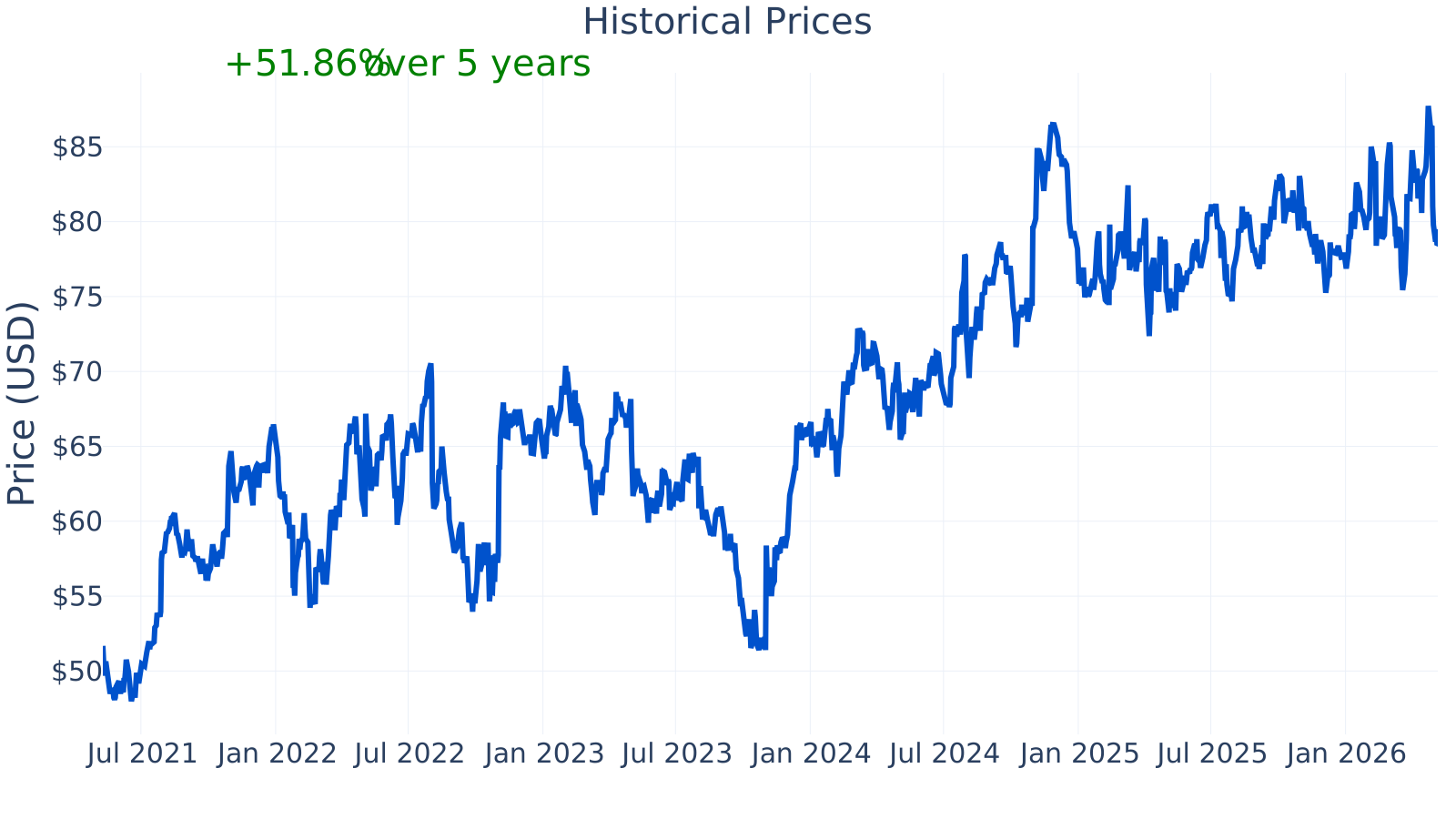
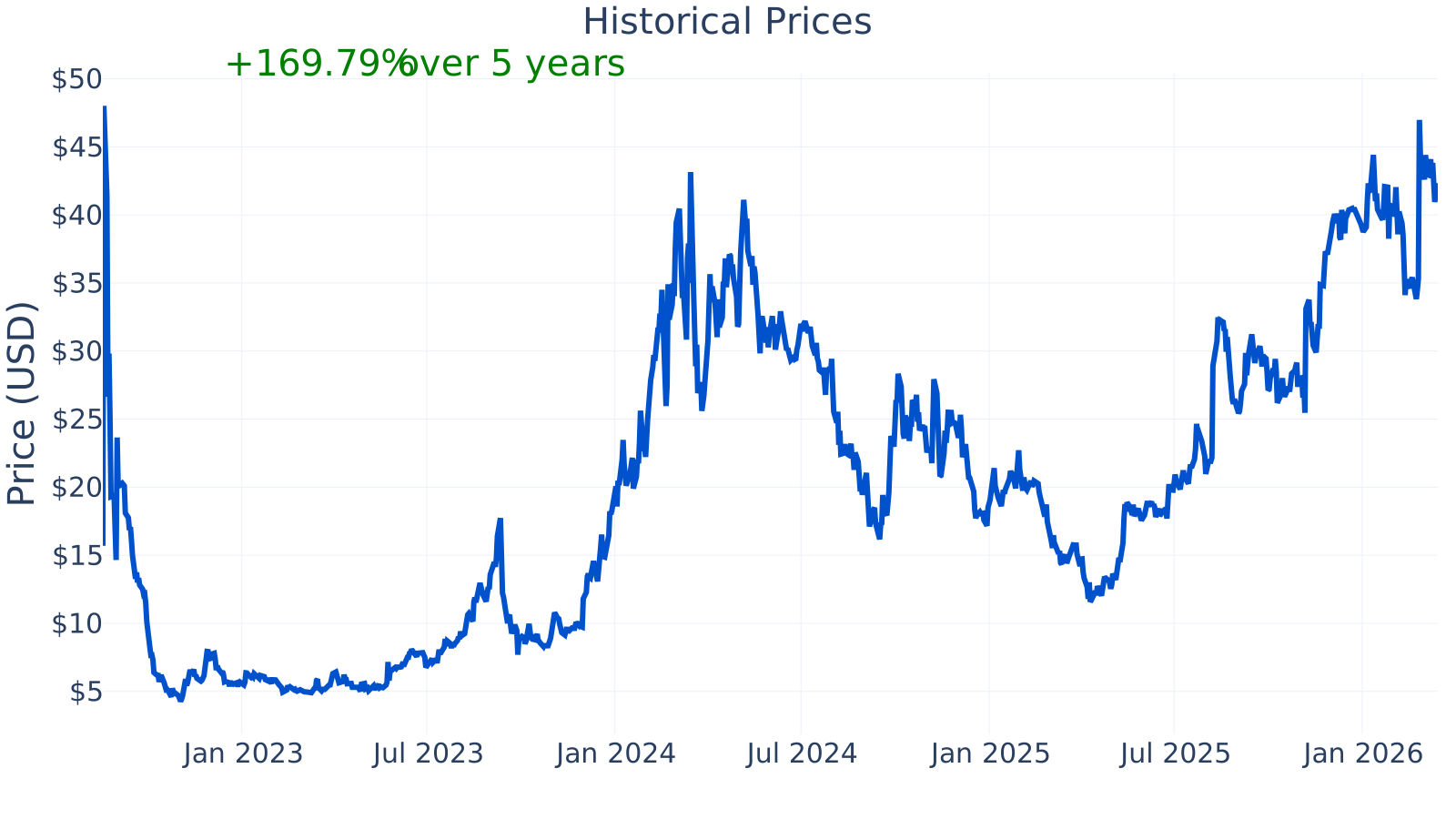
Third, the company’s volatility is not only operational but also visible in the stock’s historical movement (consistent with the higher beta). Price swings can be amplified for smaller companies and for businesses where growth expectations change quickly.
The leverage trend is elevated versus the industry median across the full period shown. Debt-to-equity rose above 100% in late 2023 and remained high through 2024 before declining to about 96.6% most recently. Higher leverage can increase financial risk, especially if the company faces a downturn, needs additional working capital, or experiences margin pressure.
Profit margin improved markedly from about 3.65% (2022) to double digits across 2023–2025, ending around 10.65%. Over much of this period, the company’s margin is also above the industry median shown. That said, margins dipped from peak levels (around the mid-teens in late 2023) and then stabilized around ~10–11% in 2024–2025, which suggests profitability may be sensitive to pricing, cost control, and the pace of growth.
On competition, the company operates in a broad landscape that includes:
- General B2B e-commerce and marketplace providers (platforms that connect business buyers and sellers)
- Logistics and fulfillment providers (companies that specialize in freight, warehousing, and last-mile delivery)
- Retailers and large distributors building in-house supply-chain capabilities (insourcing parts of sourcing and delivery)
GigaCloud’s potential competitive advantage comes from combining a marketplace workflow with services tailored to oversized items. However, leadership position is difficult to determine from high-level metrics alone; it typically requires reviewing management discussion in filings (market positioning, customer retention, supplier base) and watching whether the platform continues to scale while maintaining service quality and margins.
Valuation
The stock’s current P/E ratio is about 11.41, which is below the industry median shown in the table (about 27.17). Historically, the P/E values displayed here have generally stayed in a relatively low double-digit range, and in the periods where an industry median is shown, GigaCloud’s P/E is consistently below that median.
Interpreting this valuation requires context. A lower P/E can reflect the market assigning higher risk to the business model (for example, cyclicality, execution risk, or leverage). It can also reflect expectations that growth rates will normalize, which aligns with the slowdown seen in 2025 compared with the earlier surge. On the other hand, the company is currently profitable, has generated substantial free cash flow, and shows margins above the industry median in this snapshot—factors that can support valuation, depending on whether they prove durable over a full business cycle.
Conclusion
GigaCloud Technology Inc. operates a B2B platform focused on sourcing and moving bulky products, blending marketplace activity with logistics-oriented services. Financially, the company has scaled revenue sharply over the past several years, expanded net income, and increased free cash flow. Profit margins are in the low double digits and have been above the industry median shown, while revenue growth has moderated after an exceptionally strong period.
The main trade-offs visible from the fundamentals are: (1) strong profitability and cash generation versus (2) higher balance-sheet leverage than the industry median and a business model exposed to logistics costs and execution complexity. The valuation metrics shown (including a P/E below the industry median) indicate the market is not valuing the company like a typical high-multiple software peer, which may reflect these risks and the more operationally intensive nature of the model.
Sources:
- U.S. Securities and Exchange Commission (SEC) EDGAR — GigaCloud Technology Inc. filings (Form 10-K, Form 10-Q, Form 8-K)
- GigaCloud Technology Inc. — Investor Relations materials and press releases (company website)
- Wikipedia — “GigaCloud Technology” (basic company background)
This article is for informational purposes only and does not constitute financial advice. Some content is AI-generated. See Disclaimer