Stock Analysis · GigaCloud Technology Inc (GCT)
Overview
GigaCloud Technology Inc. (GCT) operates a business-to-business (B2B) marketplace designed to connect manufacturers (often overseas) with resellers and other business buyers. In simple terms, it helps large, bulky products (such as furniture and similar categories) move from producers to buyers by combining online ordering with logistics services that handle storage and shipping.
The company’s model blends “software-like” marketplace features (search, discovery, ordering, payments) with operational capabilities (warehousing and fulfillment). This combination aims to reduce friction for businesses that need to source items in volume and reliably deliver them to end customers.
Main revenue streams and mix can change over time, and the clearest breakdown is typically described in the company’s SEC filings. At a high level, revenue is generally associated with (1) product sales through the marketplace and (2) service revenue related to logistics and related services. Percentages by line item should be taken from the most recent annual report/10-K segment and revenue note disclosures.
From 2021 to 2024, total revenue expanded materially (about $414.2M to about $1.161B). Over the same period, gross profit grew (about $89.6M to about $285.2M) and net income increased (about $29.3M to about $125.8M). Operating expenses also rose as the business scaled, including higher selling, general and administrative costs and increasing R&D from a very low base.
Key Figures
| Metric | Value | Industry ⓘ |
|---|---|---|
| Date | Feb 08, 2026 | |
| Context | ||
| Sector | Technology | |
| Industry | Software - Infrastructure | |
| Market Cap ⓘ | $1.52B | |
| Beta ⓘ | 2.27 | |
| Fundamental | ||
| P/E Ratio ⓘ | 12.16 | 25.67 |
| Profit Margin ⓘ | 10.62% | 6.91% |
| Revenue Growth ⓘ | 9.70% | 15.20% |
| Debt to Equity ⓘ | 101.02% | 19.82% |
| PEG ⓘ | 0.37 | |
| Free Cash Flow ⓘ | $188.05M | |
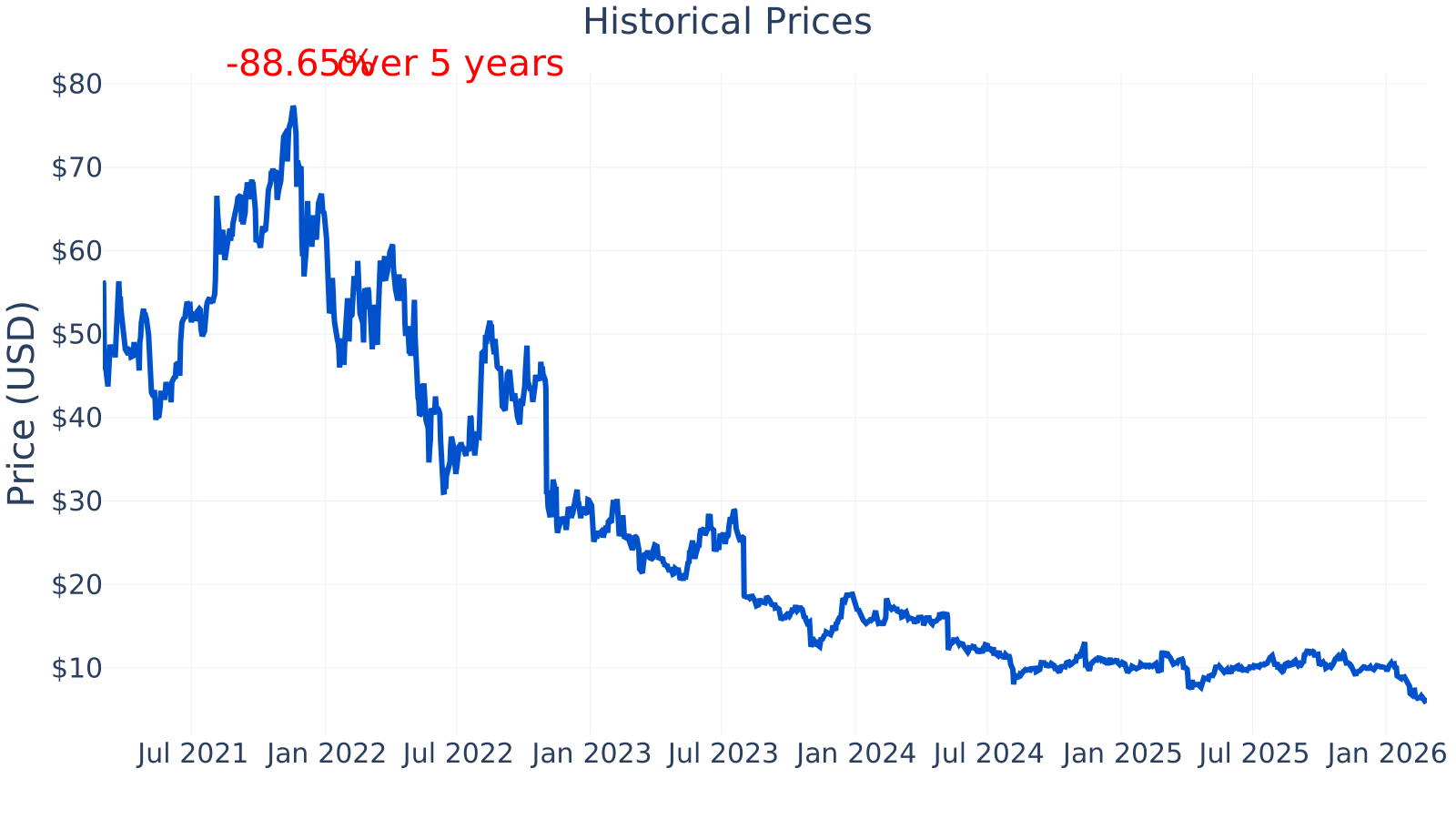
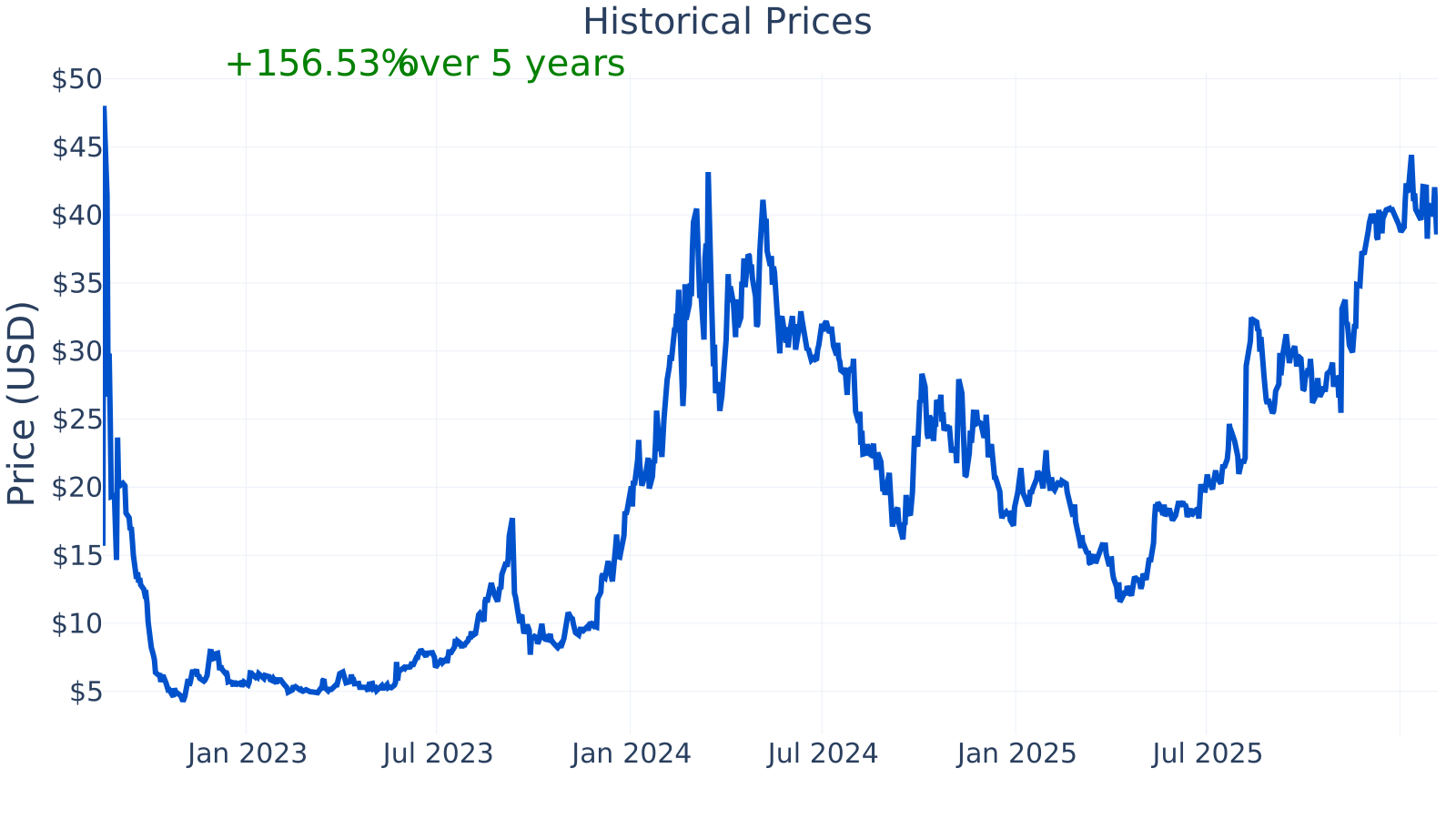
At the latest point shown, the company’s market capitalization is about $1.52B. The stock’s beta of about 2.27 signals that it has historically moved more than the broader market (higher volatility).
Profit margin is about 10.62%, above the industry median shown (about 6.91%). Revenue growth year-over-year is about 9.70%, below the industry median shown (about 15.20%), indicating growth has recently been slower than the typical company in its listed industry group.
Debt-to-equity is about 101% versus an industry median near 20%, showing substantially higher leverage than peers on this measure. Free cash flow (TTM) is about $188.1M, indicating the business has recently generated meaningful cash after operating costs and capital spending.
Growth (Medium)
GigaCloud is positioned in a part of commerce where businesses increasingly expect online sourcing, broader supplier access, and more reliable fulfillment—especially for large items where logistics complexity is a major barrier. The long-term opportunity depends on whether the company can keep adding suppliers and buyers (a “network effect” dynamic), expand categories, and improve unit economics as volume grows.
The revenue growth profile shown is notable: year-over-year revenue growth surged through 2023–2024 (reaching very high rates), then cooled substantially in 2025 (single-digit to low double-digit levels in the most recent points shown). For long-term business quality, the key question is whether this slowdown reflects normalizing after a rapid expansion phase, tougher comparisons, demand variability, or increased competition.
Free cash flow (TTM) rose from about $59.1M (2022) to about $138.3M (2025), and the latest value shown is about $188.1M. If sustained, positive and growing cash generation can provide flexibility to invest in logistics capacity, technology, and customer acquisition, while also helping the company navigate cyclical demand periods.
Potential catalysts typically discussed in company communications and filings for a marketplace-and-fulfillment model include expansion of product categories, new warehouse capacity or efficiency improvements, onboarding more sellers/buyers, and deeper penetration of existing customer accounts. Confirmation of progress usually appears in quarterly filings through revenue, margins, repeat customer metrics (if disclosed), and cash flow trends.
Risks (High)
This article is for informational purposes only and does not constitute financial advice. Some content is AI-generated. See Disclaimer