Stock Analysis · Dlocal Ltd (DLO)
Overview
Dlocal Ltd (DLO) provides cross-border payment services that help global companies collect money from customers and pay out funds to sellers, contractors, and partners in emerging markets. In simple terms, it acts as a specialized “payments bridge” between international merchants and local payment methods (such as local bank transfers, cards, and alternative payment options), while also handling parts of the complexity around settlement, currency, and payment processing.
The company’s business model is typically transaction-driven: when a client processes payments through Dlocal’s platform, Dlocal earns fees that are generally tied to payment volume and the mix of services used (for example, collecting payments vs. sending payouts, and value-added services). This structure means revenue tends to rise when clients expand in the geographies Dlocal supports, or when more payment flows shift to digital channels.
Public filings generally describe revenue as coming primarily from payment processing and related services. A simple way to think about the main revenue drivers is:
- Transaction and processing fees (the core revenue stream tied to payment volumes)
- Value-added payment services (additional features and services around collections/payouts)
- Other related service revenue (smaller, depending on product mix and accounting categories used in filings)
Over time, Dlocal’s income statement shows a growing scale of operations, with revenue expanding meaningfully from 2021 to 2024, while costs and operating expenses also increased as the company invested in growth.
From 2021 to 2024, total revenue rose from about $244M to about $746M. Over the same period, gross profit also increased (about $130M to about $295M), indicating that the business scaled, although the gap between revenue growth and profit growth narrowed as operating costs and other expenses rose.
Key Figures
| Metric | Value | Industry ⓘ |
|---|---|---|
| Date | Feb 08, 2026 | |
| Context | ||
| Sector | Technology | |
| Industry | Software - Infrastructure | |
| Market Cap ⓘ | $3.88B | |
| Beta ⓘ | 1.10 | |
| Fundamental | ||
| P/E Ratio ⓘ | 23.54 | 25.66 |
| Profit Margin ⓘ | 17.80% | 6.68% |
| Revenue Growth ⓘ | 52.10% | 15.20% |
| Debt to Equity ⓘ | 0.74% | 19.82% |
| PEG ⓘ | N/A | |
| Free Cash Flow ⓘ | $157.32M | |
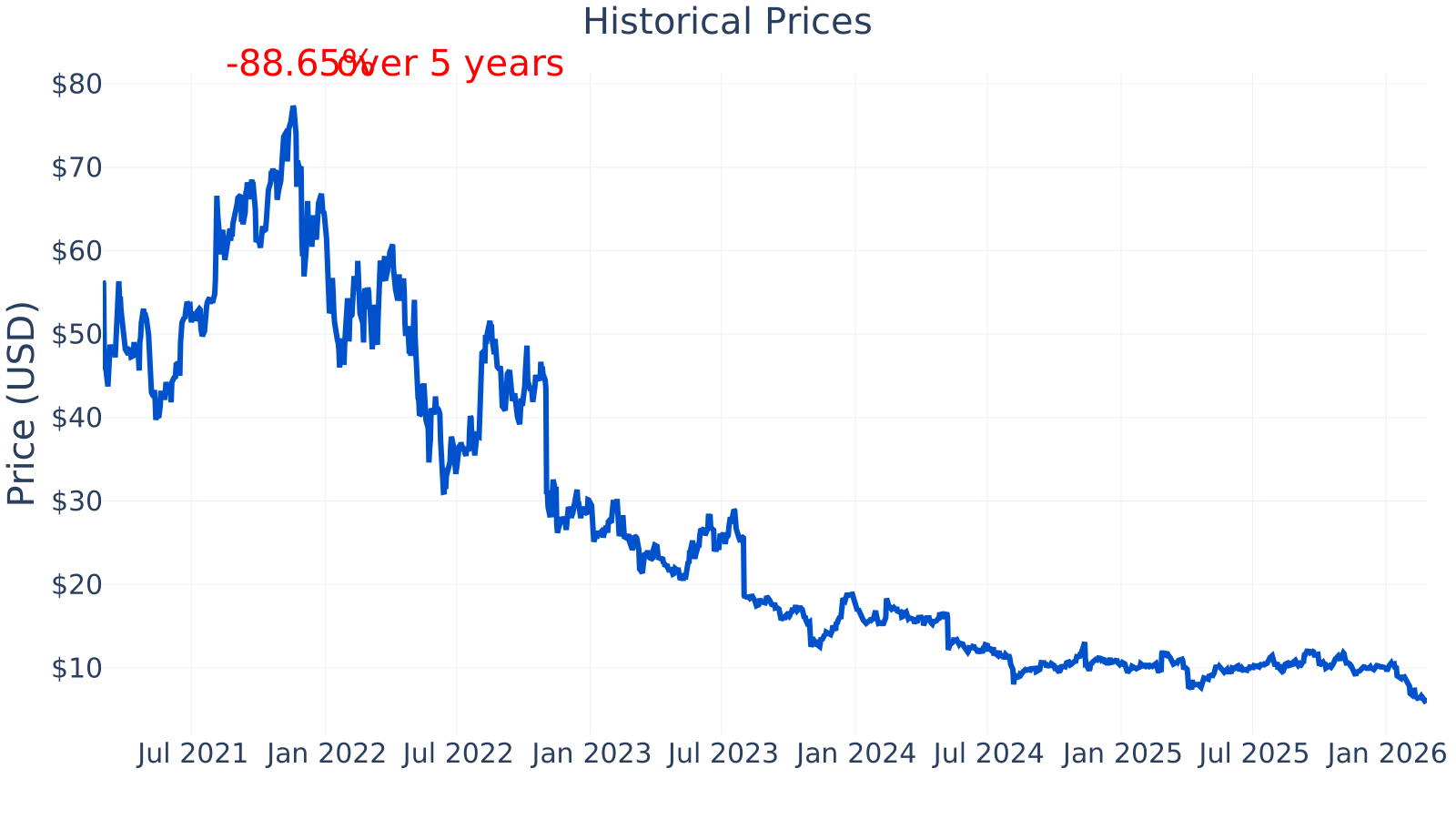
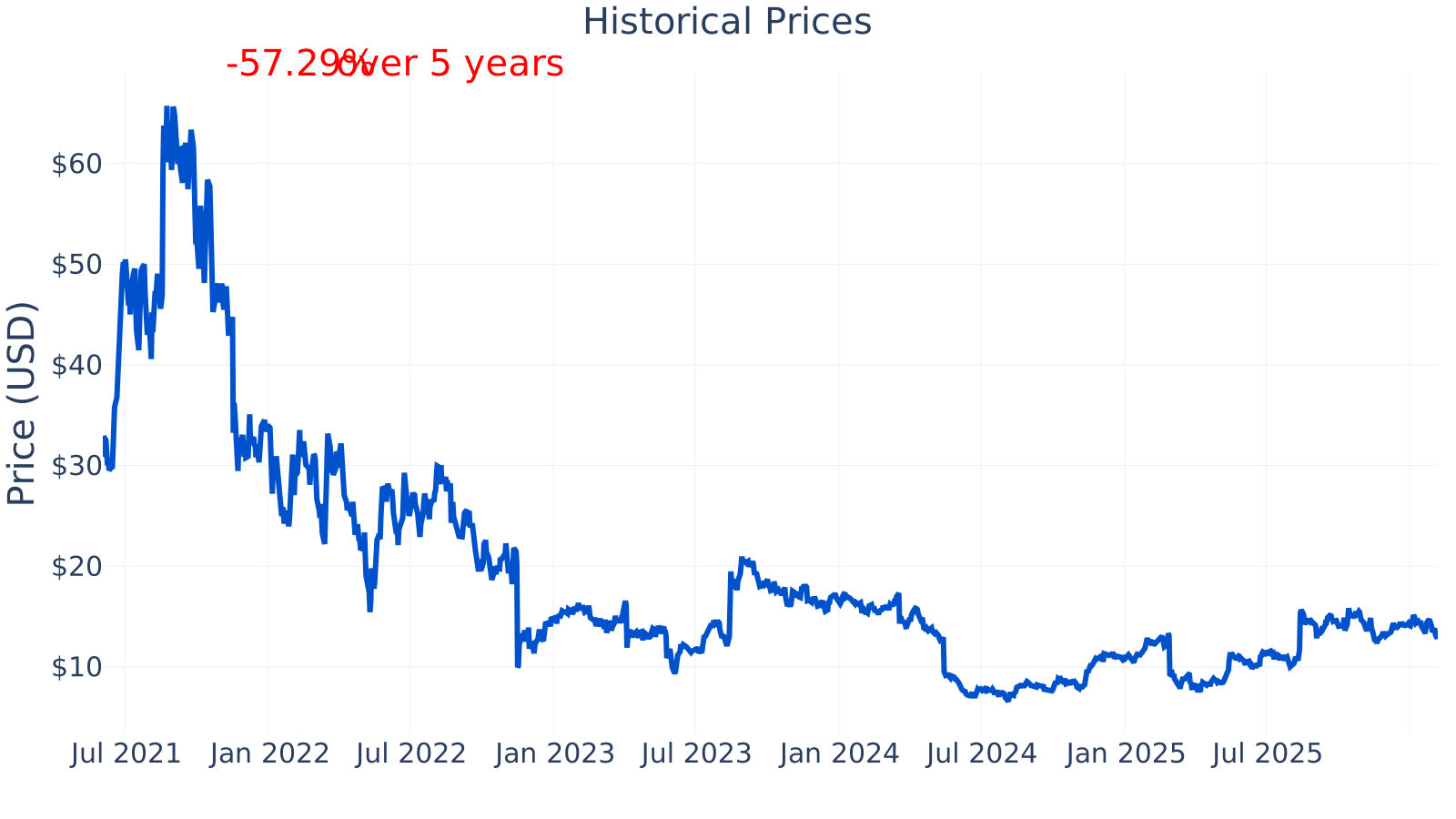
Dlocal’s market capitalization is about $3.88B, placing it in the mid-cap range. The stock’s beta (~1.10) suggests it has historically moved somewhat more than the broader market. On profitability, the company’s profit margin is ~17.8%, which is higher than the listed industry median in the table (~6.68%). Recent year-over-year revenue growth is ~52.1%, above the industry median shown (~15.2%). The balance sheet leverage shown here is very low, with debt-to-equity ~0.7% versus an industry median near 19.8%. Trailing twelve-month free cash flow is approximately $157M.
Growth (Medium)
Dlocal operates within the long-term shift from cash to digital payments, particularly in emerging markets where local payment methods can differ widely by country. This backdrop can support continued adoption of payment platforms that simplify expansion for global merchants. The company’s strategy—offering one integration that connects merchants to multiple local rails—targets a real friction point: entering and operating across many markets can be operationally complex, and payment acceptance is often one of the hardest parts to localize.
The revenue growth pattern is uneven but notable. Year-over-year growth was extremely high in 2021–2022, then slowed materially through parts of 2024, and later re-accelerated in 2025 (reaching above 50% in the most recent points shown). For long-term context, this kind of profile can reflect changing comparisons (tougher “base effects”), client concentration effects, pricing/mix changes, and the pace at which new merchants or new geographies ramp up.
Free cash flow expanded from 2021 through 2024 (peaking around $233M on the timeline shown), followed by a sharp decline by 2025 (near breakeven on the timeline shown). Because free cash flow can swing due to working-capital movements (timing of receivables/payables), settlement cycles, and investment levels, the direction over multiple periods often matters more than a single point. Still, a sustained drop—if it persisted—would be important because cash generation helps fund growth and can reduce reliance on external financing.
Potential catalysts (in a factual, non-predictive sense) generally include expanding coverage of local payment methods and countries, deepening relationships with large global merchants, and increasing usage of higher-value services (where revenue per transaction may be higher). Execution quality and risk management are particularly important in cross-border payments, since operational issues can scale quickly with volume.
Risks (High)
This article is for informational purposes only and does not constitute financial advice. Some content is AI-generated. See Disclaimer