Stock Analysis · Ambarella Inc (AMBA)
Overview
Ambarella, Inc. designs semiconductor products (chips) that help devices “see” and understand what is happening around them. In simple terms, its technology is used for turning camera and sensor inputs into usable video and “computer vision” outputs, enabling features such as object detection, scene understanding, and smart video processing. These chips are typically used inside products like security cameras, automotive camera systems, and other embedded vision devices.
Ambarella’s revenue mainly comes from selling chips (and related software/technology) into markets where video processing and on-device AI are important. In its filings, the company discusses revenue by end market rather than a large set of separate product lines, and the mix can shift meaningfully from year to year depending on customer demand cycles.
Main revenue streams (high-level end markets commonly discussed by the company):
- Automotive (advanced driver assistance and in-vehicle camera/AI perception use cases)
- IoT / Security / Smart cameras (video security, smart home/enterprise cameras, and other connected vision devices)
- Other embedded vision (use cases that require efficient video + AI processing at the edge)
Because the precise percentages by end market can change and are not always presented as a simple fixed breakdown in every period, the most reliable way to track the mix is through the company’s latest annual report (Form 10-K) and quarterly updates (Form 10-Q), where management explains which areas grew or declined and why.
Across recent fiscal years, revenue has fluctuated, while operating costs have remained high—especially research and development. The company has continued to spend heavily on engineering (R&D), which is consistent with a strategy focused on building more advanced AI vision chips, but it also means profitability depends on revenue scale improving.
Key Figures
| Metric | Value | Industry ⓘ |
|---|---|---|
| Date | Feb 08, 2026 | |
| Context | ||
| Sector | Technology | |
| Industry | Semiconductor Equipment & Materials | |
| Market Cap ⓘ | $2.74B | |
| Beta ⓘ | 1.94 | |
| Fundamental | ||
| P/E Ratio ⓘ | N/A | 47.44 |
| Profit Margin ⓘ | -21.31% | 9.40% |
| Revenue Growth ⓘ | 31.20% | 9.90% |
| Debt to Equity ⓘ | 2.31% | 20.73% |
| PEG ⓘ | 4.97 | |
| Free Cash Flow ⓘ | $75.87M | |
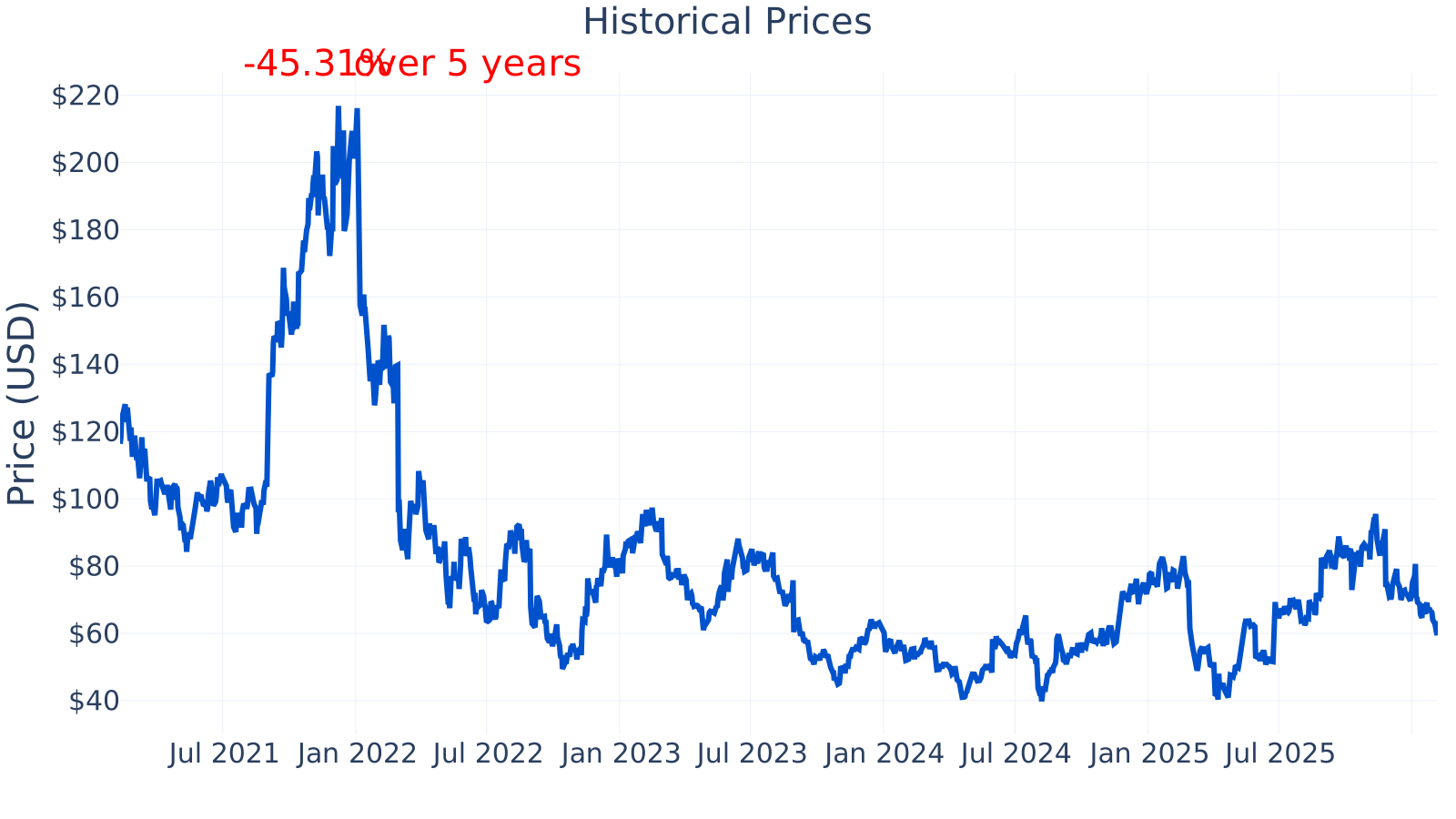
Ambarella’s market capitalization is about $2.7B, and the stock has shown relatively high sensitivity to market movements (beta ~1.94). Recent profitability is negative, with a net profit margin around -21% versus an industry median near +9%, while revenue growth has recently been stronger (~31% year-over-year) than the industry median (~10%). Leverage appears low, with debt-to-equity around 2% versus an industry median near 21%. Free cash flow over the trailing twelve months is positive at roughly $75.9M, which can differ from accounting earnings due to timing effects (working capital, non-cash expenses, and investment patterns).
Growth (Medium)
Ambarella operates in areas tied to long-term themes: more cameras in the world, more onboard processing (doing the “thinking” inside the device instead of sending everything to the cloud), and increasing demand for AI-enabled perception in vehicles and smart infrastructure. These trends can support multi-year demand for higher-performance, energy-efficient vision processors.
The company’s strategy centers on building advanced “edge AI” vision systems-on-chip, where power efficiency and real-time processing matter. If more customers adopt on-device AI (for latency, privacy, bandwidth, and cost reasons), this positioning can be relevant, especially in automotive and security applications where reliability and response time are critical.
Revenue growth has been volatile over the past several years, with a period of contraction followed by a rebound. Most recently, year-over-year growth is positive (about 31%), and several prior quarters show significantly higher growth rates. For long-term business momentum, readers typically watch whether growth becomes steadier and whether it is driven by broader customer adoption rather than a small number of programs.
Free cash flow has remained positive in each of the periods shown, but it has not been linear—dropping sharply around early 2024 before recovering. Consistently positive free cash flow can help fund R&D and reduce reliance on external financing, but sustainability depends on revenue scale, gross margin stability, and operating expense discipline over time.
Risks (High)
This article is for informational purposes only and does not constitute financial advice. Some content is AI-generated. See Disclaimer