Stock Analysis · Aptiv PLC (APTV)
Overview
Aptiv PLC is an automotive technology and components supplier. In simple terms, it helps carmakers build vehicles that are more electrified (power distribution and high-voltage systems), more connected (vehicle computing and communication), and more automated (systems that support driver assistance and, over time, higher levels of automation). Aptiv sells primarily to vehicle manufacturers (OEMs) and, to a lesser extent, to other automotive suppliers.
Its business is commonly described through two main operating segments, which reflect how the company designs, manufactures, and sells products:
- Signal & Power Solutions: wiring harnesses, connectors, electrical distribution systems, and related components that deliver power and data throughout a vehicle (including for electric vehicles).
- Advanced Safety & User Experience: vehicle computing architectures, software, and systems that support advanced driver assistance and in-vehicle user experience.
In many years, a large share of Aptiv’s revenue has historically come from the Signal & Power Solutions segment (because wiring and electrical architecture content is present in every vehicle), while Advanced Safety & User Experience is typically smaller but tied to newer electronics and software content. Percentages by segment and by customer/geography are disclosed in Aptiv’s annual report filings.
Across the years shown, total revenue rises from about $15.6B (2021) to about $20.4B (2025). Over the same period, the cost of revenue remains the largest expense line, which is typical for a manufacturing-heavy supplier. Operating income is positive each year shown, but net income is notably volatile—highlighting that items below operating profit (such as taxes and other non-operating effects) can materially change the bottom line from year to year.
Key Figures
| Metric | Value | Industry ⓘ |
|---|---|---|
| Date | Feb 07, 2026 | |
| Context | ||
| Sector | Consumer Cyclical | |
| Industry | Auto Parts | |
| Market Cap ⓘ | $17.94B | |
| Beta ⓘ | 1.50 | |
| Fundamental | ||
| P/E Ratio ⓘ | 109.84 | 25.56 |
| Profit Margin ⓘ | 0.81% | 3.38% |
| Revenue Growth ⓘ | 5.00% | 4.95% |
| Debt to Equity ⓘ | 85.42% | 66.87% |
| PEG ⓘ | 0.93 | |
| Free Cash Flow ⓘ | $1.53B | |
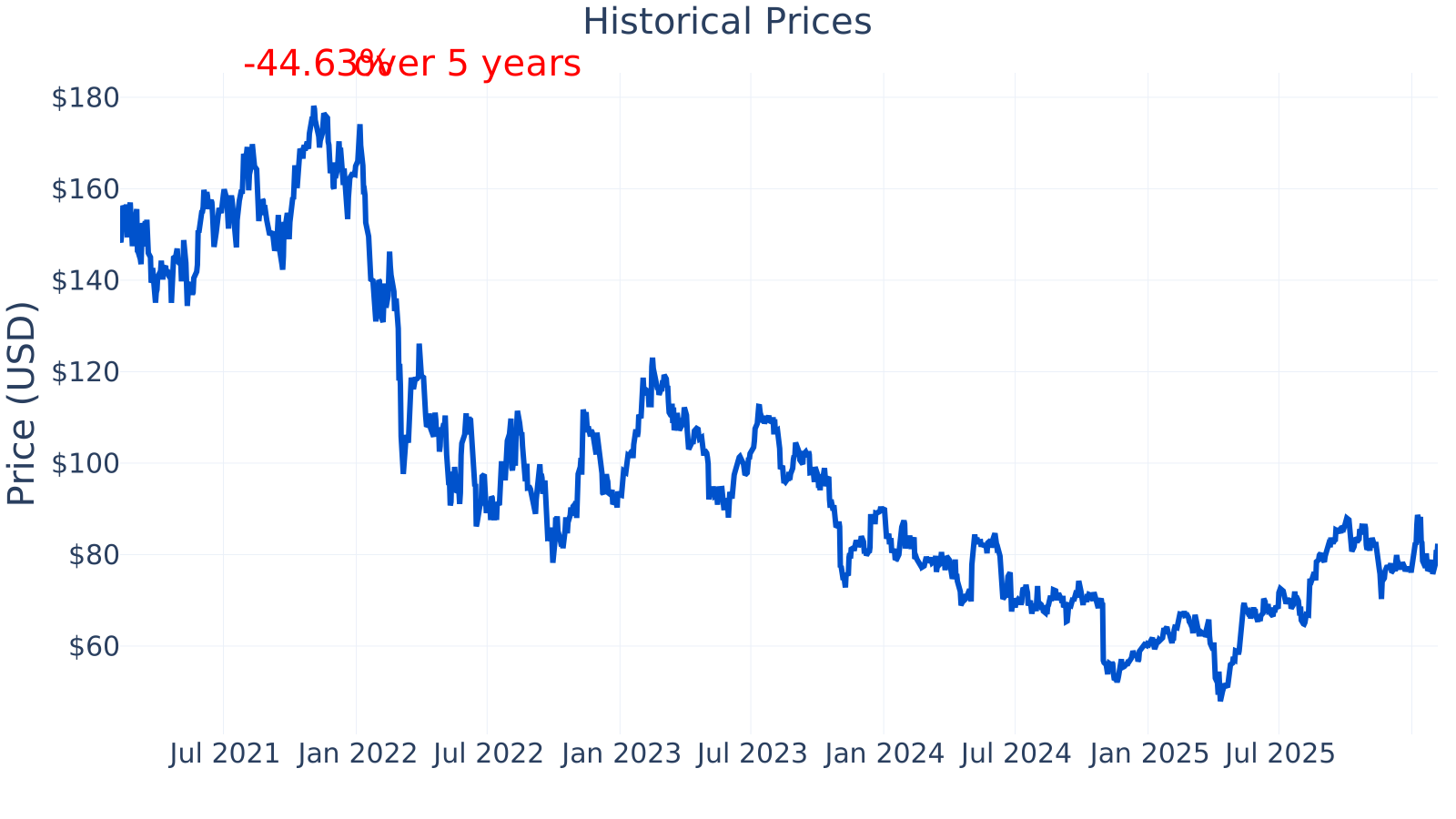
Aptiv’s market capitalization is about $17.9B, and its beta of about 1.5 suggests the stock has tended to move more than the broader market. The P/E ratio shown (about 109.8) is far above the industry median (about 25.6), which usually happens when reported earnings are temporarily low relative to the share price. Profit margin is about 0.8% versus an industry median around 3.4%, pointing to weaker recent profitability than many peers. Year-over-year revenue growth is about 5.0%, roughly in line with the industry median. Debt-to-equity is about 85% versus an industry median around 67%, indicating higher leverage than the typical peer. Free cash flow over the trailing period is about $1.53B, which is an important counterpoint because cash generation can differ from accounting earnings.
Growth (Medium)
Aptiv operates in a part of the auto industry that is being reshaped by long-running trends: electrification (more high-voltage content and more complex electrical architectures), increasing electronics content per vehicle, and the shift toward centralized vehicle computing platforms. These trends can raise the value of electrical distribution, connectors, and computing architecture—areas where Aptiv has established product lines and long-standing relationships with major automakers.
The year-over-year revenue growth pattern is uneven. After very strong growth in parts of 2021 (a period affected by comparisons to earlier, weaker periods), growth normalizes and then turns modestly negative through parts of 2024 and early 2025 before returning to positive territory later in 2025 (about 5.0% most recently). For a supplier tied to global vehicle production, this kind of stop-and-go pattern is common because automaker build schedules and model ramps can fluctuate.
Free cash flow improves materially over the period shown: from roughly $991M (2021) down sharply in 2022 (about $44M), then recovering to about $590M (2023), about $1.25B (2024), and about $1.71B (2025). For long-term business durability, sustained cash generation matters because it supports investment in engineering, tooling, and manufacturing capacity while also helping manage debt. The sharp swing from 2022 to later years also indicates that cash flow can be sensitive to industry conditions and working-capital needs.
Potential catalysts described in company disclosures typically include higher electronic and electrified content per vehicle, platform wins with automakers that scale over multiple model years, and continuing product transitions toward higher-value architectures. Because vehicle programs often run for years, new program launches can influence revenue and profitability over long time horizons rather than quarter-to-quarter.
Risks (High)
Aptiv’s results are closely linked to global vehicle production volumes and automaker demand. If auto production slows, or if specific customers reduce builds, suppliers can see quick pressure on revenue and plant utilization. In addition, the company operates in a highly competitive supply chain with ongoing pricing pressure, and it must continuously meet strict quality and delivery requirements.
Leverage has risen compared with the earlier part of the period shown. Debt-to-equity moves from roughly the mid-50% range in 2021 to the mid-80% range most recently (about 85%), and it spiked above 100% during parts of 2024. Higher leverage can reduce flexibility during downturns because interest costs and refinancing needs become more important when the business cycle weakens.
Profitability shows significant volatility. After very strong margins during parts of 2023–2024 (well above the industry median in those quarters), the most recent value falls to about 0.8%, below the industry median around 3.4%. This kind of swing can happen due to mix changes, pricing and cost dynamics, restructuring, one-time items, and other factors disclosed in filings. For long-term analysis, it is important to understand whether margin pressure is temporary (cycle and specific items) or structural (competitive intensity and cost position).
In terms of competitive advantages, Aptiv benefits from scale, global manufacturing footprint, deep integration into customer vehicle platforms, and engineering expertise in electrical architecture and vehicle computing. However, it is not operating in a winner-take-all market. Many products are competed program by program, and automakers often dual-source components to reduce risk and increase bargaining power.
Competition comes from large global automotive suppliers across wiring/electrical distribution and electronics/ADAS-related areas. Depending on the product line, peers may include major diversified suppliers and specialized electronics providers. Aptiv’s positioning is that of a large, established Tier 1 supplier with broad capabilities, but it faces strong rivals with comparable scale in adjacent categories and frequent price-based competition during contract awards.
Valuation
The P/E ratio has moved dramatically over time and is currently shown at about 109.8, well above the industry median (about 25.6). A very high P/E often signals that earnings are currently depressed (so the “E” in P/E is small), that the market expects a rebound in profitability, or that reported earnings include items that reduce net income even if the core business remains cash-generative.
Because Aptiv’s recent profit margin is low (about 0.8%) while free cash flow remains substantial (about $1.53B trailing), a single valuation measure like P/E may be less informative than a broader view that also considers cash flow, normalized margins across an auto cycle, and balance-sheet risk (including the higher debt-to-equity level). In other words, the current valuation signals are mixed: the earnings-based multiple looks elevated relative to peers, while cash generation and longer-term industry themes can support a different interpretation—depending on whether profitability normalizes and how stable demand remains.
Conclusion
Aptiv is a major automotive supplier positioned around electrification and the increasing role of electronics and computing in vehicles. Those themes can support long-term demand for its products, and the company has shown strong cash generation in the most recent years shown after a weak 2022.
At the same time, the business carries meaningful cyclical and execution risk: results can swing with global auto production, leverage is higher than the industry median, and profitability has been volatile—ending most recently at a low level versus peers. Valuation signals also require care: the very high P/E suggests that current earnings are not representative of a steadier profitability level, so understanding what drove the latest net income and whether margins can stabilize is central to interpreting the stock’s current pricing.
Sources:
- Aptiv PLC — Annual Report on Form 10-K (SEC EDGAR)
- Aptiv PLC — Quarterly Reports on Form 10-Q (SEC EDGAR)
- Aptiv PLC — Investor Relations materials and press releases (company website)
- Wikipedia — “Aptiv” (company background information)
This article is for informational purposes only and does not constitute financial advice. Some content is AI-generated. See Disclaimer


