Stock Analysis · Aptiv PLC (APTV)
Overview
Aptiv PLC is an automotive technology and components supplier. In simple terms, it helps carmakers build vehicles that are more electrified (power distribution and high-voltage systems), more connected (vehicle computing and communication), and more automated (systems that support driver assistance and, over time, higher levels of automation). Aptiv sells primarily to vehicle manufacturers (OEMs) and, to a lesser extent, to other automotive suppliers.
Its business is commonly described through two main operating segments, which reflect how the company designs, manufactures, and sells products:
- Signal & Power Solutions: wiring harnesses, connectors, electrical distribution systems, and related components that deliver power and data throughout a vehicle (including for electric vehicles).
- Advanced Safety & User Experience: vehicle computing architectures, software, and systems that support advanced driver assistance and in-vehicle user experience.
In many years, a large share of Aptiv’s revenue has historically come from the Signal & Power Solutions segment (because wiring and electrical architecture content is present in every vehicle), while Advanced Safety & User Experience is typically smaller but tied to newer electronics and software content. Percentages by segment and by customer/geography are disclosed in Aptiv’s annual report filings.
Across the years shown, total revenue rises from about $15.6B (2021) to about $20.4B (2025). Over the same period, the cost of revenue remains the largest expense line, which is typical for a manufacturing-heavy supplier. Operating income is positive each year shown, but net income is notably volatile—highlighting that items below operating profit (such as taxes and other non-operating effects) can materially change the bottom line from year to year.
Key Figures
| Metric | Value | Industry ⓘ |
|---|---|---|
| Date | Feb 07, 2026 | |
| Context | ||
| Sector | Consumer Cyclical | |
| Industry | Auto Parts | |
| Market Cap ⓘ | $17.94B | |
| Beta ⓘ | 1.50 | |
| Fundamental | ||
| P/E Ratio ⓘ | 109.84 | 25.56 |
| Profit Margin ⓘ | 0.81% | 3.38% |
| Revenue Growth ⓘ | 5.00% | 4.95% |
| Debt to Equity ⓘ | 85.42% | 66.87% |
| PEG ⓘ | 0.93 | |
| Free Cash Flow ⓘ | $1.53B | |
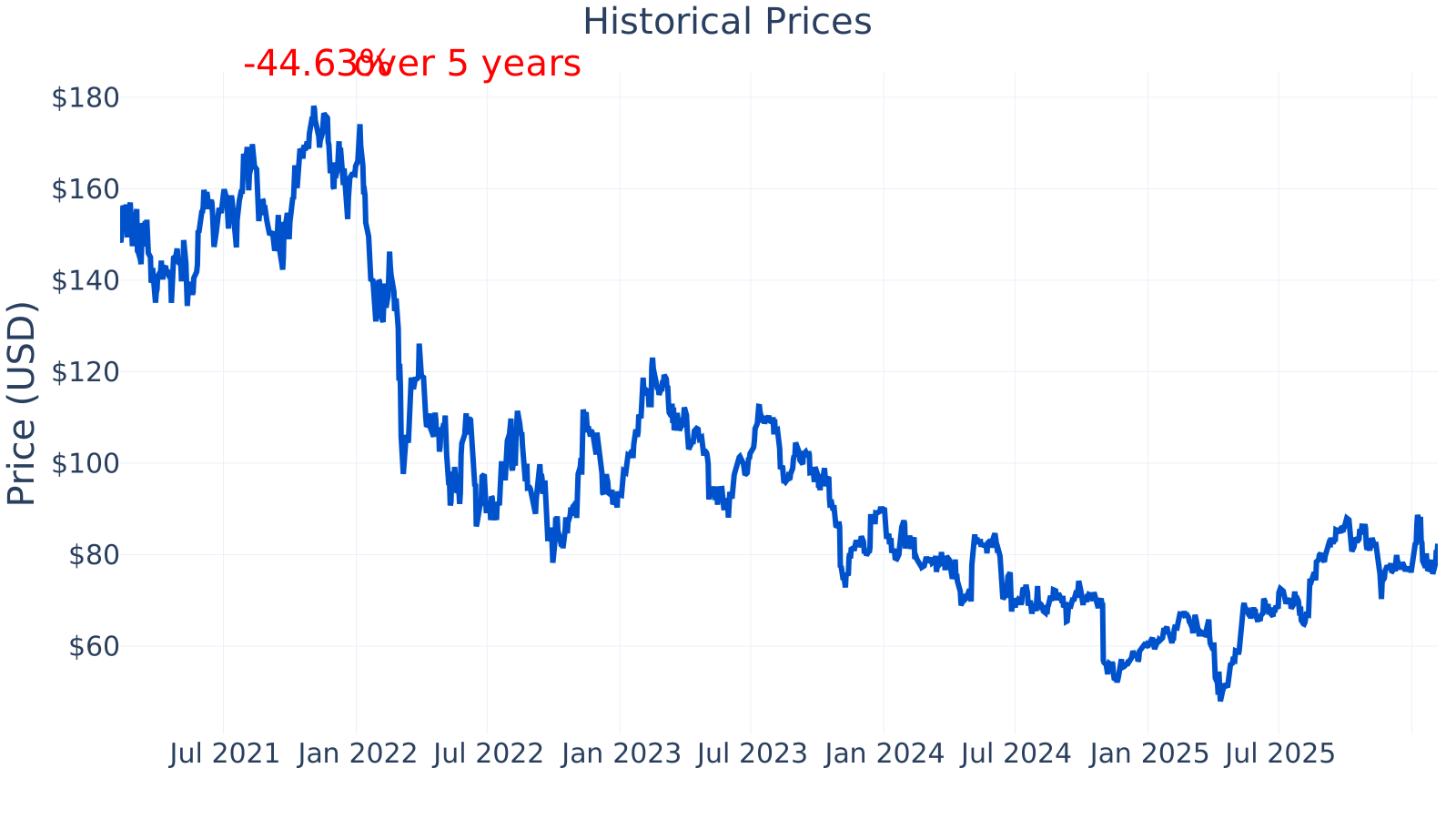
Aptiv’s market capitalization is about $17.9B, and its beta of about 1.5 suggests the stock has tended to move more than the broader market. The P/E ratio shown (about 109.8) is far above the industry median (about 25.6), which usually happens when reported earnings are temporarily low relative to the share price. Profit margin is about 0.8% versus an industry median around 3.4%, pointing to weaker recent profitability than many peers. Year-over-year revenue growth is about 5.0%, roughly in line with the industry median. Debt-to-equity is about 85% versus an industry median around 67%, indicating higher leverage than the typical peer. Free cash flow over the trailing period is about $1.53B, which is an important counterpoint because cash generation can differ from accounting earnings.
Growth (Medium)
Aptiv operates in a part of the auto industry that is being reshaped by long-running trends: electrification (more high-voltage content and more complex electrical architectures), increasing electronics content per vehicle, and the shift toward centralized vehicle computing platforms. These trends can raise the value of electrical distribution, connectors, and computing architecture—areas where Aptiv has established product lines and long-standing relationships with major automakers.
The year-over-year revenue growth pattern is uneven. After very strong growth in parts of 2021 (a period affected by comparisons to earlier, weaker periods), growth normalizes and then turns modestly negative through parts of 2024 and early 2025 before returning to positive territory later in 2025 (about 5.0% most recently). For a supplier tied to global vehicle production, this kind of stop-and-go pattern is common because automaker build schedules and model ramps can fluctuate.
Free cash flow improves materially over the period shown: from roughly $991M (2021) down sharply in 2022 (about $44M), then recovering to about $590M (2023), about $1.25B (2024), and about $1.71B (2025). For long-term business durability, sustained cash generation matters because it supports investment in engineering, tooling, and manufacturing capacity while also helping manage debt. The sharp swing from 2022 to later years also indicates that cash flow can be sensitive to industry conditions and working-capital needs.
Potential catalysts described in company disclosures typically include higher electronic and electrified content per vehicle, platform wins with automakers that scale over multiple model years, and continuing product transitions toward higher-value architectures. Because vehicle programs often run for years, new program launches can influence revenue and profitability over long time horizons rather than quarter-to-quarter.
Risks (High)
This article is for informational purposes only and does not constitute financial advice. Some content is AI-generated. See Disclaimer