Stock Analysis · CLARIVATE PLC (CLVT)
Overview
Clarivate Plc is an information services company that sells software, data, and analytics used to support research, intellectual property (IP), and life-sciences decision-making. In simple terms, it helps organizations find, organize, and use trusted information to make better choices—such as selecting research directions, managing patents and trademarks, or planning clinical and commercial strategies in pharmaceuticals.
Its products are typically sold on subscription-style contracts (often recurring), which can make revenue more predictable than one-time sales. Clarivate reports its business through operating segments that reflect the main ways it serves customers.
Main revenue sources (ordered from largest to smallest) are commonly described at a high level as:
- Life Sciences & Healthcare (data and analytics supporting drug development, evidence generation, and commercialization)
- Intellectual Property (solutions that support patent/trademark workflows, IP searches, and portfolio management)
- Academia & Government (research intelligence and library/workflow tools supporting scientific discovery and evaluation)
Clarivate’s filings provide the official breakdown by operating segment; the exact percentages can vary by year and are best read directly in the latest Form 10-K segment reporting.
From the income statement flow over recent years, revenue appears to have peaked around 2022 and then declined modestly, while net income has remained negative. Interest expense is also a meaningful cost item, which matters when evaluating the business under higher-rate environments.
Key Figures
| Metric | Value | Industry ⓘ |
|---|---|---|
| Date | Feb 08, 2026 | |
| Context | ||
| Sector | Technology | |
| Industry | Information Technology Services | |
| Market Cap ⓘ | $1.45B | |
| Beta ⓘ | 1.54 | |
| Fundamental | ||
| P/E Ratio ⓘ | N/A | 21.42 |
| Profit Margin ⓘ | -15.83% | 4.91% |
| Revenue Growth ⓘ | 0.10% | 6.15% |
| Debt to Equity ⓘ | 91.35% | 54.49% |
| PEG ⓘ | 0.17 | |
| Free Cash Flow ⓘ | $335.20M | |
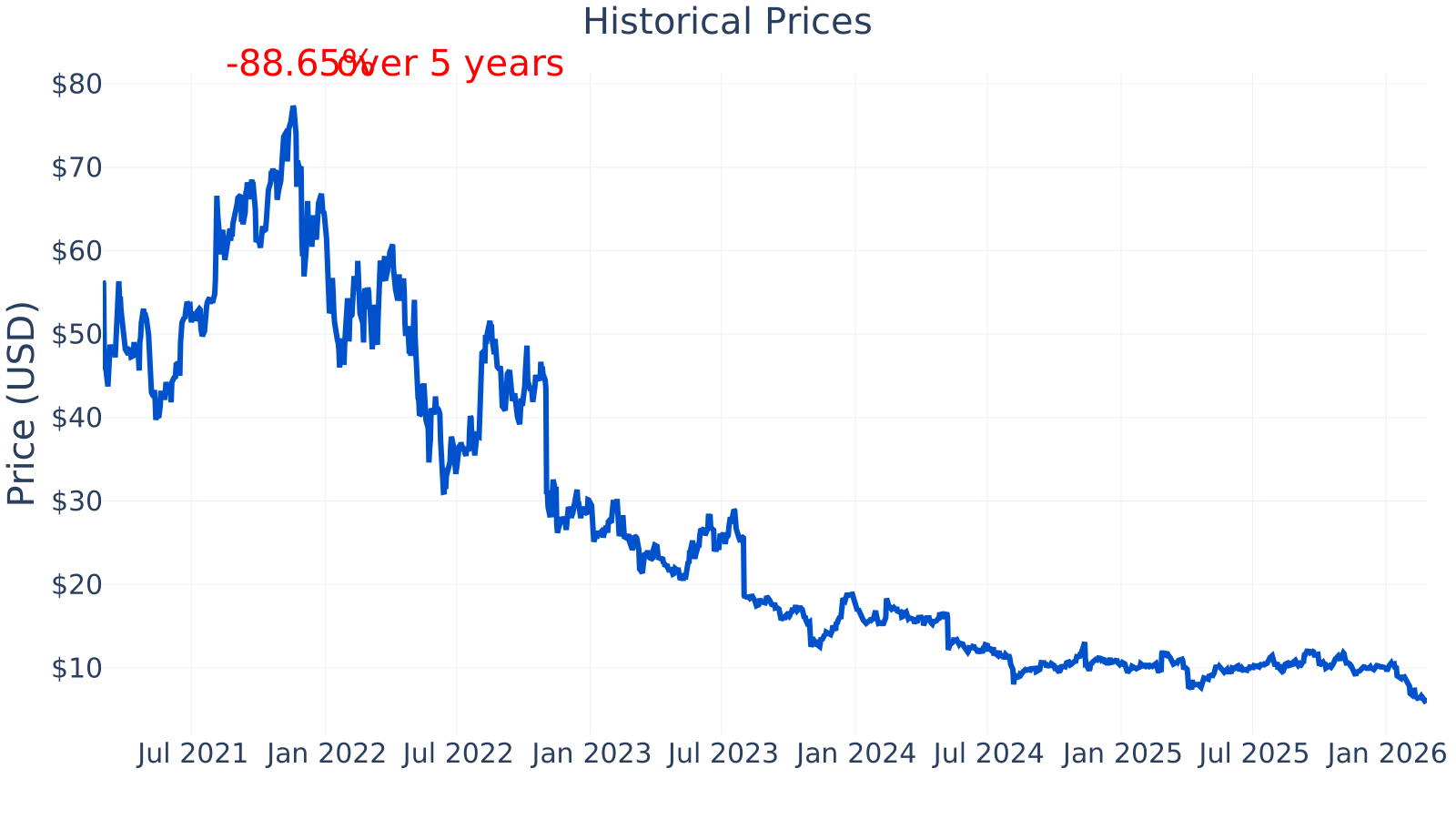
Clarivate’s market capitalization is about $1.45B, placing it in the small-to-mid cap range. The stock’s beta of ~1.54 indicates it has tended to move more than the broader market, which can mean larger swings up or down.
On profitability, the latest profit margin is about -15.8%, versus an industry median around +4.9%, showing the company is currently generating accounting losses while many peers report positive net margins. Revenue growth is roughly 0.1% year over year, below an industry median near 6.2%, which suggests recent top-line growth has been limited relative to peers.
Leverage is also notable: debt-to-equity is ~91% versus an industry median near 54%. At the same time, the company shows positive trailing twelve-month free cash flow of about $335M, highlighting that cash generation can differ from net income (for example, due to non-cash charges such as amortization and impairment).
Growth (Medium)
Clarivate operates in areas with long-term demand drivers: research output continues globally, IP remains central to competitive strategy, and life sciences relies heavily on specialized data and analytics across discovery, trials, regulatory work, and commercialization. These areas tend to reward scaled data assets, embedded workflows, and long-standing customer relationships.
That said, the company’s recent reported growth profile looks more mixed. The year-over-year revenue trend has cooled substantially compared with earlier periods, moving from high growth in 2021–2022 (in part reflecting acquisitions and business changes) to flat-to-slightly negative growth across much of 2023–2025.
The most recent quarter shown is near flat (~0.1% year-over-year), after several quarters of modest declines. For long-term outcomes, a key question is whether Clarivate can return to steadier organic growth through product improvements, retention, pricing, and expansion within existing accounts.
Cash generation is an important supporting element of the longer-term story, particularly given leverage and the need to invest in products.
Free cash flow has remained positive over the periods shown, though it has varied meaningfully year to year (roughly $356M most recently vs. a higher level around $463M in 2023). Sustained free cash flow can help fund debt repayment, restructuring, or targeted investment, but it is still important to compare cash flow stability against revenue trends and profitability.
Potential catalysts in this type of business often include: improved net retention on subscriptions, better cross-selling across segments, product innovation (including workflow automation and AI features), and balance sheet progress (for example, lowering interest burden through repayment or refinancing). Whether these catalysts materialize is typically visible over multiple quarters in filings through organic revenue trends, margin progression, and debt reduction.
Risks (High)
This article is for informational purposes only and does not constitute financial advice. Some content is AI-generated. See Disclaimer