Stock Analysis · Pagaya Technologies Ltd (PGY)
Overview
Pagaya Technologies Ltd (PGY) is a financial technology company that builds and operates an AI-driven platform used in consumer credit. In simple terms, Pagaya works with banks and other lending partners to help them evaluate borrowers, approve more loans that fit their risk rules, and package those loans so long-term capital providers can fund them.
The business sits between two groups: (1) companies that originate loans (for example, lenders offering personal loans, auto loans, or point-of-sale financing) and (2) investors and funding partners that provide capital. Pagaya’s goal is to improve how credit decisions are made and how loans are financed, using data models and automation.
Pagaya’s revenue is primarily tied to its network activity—when loans are originated through partners and then distributed to funding sources. In company reporting, these economics are generally described through items such as fees for facilitating origination and fees connected to funding, securitization, and related program activities. Exact revenue splits by category can change over time and are best read directly from the latest annual report segment and revenue note disclosures.
Commonly described revenue drivers include:
- Fees tied to facilitating loan origination through partners
- Fees and other income connected to funding programs and capital markets execution (for example, packaging loans and placing them with funding providers)
- Other platform-related revenue items (as disclosed in filings)
From 2021 to 2025, total revenue increased from about $446M to about $1.26B. Over the same period, gross profit rose (about $214M to about $512M), and operating income turned positive in 2024–2025 (about $39M and $52M, respectively). Net income was volatile, including large losses in 2022–2024, followed by positive net income in 2025 (about $81M). Interest expense is a meaningful line item across the period.
Key Figures
| Metric | Value | Industry ⓘ |
|---|---|---|
| Date | Feb 13, 2026 | |
| Context | ||
| Sector | Technology | |
| Industry | Software - Infrastructure | |
| Market Cap ⓘ | $996.91M | |
| Beta ⓘ | 5.88 | |
| Fundamental | ||
| P/E Ratio ⓘ | N/A | 25.67 |
| Profit Margin ⓘ | 6.25% | 6.91% |
| Revenue Growth ⓘ | 19.80% | 15.20% |
| Debt to Equity ⓘ | 192.24% | 19.82% |
| PEG ⓘ | 0.03 | |
| Free Cash Flow ⓘ | $183.50M | |
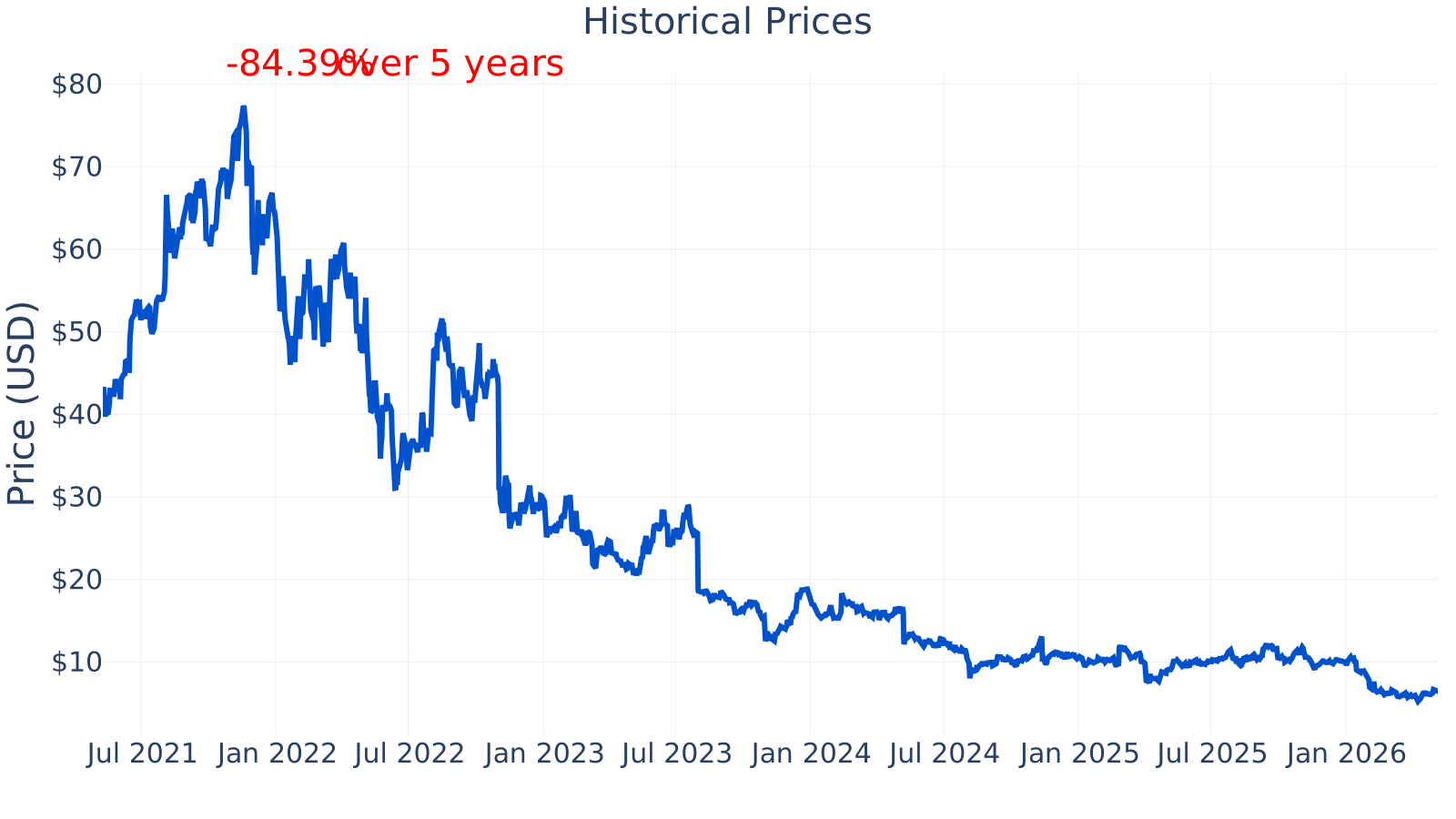
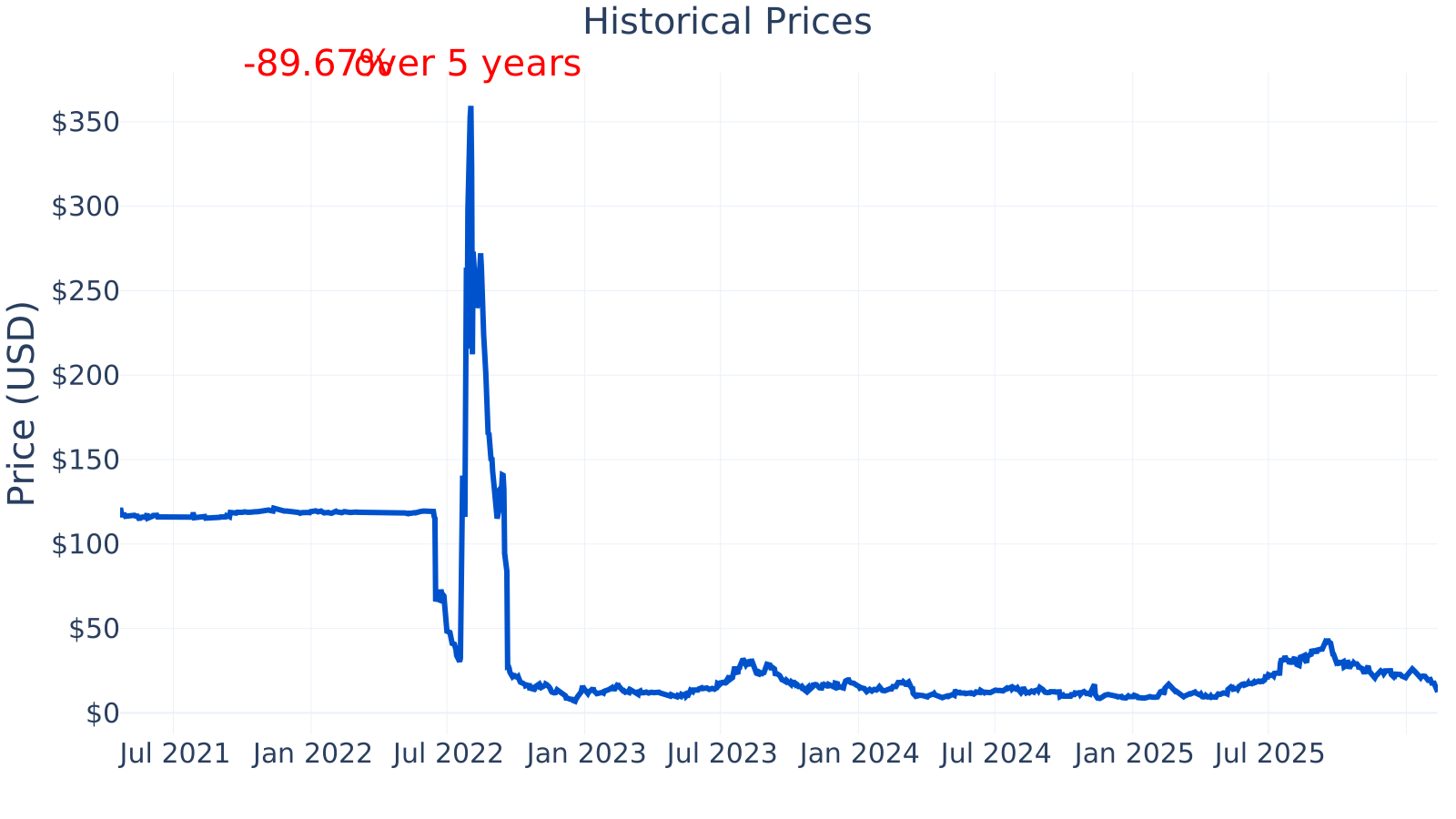
Pagaya’s market capitalization is about $1.0B. The stock’s beta is about 5.88, which indicates the share price has historically moved much more than the broader market. On operating metrics, revenue growth is about 19.8% year over year (above the industry median of about 15.2%). Profit margin is about 6.25% versus an industry median near 6.91%. Debt-to-equity is about 192% versus an industry median near 20%, pointing to significantly higher leverage than many peers. Trailing twelve-month free cash flow is about $183.5M.
Growth (Medium)
Pagaya operates in areas that are structurally supported by long-term trends: digitization of consumer lending, greater use of automated decisioning, and ongoing demand for efficient ways to connect loan originators with diversified funding sources. If these trends continue, platforms that can improve approval rates while managing credit performance and funding access can have room to expand.
Strategy-wise, the company’s growth logic is straightforward: add and deepen relationships with originators, increase the volume of qualified loans that run through its network, and maintain dependable access to capital markets and other funding channels. The more consistent the platform is across credit cycles, the easier it is to scale.
Year-over-year revenue growth has been positive but uneven. It was very high in 2022 (above 70% in some quarters), then moderated into single digits in parts of 2023, and re-accelerated through much of 2024 and 2025 (roughly in the high teens to low 30% range).
Free cash flow has also been volatile, including a negative period in 2023 (about -$87M on a trailing basis), followed by a return to positive territory in 2024 and 2025. The latest value shown is positive (about $183.5M), which can matter for flexibility because it may support funding needs, investment in product development, or balance sheet management.
Potential catalysts discussed in company materials often include expanding partner programs, scaling new lending products or geographies (if applicable), and improved capital markets conditions that support loan funding and securitization volume. In a model like Pagaya’s, the ability to keep funding channels open through changing credit conditions can be a key driver of growth consistency.
Risks (High)
Pagaya’s risk profile is meaningfully shaped by the credit cycle and capital markets. A weaker consumer environment can reduce loan performance, increase funding costs, or make funding partners more cautious—each of which can reduce platform volume and profitability. Even if the company does not hold most loans long-term, its economics and growth can still be sensitive to credit conditions because the platform relies on steady origination and efficient distribution of loans.
Another major risk is financial leverage. Higher leverage can amplify both outcomes and constraints, especially during periods of higher interest rates or tighter funding conditions.
Debt-to-equity increased sharply over time, reaching about 192% in the latest point shown, far above the industry median (about 20%). This gap suggests the balance sheet is more leveraged than many software/infrastructure peers, which can increase sensitivity to earnings volatility and refinancing conditions.
Profitability has also been inconsistent, which is common for companies building scaled platforms but remains important for long-term assessment. Margins can be pressured by funding costs, model performance, partner economics, and operating expense needs.
Profit margin improved from deeply negative levels in 2021–2024 to less negative by 2025 (around -15% in the latest quarter shown), while the industry median moved into positive territory (around 6% most recently). This highlights progress versus earlier periods, but also indicates the company has not consistently matched typical peer profitability across the full timeline shown.
Competitive risk is also notable. Pagaya competes for lending partners and funding relationships in a crowded landscape that includes:
- Large lenders and fintech lenders with in-house underwriting and distribution capabilities
- Credit and decisioning technology providers that sell underwriting and fraud/risk tools
- Asset managers and structured finance platforms involved in consumer loan securitization and funding
Pagaya’s potential competitive advantages, as typically described in filings, are the performance of its models over time, the scale and breadth of its partner network, and its operating infrastructure to move from origination to funding efficiently. Whether it is a “leader” depends on the exact product category and how leadership is defined (origination volume, partner count, model performance, or funding scale). The practical question for long-term durability is whether partners view Pagaya as meaningfully improving approvals and economics without taking on unacceptable credit risk—and whether capital providers remain willing to fund the loans produced through the platform.
Valuation
For many companies, a common starting point is the price-to-earnings (P/E) ratio, but that measure can be uninformative when earnings are small, negative, or highly volatile. In the P/E history shown here, Pagaya’s displayed values are 0 throughout because the meaningful P/E readings were not available or not comparable across the period (for example, due to losses or extremely high values that were excluded from the chart).
In contrast, the industry median P/E displayed on the chart is generally around the high 20s to high 30s over time (most recently around 27.7), which provides a general reference point for profitable peers in the same broad industry classification.
Given Pagaya’s mix of (1) relatively strong recent revenue growth versus the industry median, (2) volatility in historical profitability, and (3) higher balance-sheet leverage, valuation tends to depend less on a single multiple and more on whether the company can sustain positive operating results through different credit environments while maintaining reliable access to funding. The market capitalization (about $1.0B) provides scale context, but the appropriate valuation framework typically requires careful reading of the latest annual report and quarterly updates for profitability quality, balance sheet structure, and volume/funding outlook.
Conclusion
Pagaya is positioned in a part of financial technology that benefits from long-term trends toward automated underwriting and more efficient connections between loan originators and capital providers. The company has demonstrated substantial revenue expansion over several years and showed improving operating performance in the income statement view provided (including positive operating income in 2024–2025 and positive net income in 2025).
At the same time, the overall risk profile remains elevated. The business is sensitive to consumer credit conditions and capital market liquidity, and the company’s leverage (debt-to-equity far above the industry median) adds another layer of financial risk. Profitability has improved from earlier periods but has not been consistently in line with typical peer margins across the full history shown.
For a long-term assessment, the most decision-relevant facts to track over time are: durability of funding access across cycles, credit performance of loans facilitated through the platform, the stability of partner relationships, progress toward consistently positive earnings and cash generation, and balance-sheet leverage trends.
Sources:
- SEC EDGAR — Pagaya Technologies Ltd filings (Form 10-K, Form 10-Q, Form 8-K)
- Pagaya Technologies Ltd — Investor Relations materials and press releases
- Pagaya Technologies Ltd — Company-hosted earnings call materials/transcripts (when available)
- Wikipedia — “Pagaya” (basic company background)
This article is for informational purposes only and does not constitute financial advice. Some content is AI-generated. See Disclaimer