Stock Analysis · Cellebrite DI (CLBT)
Overview
Cellebrite DI (CLBT) is a software company best known for tools used in digital investigations. In practical terms, its products help authorized organizations collect and analyze information from devices and digital sources so they can support investigations and legal processes. The company’s customer base is heavily tied to the public sector (such as law enforcement and other government-related entities), and its offering typically sits at the intersection of security, compliance, and investigative workflows.
From an economic point of view, the company’s business model is mainly driven by software and services delivered to organizations that need ongoing access, updates, and support rather than one-time purchases only. This can make revenue more recurring over time compared with purely project-based work, although actual recurring share depends on how contracts are structured and renewed.
Based on how the company describes its operations in its SEC filings, its revenue is commonly discussed in categories such as software subscriptions/licenses and related services (implementation, support, training), but the exact mix and percentages can vary by period and contract type. If you want precise percentages, the most reliable place is the company’s latest annual report (Form 10-K) segment and revenue recognition notes.
Main sources of revenue typically include:
- Software subscriptions / licenses (access to investigation and analytics tools)
- Services (deployment, training, support, and professional services tied to the platform)
- Other / related revenue streams (as described in filings, depending on product packaging)
The company has also spent meaningfully on research and development over time, which is consistent with a strategy focused on keeping products effective as devices, encryption, operating systems, and data formats change.
Across the years shown, total revenue trends upward (from about $246M in 2021 to about $476M in 2025). Operating income is positive in 2021, 2022, 2024, and 2025, while 2023 shows an operating loss. Net income is more volatile than operating income, including a large net loss in 2024 despite positive operating income, which signals that non-operating items (notably interest expense in that year) had a major impact on bottom-line results.
Key Figures
| Metric | Value | Industry ⓘ |
|---|---|---|
| Date | Feb 16, 2026 | |
| Context | ||
| Sector | Technology | |
| Industry | Software - Infrastructure | |
| Market Cap ⓘ | $3.58B | |
| Beta ⓘ | 1.28 | |
| Fundamental | ||
| P/E Ratio ⓘ | 47.23 | 25.13 |
| Profit Margin ⓘ | 16.47% | 6.91% |
| Revenue Growth ⓘ | 18.10% | 15.25% |
| Debt to Equity ⓘ | 4.68% | 19.82% |
| PEG ⓘ | N/A | |
| Free Cash Flow ⓘ | $160.32M | |
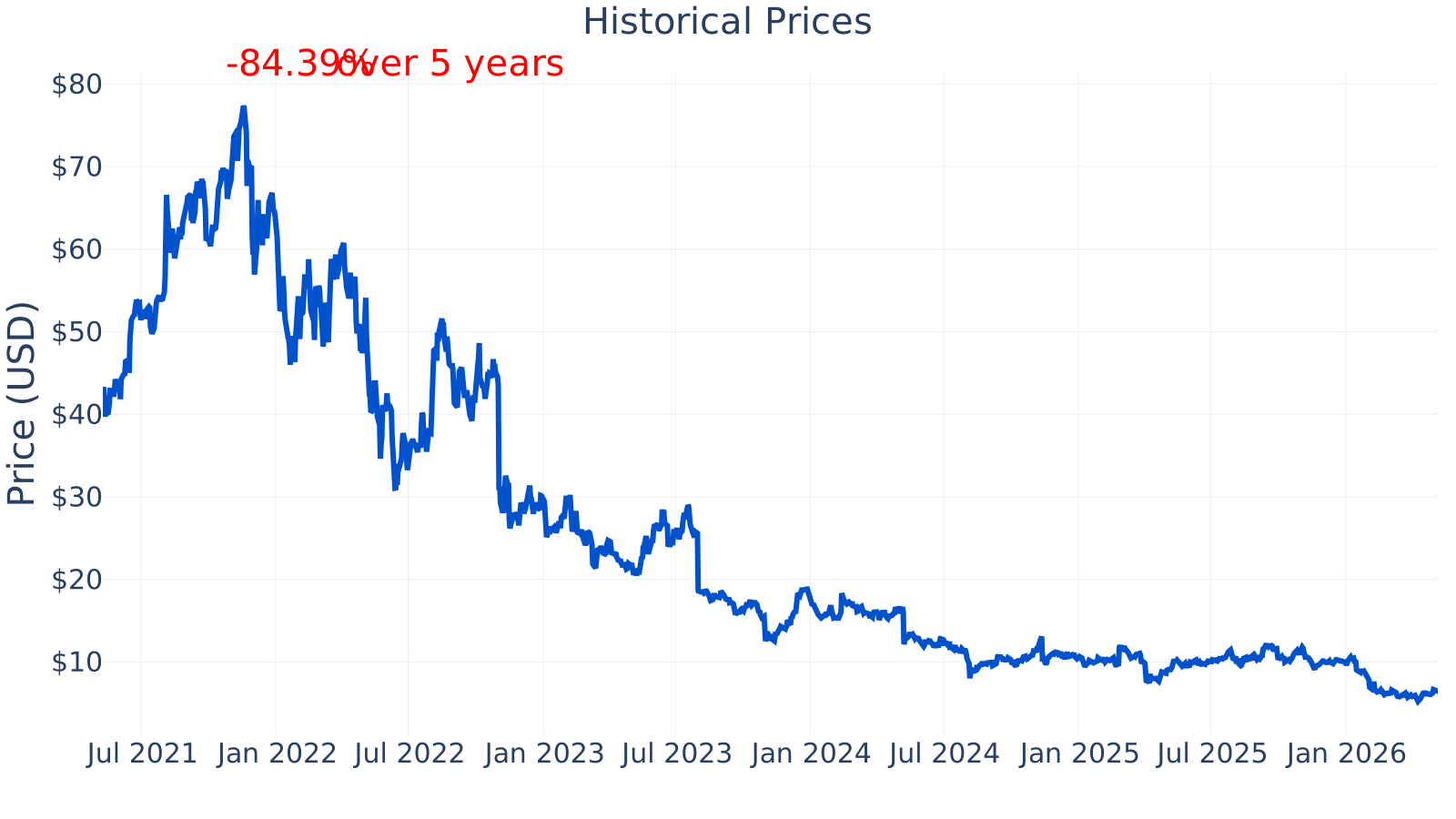
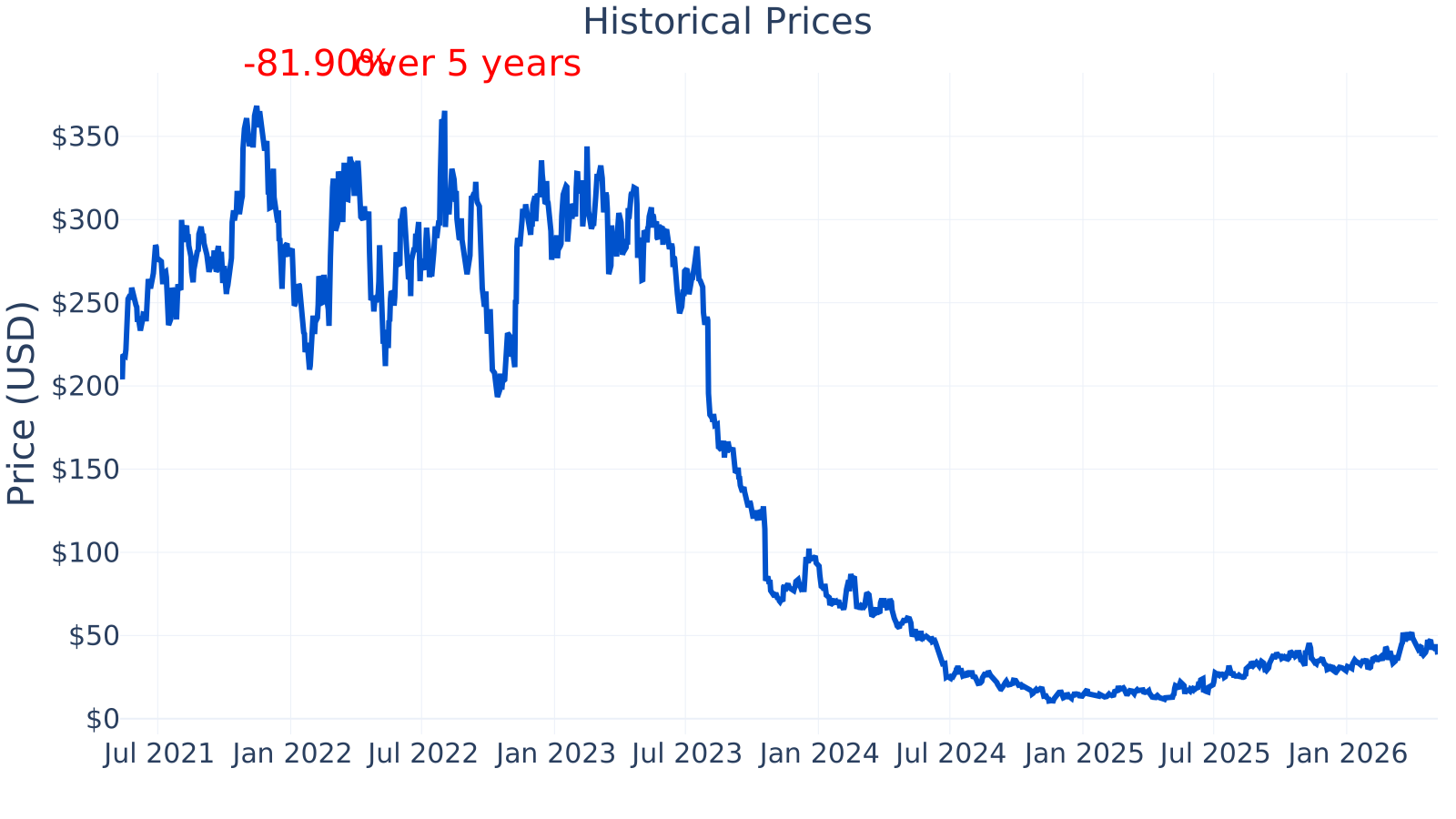
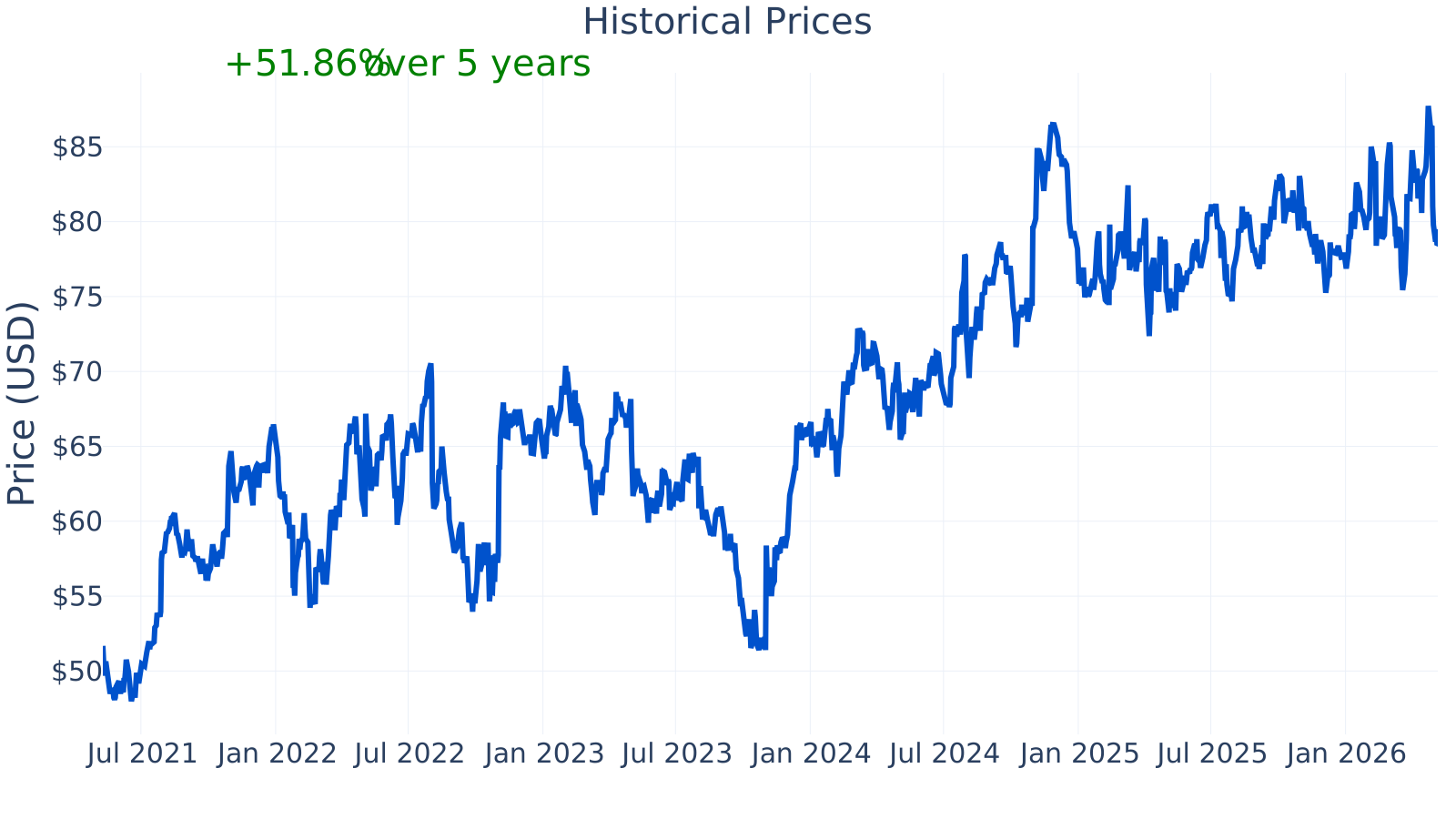
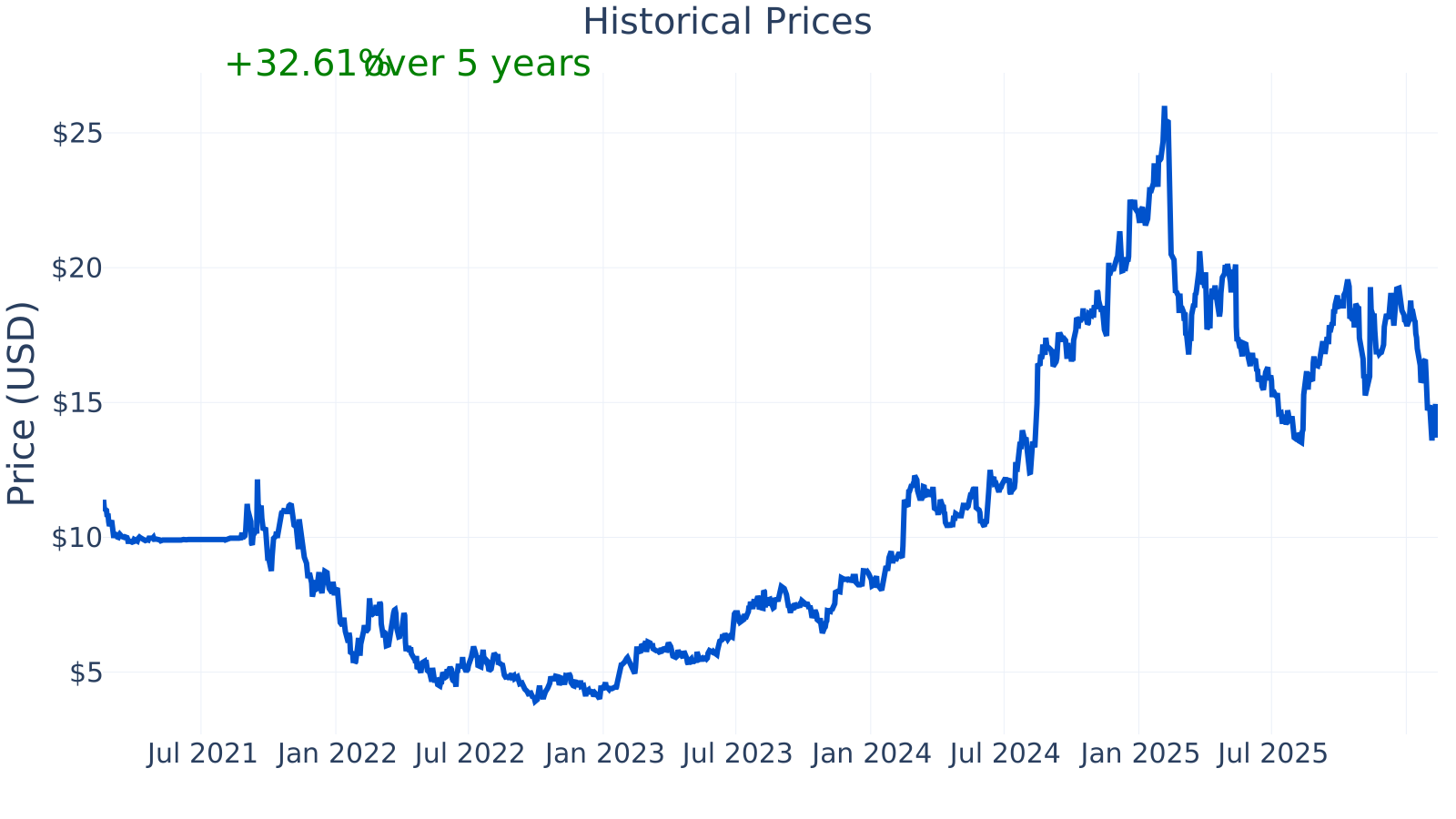
Cellebrite DI’s market capitalization is about $3.58B, and the stock’s beta (~1.28) suggests it has tended to move more than the broader market on average. The latest P/E ratio (~47.2) is above the industry median (~25.1), while the company’s latest profit margin (~16.5%) is also above the industry median (~6.9%). Revenue growth year over year is about 18.1%, slightly above the industry median (~15.3%). Leverage appears low with debt-to-equity ~4.7% versus an industry median near 19.8%. Trailing twelve-month free cash flow is about $160M.
Growth (medium)
Cellebrite operates in a part of the software market linked to long-running trends: more digital activity, more data generated by mobile devices and cloud services, and increasing needs for organizations to investigate incidents and support legal or regulatory processes. Even without technical details, the direction is straightforward: as everyday life and business move further into apps, messaging, and cloud accounts, the volume and importance of digital evidence and digital investigation workflows tends to rise.
Strategically, the company’s emphasis on software capabilities and continued product development aligns with an environment where data sources change quickly (new phone models, operating system updates, new apps, stronger security features). The company’s ongoing R&D spending visible in its financial statements is consistent with maintaining product relevance in that shifting landscape.
The year-over-year revenue growth displayed is generally positive across the period shown, with growth often in the high single digits to mid-to-high 20% range, and most recently around 18%. That pattern indicates a business that has been expanding, though with variability quarter to quarter.
Free cash flow trends upward over the years shown (roughly $57M in mid-2021 to about $132M by early 2025, and about $160M most recently on a trailing basis in the table). For long-term business quality, sustained positive cash generation can matter because it can fund product development and operations without relying as heavily on new financing.
Potential catalysts (in a neutral, factual sense) typically relate to: broader adoption of digital investigation tools across agencies, expansion into additional geographies or customer types, new product releases that enlarge what the platform can handle, and multi-year contract wins or renewals that increase visibility. The exact timing and magnitude of these items depends on execution and procurement cycles.
Risks (high)
A key risk is that the business depends heavily on customers with formal procurement processes and budget constraints. Government and public-sector purchasing can be lumpy, involve long sales cycles, and be influenced by policy decisions. That can create uneven quarterly results even when underlying demand exists.
Another important risk is technology and platform change. Device makers and operating system providers continuously update security and privacy features. If tools become less effective, require frequent re-engineering, or face delays in supporting new environments, the company may need higher ongoing development spending to keep pace.
Legal, regulatory, and reputational risks are also material in this category of software. Products used in investigations can draw scrutiny around privacy, civil liberties, cross-border use, and permitted end users. Changes in regulation or export controls, or heightened compliance expectations, can raise costs or limit certain sales.
Competition is a further risk. Digital investigation and related software markets include specialized vendors and broader security/forensics providers. Competitive pressure can show up as pricing pressure, higher sales costs, or slower renewal momentum. In many software categories, switching costs and workflow integration can create advantages for established vendors, but competitors may still win deals through features, certifications, or bundled offerings.
Financial leverage appears relatively low at the end of the period shown (around 4.7% debt-to-equity, below the industry median). The chart also shows prior periods where this ratio was higher and even negative in parts of 2024, which can happen due to changes in equity levels rather than a simple “debt went negative” story. Overall, the most recent level indicates the balance sheet is not heavily debt-funded compared to many peers.
Profitability has been volatile across the timeline. The company shows a return to positive margin most recently (about 16.5%), above the industry median (~7.2%). Earlier periods include meaningful negative margins (notably through much of 2023–2025 before improving late in 2025), which highlights that reported earnings can swing. For a long-term view, it becomes important to separate operating performance from one-time or non-operating factors when reviewing filings.
On competitive advantages, Cellebrite’s position is commonly associated with recognized products, established relationships, and a focus on a specialized workflow. However, leadership claims are best validated by customer adoption, renewal behavior, and contract wins described in official filings rather than general market perception. The most grounded way to assess “leader vs. follower” status using allowed sources is to look for: customer concentration disclosures, backlog or remaining performance obligations (if provided), and management discussion of competitive landscape in the 10-K.
Valuation
The latest P/E ratio (~47) is above the industry median (~25), which mechanically implies the market is assigning a higher price per dollar of current earnings than the typical peer in its listed industry group. A higher multiple can be consistent with expectations of faster growth, higher margins, stronger cash generation, or lower financial risk, but it also means valuation may be more sensitive if growth slows or profitability becomes more volatile.
In Cellebrite’s case, some fundamentals point in a constructive direction (recent positive profit margin and meaningful free cash flow, plus low debt-to-equity), while other elements add uncertainty (historically volatile net income and profitability swings). This combination often leads readers to weigh whether today’s earnings level is likely to be durable through cycles, contract timing, and changing technology requirements.
Conclusion
Cellebrite DI is a specialized software company tied to digital investigation workflows, with revenue that has trended upward over the years shown and with recent metrics indicating positive profitability and solid cash generation. The balance sheet appears relatively lightly levered compared with the industry median.
At the same time, the business carries meaningful risks that can matter over long periods: dependence on budgeted procurement cycles, ongoing technical change in devices and security, and the potential for regulatory or reputational challenges. Reported earnings have also been volatile in parts of the timeline, including periods of losses and large non-operating impacts on net income.
From a valuation perspective, the current earnings multiple is higher than the industry median, so the market appears to be embedding expectations that performance (growth, margins, and cash generation) can remain strong. Whether those expectations match future outcomes depends on execution, competitive dynamics, and how stable profitability is across cycles.
Sources:
- SEC EDGAR — Cellebrite DI filings (Form 10-K, 10-Q, 8-K)
- Cellebrite DI — Investor Relations materials and press releases (company-hosted)
- Wikipedia — “Cellebrite” (basic background; non-financial overview)
This article is for informational purposes only and does not constitute financial advice. Some content is AI-generated. See Disclaimer