Stock Analysis · Monday.Com Ltd (MNDY)
Overview
Monday.com Ltd (MNDY) is a software company that provides a cloud-based “work operating system” (work management platform). In simple terms, it helps teams plan projects, track tasks, collaborate, and automate routine workflows in one place. The product is used across many functions (for example: marketing, product development, operations, IT, and sales), and it is typically sold as a subscription that customers pay for over time.
The company’s revenue is mainly generated from subscriptions to its platform (software-as-a-service). Based on how the business is described in its public filings, the revenue mix is primarily:
- Subscription revenue (SaaS platform access): the large majority of total revenue (the company reports revenue largely as subscriptions).
- Other/related services (limited): smaller contribution compared with subscriptions (exact percentages can vary by reporting period and are not always broken out in a simple consumer-style split).
The longer-term financial story visible in the company’s results is a transition from “growth-first with losses” toward “growth with improving profitability,” as revenue has expanded while margins and cash generation have improved meaningfully in recent years.
From 2021 to 2025, total revenue increased from about $308M to about $1.232B, while the company moved from sizeable net losses (2021–2022) to positive net income in 2024 and 2025. This suggests that operating expenses grew more slowly than revenue over time, supporting the shift toward profitability.
Key Figures
| Metric | Value | Industry ⓘ |
|---|---|---|
| Date | Feb 13, 2026 | |
| Context | ||
| Sector | Technology | |
| Industry | Software - Application | |
| Market Cap ⓘ | $3.80B | |
| Beta ⓘ | 1.25 | |
| Fundamental | ||
| P/E Ratio ⓘ | 32.87 | 27.28 |
| Profit Margin ⓘ | 9.64% | 7.09% |
| Revenue Growth ⓘ | 24.60% | 15.80% |
| Debt to Equity ⓘ | 25.00% | 25.00% |
| PEG ⓘ | 0.27 | |
| Free Cash Flow ⓘ | $320.51M | |
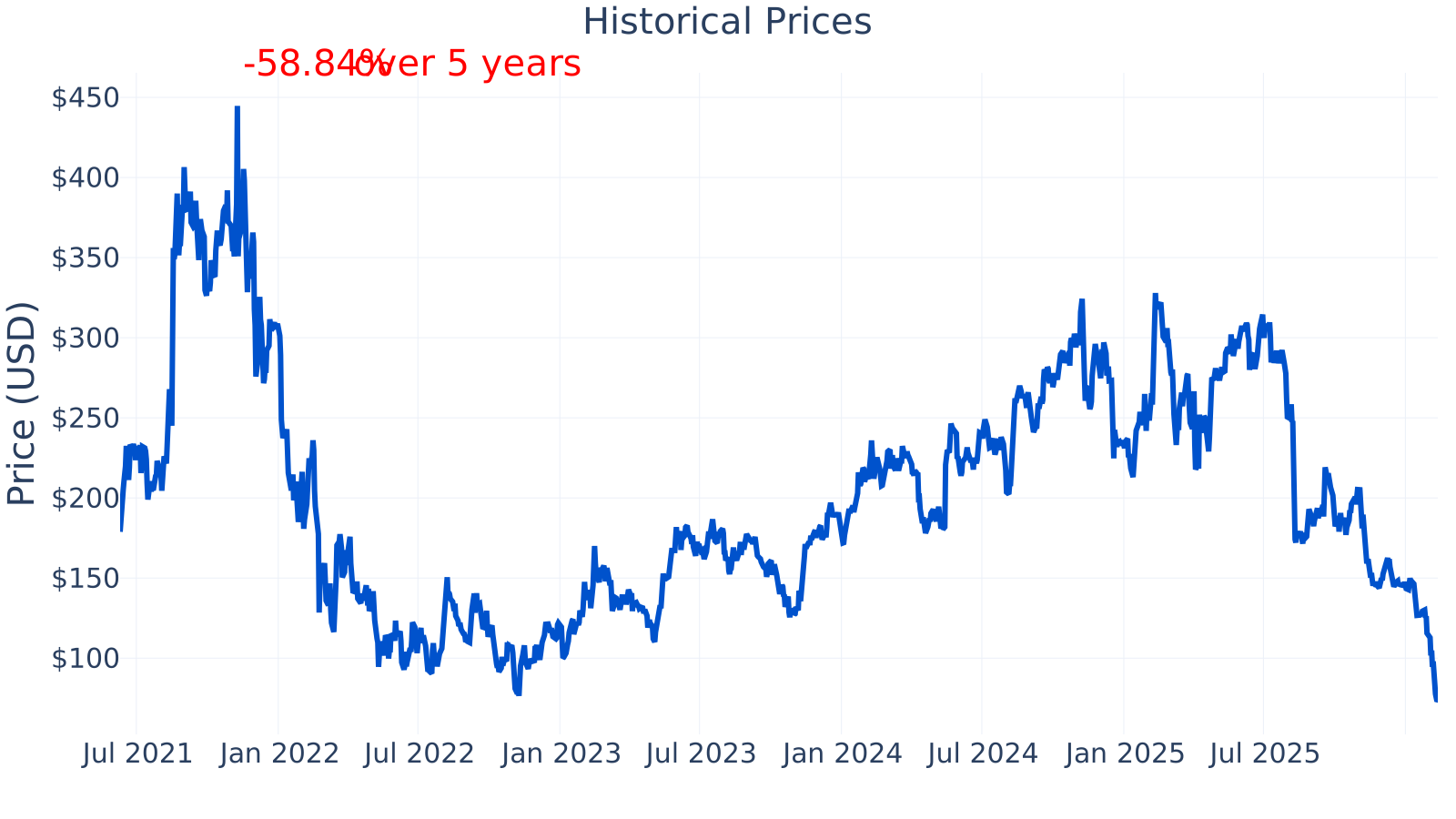
Monday.com’s market capitalization is about $3.80B. The stock’s beta of ~1.25 indicates it has historically moved more than the overall market (higher volatility than a broad index).
On profitability and growth, the latest metrics show a profit margin of ~9.64%, which is above the industry median (~7.10%) for its peer group. Revenue growth year-over-year is about 24.6%, also above the industry median (~15.8%), indicating the company has been growing faster than many software application peers. The company reports trailing twelve-month free cash flow of about $320.5M, which signals that the business has been converting a portion of its revenue into cash after operating costs and capital spending.
For leverage, the latest debt-to-equity is ~25%, in line with the peer-group median shown, suggesting a moderate balance-sheet leverage profile relative to comparable software companies.
Growth (medium)
Monday.com operates in the broader market for cloud software that helps organizations manage work, coordinate teams, and standardize processes. This category has structural tailwinds because many companies continue to shift away from spreadsheets and disconnected tools toward centralized platforms that improve visibility, accountability, and automation. In addition, the ongoing expansion of “digital operations” (more distributed teams, more cross-functional work, and more software-driven processes) supports demand for work management tools.
Strategically, the company’s approach centers on selling a flexible platform that can be used across many departments, which can support expansion within existing customers over time (more users, more teams, and additional use cases). For long-term growth, this matters because usage can spread beyond the initial team that adopted the tool, potentially increasing subscription value without requiring a brand-new customer each time.
Revenue growth has been strong but has also decelerated from very high levels in 2021–2022 to the mid-20% range more recently (about 24.6% most recently). This is a common pattern as a company scales: growing from a larger base becomes mathematically harder. The key question for future periods is whether the company can keep expanding efficiently while defending pricing and retention in a competitive market.
Cash generation has improved substantially over time, moving from negative free cash flow in 2021–2022 to strongly positive levels more recently (about $320M trailing twelve months). For a subscription software business, expanding free cash flow can be an important catalyst because it can fund product development and go-to-market investment without relying as much on external financing.
Risks (medium)
This article is for informational purposes only and does not constitute financial advice. Some content is AI-generated. See Disclaimer