Stock Analysis · Nayax Ltd (NYAX)
Overview
Nayax Ltd (NYSE: NYAX) provides payment and commerce tools that help operators of “unattended” points of sale get paid and manage their businesses. In simple terms, it sells the hardware, software, and payment services that make it possible for machines and self-service locations to accept cashless payments (for example, card or mobile payments), track sales, and manage devices remotely. The company focuses on markets where transactions are frequent and typically small, such as vending, micro-markets, and other self-service retail environments.
Its business model blends payment processing (earning fees when transactions run through its platform) with recurring software/services and sales of devices. This kind of mix can create recurring revenue over time, but it also means profitability depends on both transaction volume growth and the company’s cost structure.
Main revenue sources are typically described along these lines (exact percentages can vary by period and are not included here):
- Payment services (fees tied to transactions processed through Nayax’s platform)
- Recurring software and services (subscriptions, platform services, and related recurring fees)
- Hardware / devices (sale of payment readers and related equipment)
Over the 2021–2024 period, revenue expanded meaningfully (from about $119.1M in 2021 to about $314.0M in 2024), while the cost of revenue grew more slowly than revenue, supporting a higher gross profit. Operating expenses (notably selling, general & administrative) also increased in absolute terms, but the company moved from negative operating income in prior years to slightly positive operating income in 2024.
Key Figures
| Metric | Value | Industry ⓘ |
|---|---|---|
| Date | Feb 08, 2026 | |
| Context | ||
| Sector | Technology | |
| Industry | Software - Infrastructure | |
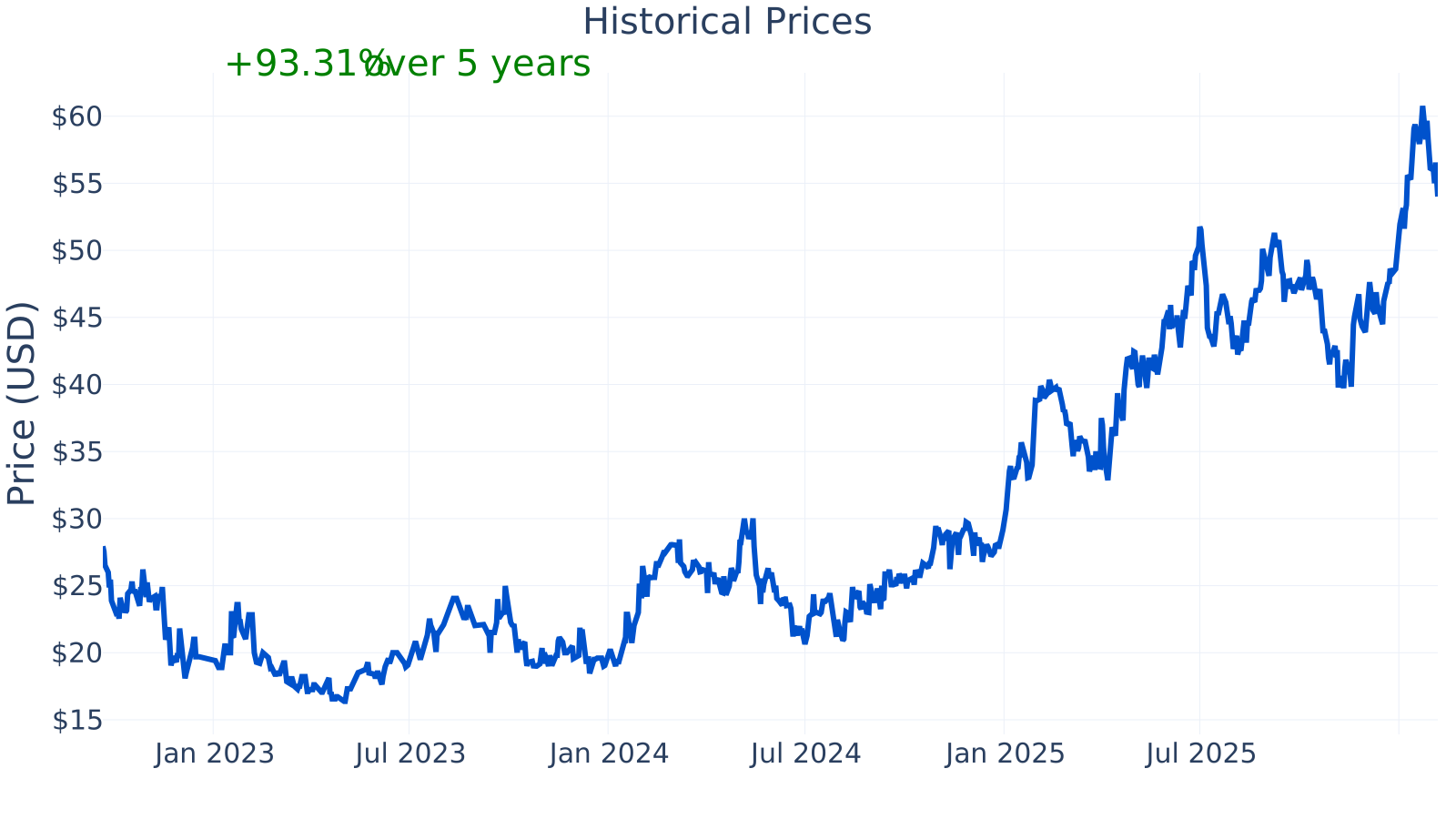
| Market Cap ⓘ | $2.03B | |
| Beta ⓘ | -0.24 | |
| Fundamental | ||
| P/E Ratio ⓘ | 85.73 | 25.67 |
| Profit Margin ⓘ | 6.49% | 6.91% |
| Revenue Growth ⓘ | 25.60% | 15.20% |
| Debt to Equity ⓘ | 77.65% | 19.82% |
| PEG ⓘ | N/A | |
| Free Cash Flow ⓘ | $24.58M | |
Nayax’s market capitalization is about $2.03B. The company shows profit margin of ~6.49%, close to the industry median (~6.91%), alongside year-over-year revenue growth of ~25.6%, above the industry median (~15.2%). The debt-to-equity ratio is ~77.6%, which is notably higher than the industry median (~19.8%). Free cash flow over the trailing twelve months is about $24.6M. The current P/E ratio is ~85.7, above the industry median (~25.7), which implies the market price embeds higher expectations for future earnings growth and/or improving profitability.
Growth (Medium)
Nayax operates in a segment shaped by long-term adoption of cashless payments and the modernization of unattended retail. As more self-service machines and kiosks accept digital payments, operators often look for platforms that combine payments, telemetry/monitoring, and management tools in one place. This backdrop generally supports continued expansion in payment volume and recurring software usage for companies that can win and retain operators.
Strategically, Nayax’s “platform” approach (payments plus management software plus devices) can support growth in a few ways: expanding its installed base of devices, increasing transaction volume on existing devices, and adding recurring services to customers already using the ecosystem. For long-term results, a key question is whether revenue growth can continue while costs scale more slowly, allowing operating leverage (improving profitability as the business grows).
Revenue growth has remained positive and relatively strong across the period shown, often in the 20%–50%+ range year over year, with the most recent value around 27.5%. While growth has cooled from earlier peaks above 50%, it still compares favorably with the industry median shown in the table (about 15.2%), suggesting Nayax has been expanding faster than many peers in its broader category.
Free cash flow improved substantially over time, moving from negative levels (for example, about -$50.9M in late 2022) to positive territory (about +$16.6M by early 2025 and about +$24.6M on a trailing-twelve-month basis in the latest metrics). Sustained positive free cash flow can increase flexibility for investment, debt service, or other corporate needs, though the durability of this trend matters.
Risks (High)
This article is for informational purposes only and does not constitute financial advice. Some content is AI-generated. See Disclaimer