Stock Analysis · Jfrog Ltd (FROG)
Overview
JFrog Ltd (NASDAQ: FROG) is a software company that helps organizations build, secure, store, and deliver software in a reliable way. In simple terms, when a team creates an application, it is made of many “building blocks” (internal code plus third-party components). JFrog’s products help companies manage these building blocks, automate software releases, and reduce the risk of shipping vulnerable components.
The company primarily sells its platform as subscription-based software (customers pay recurring fees), and it also offers related services. In its SEC filings, JFrog typically describes revenue in broad categories rather than breaking out many small product lines.
Main sources of revenue (high-level):
- Subscription revenue (recurring contracts for the JFrog platform and related modules) — typically the largest portion
- Services revenue (professional services such as implementation and support) — typically smaller than subscriptions
From the income statement trend over recent years, JFrog has been increasing total revenue while continuing to spend heavily on research and development, which is common for software companies focused on expanding their product platform.
Across 2021–2025, total revenue increased from about $206.7M (2021) to about $531.8M (2025). Over the same period, the company’s largest operating cost categories remained research & development and selling, general & administrative, which helps explain why operating income stayed negative even as gross profit rose.
Key Figures
| Metric | Value | Industry ⓘ |
|---|---|---|
| Date | Feb 16, 2026 | |
| Context | ||
| Sector | Technology | |
| Industry | Software - Application | |
| Market Cap ⓘ | $6.11B | |
| Beta ⓘ | 1.16 | |
| Fundamental | ||
| P/E Ratio ⓘ | N/A | 27.48 |
| Profit Margin ⓘ | -15.88% | 7.66% |
| Revenue Growth ⓘ | 25.50% | 15.80% |
| Debt to Equity ⓘ | 2.16% | 24.71% |
| PEG ⓘ | N/A | |
| Free Cash Flow ⓘ | $142.27M | |
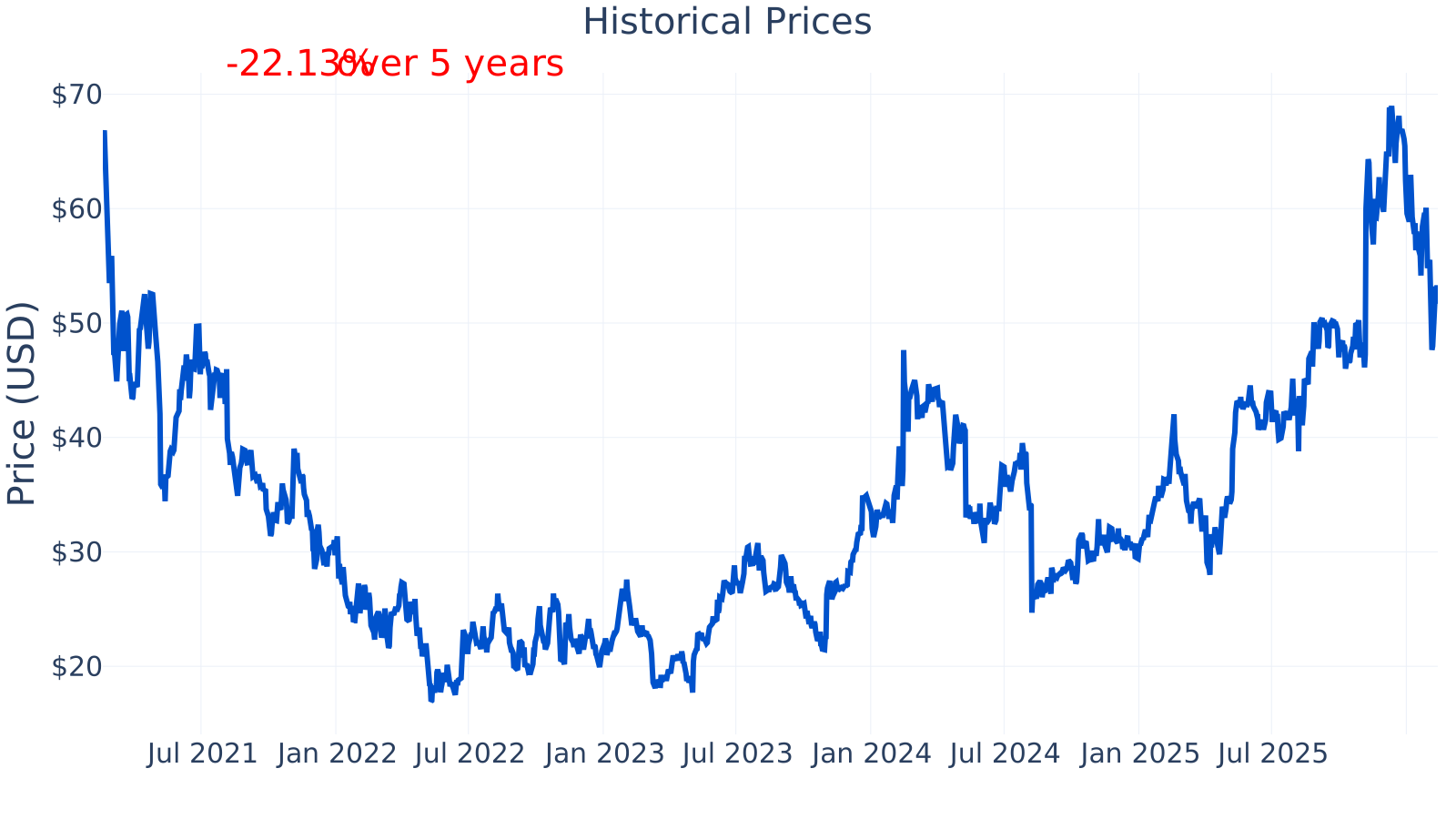
JFrog’s market capitalization is about $6.1B, placing it in the mid-cap range. The stock’s beta (~1.16) suggests it has tended to move somewhat more than the broader market. Profitability is currently negative (profit margin about -15.9% versus an industry median near +7.7%), while growth has been stronger than the industry median (revenue growth about +25.5% year-over-year versus an industry median near +15.8%). The balance sheet appears conservatively leveraged, with debt-to-equity around 2.2% (industry median roughly 24.7%). Free cash flow over the trailing twelve months is about $142.3M, indicating the business has been generating cash despite accounting losses.
Growth (Medium)
JFrog operates in software tooling used by development and IT teams—often described in filings and industry discussions as part of the broader shift toward cloud adoption, faster software release cycles, and software supply-chain security. These themes have remained important as more businesses deliver products and services through software and want faster, more automated releases.
The company’s strategy is centered on building a platform that becomes part of a customer’s day-to-day development workflow. In practice, tools embedded in how software is built and released can be “sticky” over time, because switching them can be disruptive. That said, long-term growth still depends on continued adoption, expanding usage within existing customers, and maintaining product relevance as tools and standards evolve.
Year-over-year revenue growth has generally stayed positive but has cooled from the ~30–40% range earlier in the period to the ~20–25% range more recently. The most recent point shown is about +25.2% year-over-year, which remains above the industry median shown in the latest metrics.
Free cash flow improved meaningfully over time, rising from about $11.5M (TTM ending 2023-03-31) to about $119.3M (TTM ending 2025-03-31), with the latest table showing about $142.3M TTM. For many software companies, improving free cash flow can be an important signal that the business model is scaling, even if net income remains negative due to non-cash expenses and continued investment.
Risks (Medium-High)
This article is for informational purposes only and does not constitute financial advice. Some content is AI-generated. See Disclaimer


