Stock Analysis · Gilat Satellite Networks Ltd (GILT)
Overview
Gilat Satellite Networks Ltd (GILT) is a communications equipment company focused on satellite-based connectivity. In simple terms, it builds and sells the ground-side technology that helps data travel over satellites. That includes satellite terminals (equipment installed on vehicles, ships, aircraft, or remote sites), network equipment, and the software and services needed to operate these satellite networks.
The company’s products and services are typically used in situations where fiber or traditional cellular coverage is limited or unavailable, such as remote communities, maritime routes, in-flight connectivity, and certain government and defense applications. Gilat also works with satellite operators and service providers that package this technology into connectivity services for end customers.
Public filings usually describe revenue through business lines and/or end markets, but exact, stable percentage splits can vary by year and are not always presented as a simple, consistent breakdown. At a high level, the company commonly earns revenue from:
- Satellite network products (terminals, gateways, and related equipment sold to operators, service providers, enterprises, and governments)
- Services and support (network operation, maintenance, and managed services tied to installed equipment)
- Project-based deployments (multi-site network rollouts that may combine equipment and services)
Across the last several years, total revenue rose meaningfully, while research and development spending remained a material and ongoing cost item. Net income shifted from losses (2021–2022) to positive results (2023–2025), indicating improved profitability even as operating expenses grew.
Key Figures
| Metric | Value | Industry ⓘ |
|---|---|---|
| Date | Feb 23, 2026 | |
| Context | ||
| Sector | Technology | |
| Industry | Communication Equipment | |
| Market Cap ⓘ | $1.08B | |
| Beta ⓘ | 0.80 | |
| Fundamental | ||
| P/E Ratio ⓘ | 43.50 | 43.50 |
| Profit Margin ⓘ | 4.59% | 3.93% |
| Revenue Growth ⓘ | 75.30% | 14.10% |
| Debt to Equity ⓘ | 2.23% | 60.64% |
| PEG ⓘ | N/A | |
| Free Cash Flow ⓘ | $9.77M | |
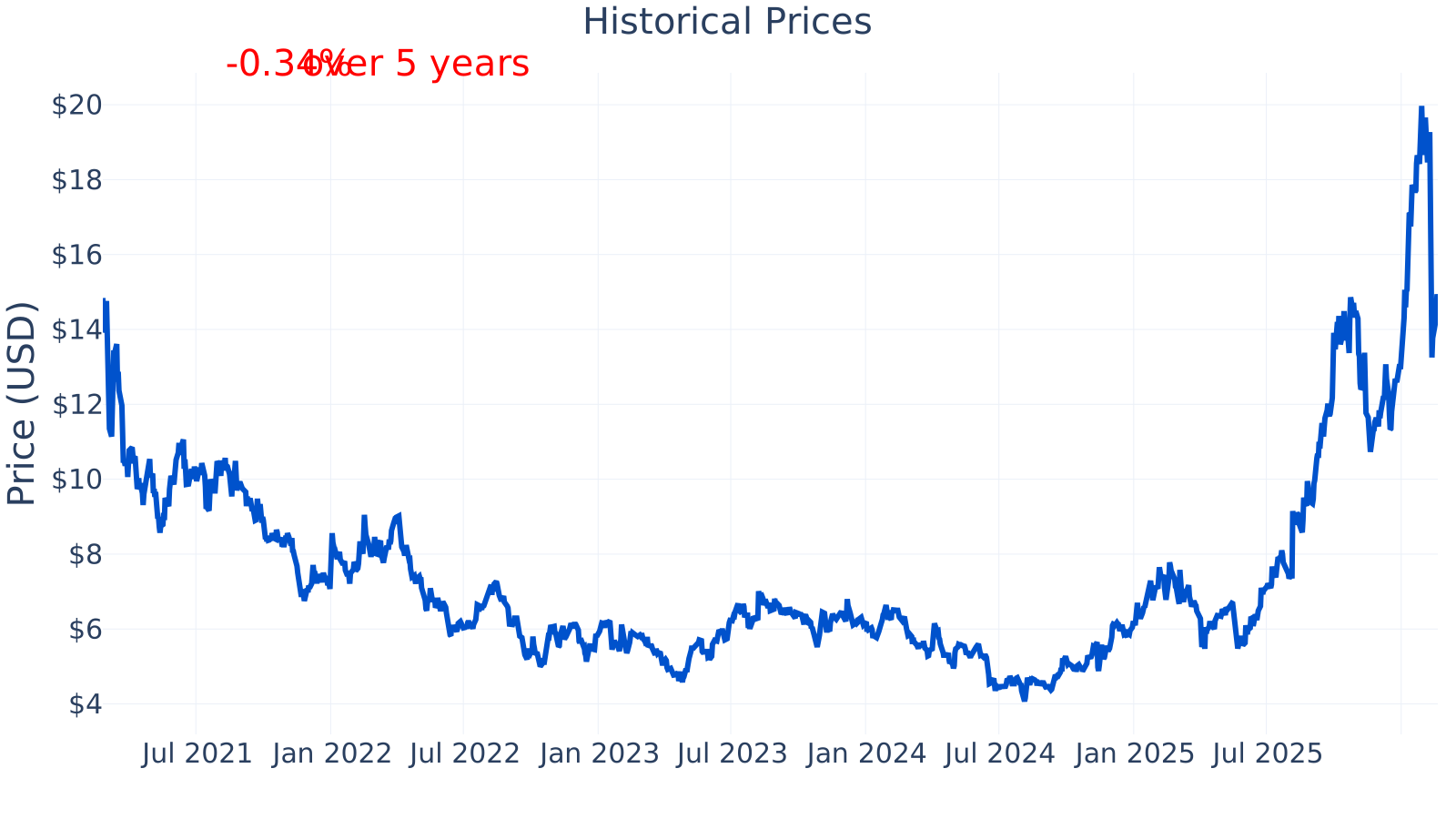
The company’s market capitalization is about $1.08B, placing it in the small-cap range. The beta of 0.80 suggests the stock has historically moved somewhat less than the broader market on average (though single stocks can still be volatile). The latest P/E ratio is 43.5, roughly in line with the industry median shown. Profit margin is about 4.59% versus an industry median near 3.93%. Year-over-year revenue growth is shown at about 75.3%, well above the industry median shown (~14.1%). Debt-to-equity is very low at about 2.23% versus an industry median around 60.6%. Trailing twelve-month free cash flow is approximately $9.8M.
Growth (Medium)
Satellite connectivity is supported by long-term demand drivers: more connected devices in more places, growth in mobility connectivity (maritime and aviation), and ongoing needs for resilient communications in remote areas. Within this backdrop, Gilat’s role is not to launch satellites, but to provide the infrastructure and terminals that make satellite capacity usable for customers—an area that can benefit as satellite coverage and capacity expand.
Strategy-wise, Gilat’s growth logic typically relies on expanding terminal and network equipment deployments, then adding recurring services and support around that installed base. This approach can create a mix of project-driven revenue (which can be uneven quarter to quarter) and more recurring service-related revenue over time.
The year-over-year revenue growth trend shows periods of modest growth and periods of acceleration, with a notable step-up in the most recent reported year. Because project timing can influence year-over-year comparisons, it is helpful to watch whether growth remains broad-based over multiple periods rather than hinging on a small number of large deployments.
Free cash flow has been positive in the periods shown but uneven, including a sharp drop around 2022 and a later recovery. For a hardware-and-project-oriented business, this variability can happen due to working capital swings (inventory builds, customer payment timing) and the timing of large contracts. Over the long run, steadier free cash flow tends to indicate improved execution and more predictable economics.
Risks (High)
This article is for informational purposes only and does not constitute financial advice. Some content is AI-generated. See Disclaimer