Stock Analysis · Tower Semiconductor Ltd (TSEM)
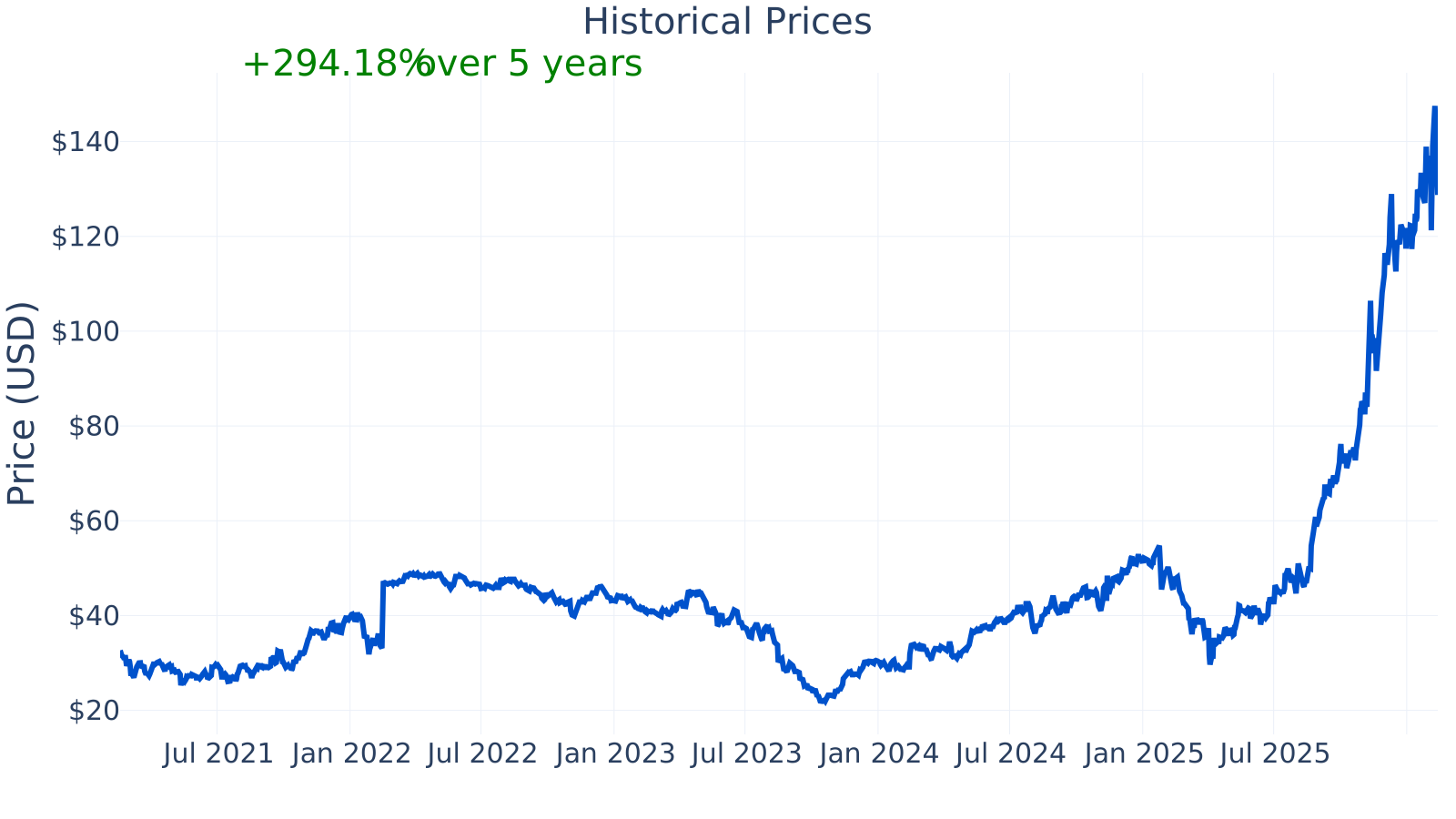
Overview
Tower Semiconductor Ltd (TSEM) is a semiconductor manufacturer focused on specialty chips. In simple terms, it operates fabrication plants (“fabs”) that make chips designed for specific uses rather than the most advanced, cutting-edge processors. This specialty focus is commonly associated with areas like analog and mixed-signal chips (used to connect real-world signals to electronics), power management, radio-frequency components (used in wireless communications), and imaging-related semiconductor processes. Tower generally manufactures chips for other companies (a “foundry” model), meaning customers design the chip and Tower produces it at scale.
Because Tower’s products are used in many everyday and industrial applications, demand typically comes from multiple end markets such as consumer electronics, automotive, industrial equipment, and communications infrastructure. This diversification can reduce dependence on any single product cycle, but results can still move with broader semiconductor supply/demand conditions.
Public revenue breakdowns can vary by reporting period and disclosure detail. In general, Tower’s revenue is primarily driven by wafer manufacturing services (producing silicon wafers with customers’ chip designs), with additional contributions from related services (for example, process and technology support and other manufacturing-related items disclosed in filings).
Main revenue drivers (high level):
- Semiconductor wafer manufacturing (foundry services) — the core business (largest share)
- Technology/process-related services and other manufacturing-related revenue — smaller share (as disclosed in company filings)
Across the multi-year view shown above, revenue and profitability have fluctuated. One notable point is that net income can move differently than revenue, reflecting the combined impact of product mix, utilization (how full fabs are), operating costs, and non-operating/tax items.
Key Figures
| Metric | Value | Industry ⓘ |
|---|---|---|
| Date | Feb 16, 2026 | |
| Context | ||
| Sector | Technology | |
| Industry | Semiconductors | |
| Market Cap ⓘ | $14.48B | |
| Beta ⓘ | 0.89 | |
| Fundamental | ||
| P/E Ratio ⓘ | 66.36 | 45.38 |
| Profit Margin ⓘ | 14.08% | 10.84% |
| Revenue Growth ⓘ | 13.70% | 15.50% |
| Debt to Equity ⓘ | 5.56% | 25.62% |
| PEG ⓘ | 3.09 | |
| Free Cash Flow ⓘ | -$41.08M | |
Tower’s market capitalization is about $14.48B, placing it among mid-sized public semiconductor companies. The stock’s beta of 0.89 indicates it has historically moved somewhat less than the broader market on average (though individual periods can differ).
Profitability (as measured by net profit margin) is about 14.08%, which is above the industry median (10.84%) in the provided peer set. Year-over-year revenue growth is about 13.70%, which is slightly below the industry median (15.50%) at this point in time.
The balance sheet looks conservatively leveraged: debt-to-equity is about 5.56% versus an industry median of 25.62%. Free cash flow over the trailing twelve months is negative (about -$41.1M), meaning cash generated from operations after capital spending has recently been slightly outpaced by investment and other cash needs.
Growth (Medium)
The semiconductor industry is structurally supported by long-term trends such as increased chip content in vehicles, continued automation in industry, broader connectivity, and ongoing digitization. Within semiconductors, specialty manufacturing can benefit from long product lifecycles and high reliability requirements, especially for industrial and automotive uses. These segments often prioritize consistency, quality, and process know-how over being the absolute smallest transistor size.
Tower’s strategy centers on specialty processes and long-lived manufacturing platforms. For long-term growth, this approach can make sense when customers need stable supply for years and value process expertise (for example, in analog, power-related, RF, or imaging-oriented technologies). However, it also means growth can depend heavily on factory utilization and winning/retaining customer programs that scale to meaningful volume.
The revenue growth pattern shows a clear cycle: strong growth earlier in the period, a contraction phase (negative year-over-year growth through much of 2023 into mid-2024), and then a return to positive growth, ending at about 13.69% year-over-year. This rebound can be consistent with an industry recovery and/or improved demand in certain end markets, but the history also highlights that growth has not been steady.
Free cash flow improved from positive levels in earlier years to slightly negative most recently. In capital-intensive manufacturing businesses, free cash flow often swings with capacity investments and working capital needs. For long-term watchers, the key question is whether spending translates into durable revenue and margins over time—especially since fabs require ongoing reinvestment to stay competitive in targeted process categories.
Risks (High)
This article is for informational purposes only and does not constitute financial advice. Some content is AI-generated. See Disclaimer


