Stock Analysis · Magic Software Enterprises Ltd (MGIC)
Overview
Magic Software Enterprises Ltd (MGIC) is a technology company that focuses on helping organizations connect systems, move data between applications, and build business software more efficiently. In simple terms, it sells software and services that make it easier for companies to run day-to-day operations (for example: connecting older “legacy” systems with newer cloud tools, automating processes, and delivering IT projects through specialized teams).
The company typically operates through a mix of software products (tools and platforms) and professional services (implementation, integration work, and ongoing support). For many IT-services companies, revenue is often driven by long-term customer relationships where software usage and service delivery continue over time.
Based on the company’s public reporting, revenue is generally grouped into broad categories such as software and related services versus professional/IT services. Exact percentages by revenue stream can vary by period and are best read directly from the company’s annual report segment and revenue notes.
Across recent years, total revenue has been relatively steady in a broad range (about $480M to $567M from 2021 to 2024), while profitability has stayed positive. Operating income has been fairly consistent (roughly $55M–$62M). Net income increased in 2022 and then eased in 2023–2024, while interest expense rose compared with earlier years, which can matter when rates are higher.
Key Figures
| Metric | Value | Industry ⓘ |
|---|---|---|
| Date | Feb 08, 2026 | |
| Context | ||
| Sector | Technology | |
| Industry | Information Technology Services | |
| Market Cap ⓘ | $1.07B | |
| Beta ⓘ | 0.75 | |
| Fundamental | ||
| P/E Ratio ⓘ | 26.65 | 21.42 |
| Profit Margin ⓘ | 6.61% | 4.91% |
| Revenue Growth ⓘ | 13.10% | 6.15% |
| Debt to Equity ⓘ | 34.74% | 54.49% |
| PEG ⓘ | 1.08 | |
| Free Cash Flow ⓘ | $64.35M | |
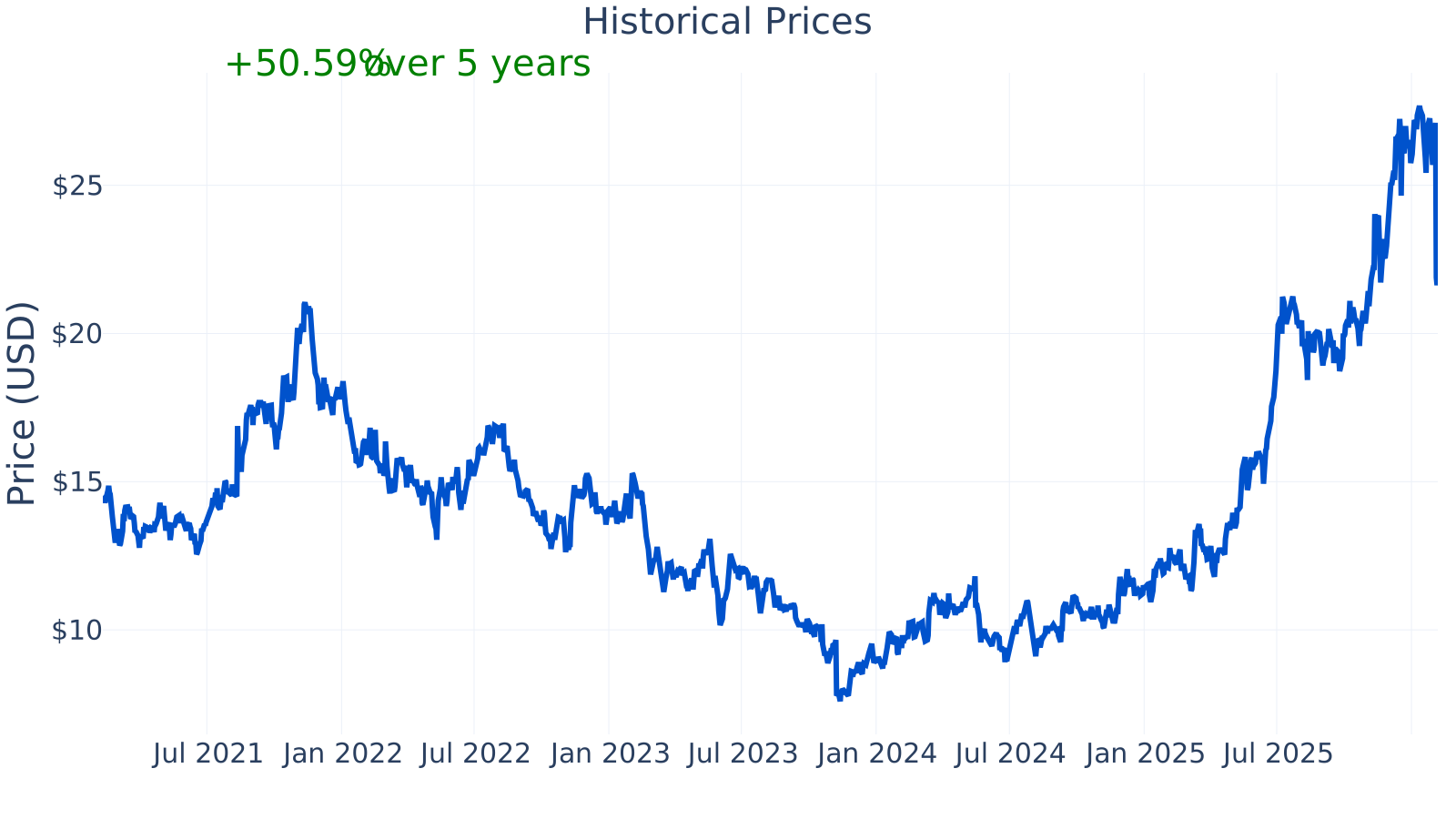
Magic Software’s market capitalization is about $1.07B, placing it in the small-cap range. The stock’s beta of about 0.75 suggests it has historically moved less than the overall market on average (though any single stock can still be volatile).
On profitability, the net profit margin is about 6.61%, above the industry median of about 4.91%, indicating the company has recently converted revenue into bottom-line earnings more efficiently than a typical peer in its listed industry group.
Recent year-over-year revenue growth is about 13.1%, higher than the industry median of about 6.15%. Debt-to-equity is about 34.7%, below the industry median of about 54.5%, which points to a comparatively lighter use of debt financing than many peers.
Growth (medium)
Magic Software operates in the broad IT services and enterprise software ecosystem, where demand is supported by long-running trends: digital transformation, migration to cloud services, integration between many different applications, and automation of business workflows. These needs are ongoing because many organizations run a mix of old and new systems and need them to “talk to each other” reliably.
A practical way to think about the company’s growth setup is that it participates in projects that are often necessary rather than optional: systems integration, application modernization, and managed IT work. This can support recurring demand even when customers become more cautious with spending, although project timing can still shift.
The revenue growth pattern has been uneven: strong growth in 2021–2022, a slowdown and brief contraction in parts of 2023–early 2024, and then a return to positive growth through late 2024 into 2025 (recently around low-double-digit percentages). That shape is consistent with an environment where customer project decisions can pause and later restart.
Free cash flow (cash left after operating needs and capital spending) has been positive in each shown period, but it has fluctuated meaningfully—from about $33.7M (2022) up to about $99.5M (2024), and then about $60.1M (2025). For long-term business quality, consistently positive free cash flow is often important, while large swings can signal changes in working capital, project mix, or investment cycles.
Potential catalysts (events that can change the business trajectory) for a company like this are usually operational rather than “one-time” announcements: new multi-year customer wins, expanding relationships with existing customers, and success selling higher-value software and managed services that can scale better than one-off projects.
Risks (medium)
This article is for informational purposes only and does not constitute financial advice. Some content is AI-generated. See Disclaimer