Stock Analysis · Seagate Technology PLC (STX)
Overview
Seagate Technology PLC designs and sells data storage products, best known for hard disk drives (HDDs) used in data centers (cloud and enterprise), as well as external and portable storage for consumers and businesses. In simple terms, Seagate helps organizations store very large amounts of digital information at a cost that is often lower per unit of capacity than many alternatives, especially when the goal is long-term “bulk” storage.
The company’s business is closely tied to how much data the world creates and keeps (for example: video, AI training data, backups, and business records) and to how data center customers manage their spending cycles. Seagate generally sells to large customers either directly or through distribution and system partners, and it competes mainly on capacity per drive, cost efficiency, reliability, and the ability to manufacture at very large scale.
In Seagate’s reporting, revenue is primarily organized around storage products (HDDs and related offerings) rather than many separate business lines. A practical way to think about the main revenue “buckets” is:
- Mass-capacity storage for cloud and enterprise data centers (a key driver of results)
- Client and consumer storage (PC-related demand and external drives)
- Other / related offerings (varies by period)
Because Seagate’s mix can shift significantly depending on where the industry is in its cycle, the most reliable percentage splits are typically provided inside the company’s annual report and quarterly filings for the specific fiscal year.
Across the periods shown, Seagate’s total revenue and profitability moved through a downcycle (with weaker results around fiscal 2023–2024) and then improved notably by fiscal 2025. The pattern highlights how earnings can swing meaningfully when demand and pricing change, even though operating costs (including R&D) remain substantial and ongoing.
Key Figures
| Metric | Value | Industry ⓘ |
|---|---|---|
| Date | May 04, 2026 | |
| Context | ||
| Sector | Technology | |
| Industry | Computer Hardware | |
| Market Cap ⓘ | $163.00B | |
| Beta ⓘ | 1.63 | |
| Fundamental | ||
| P/E Ratio ⓘ | 68.97 | 25.84 |
| Profit Margin ⓘ | 21.60% | 5.14% |
| Revenue Growth ⓘ | 44.10% | 39.50% |
| Debt to Equity ⓘ | 36.35% | 5.83% |
| PEG ⓘ | 0.50 | |
| Free Cash Flow ⓘ | $2.63B | |
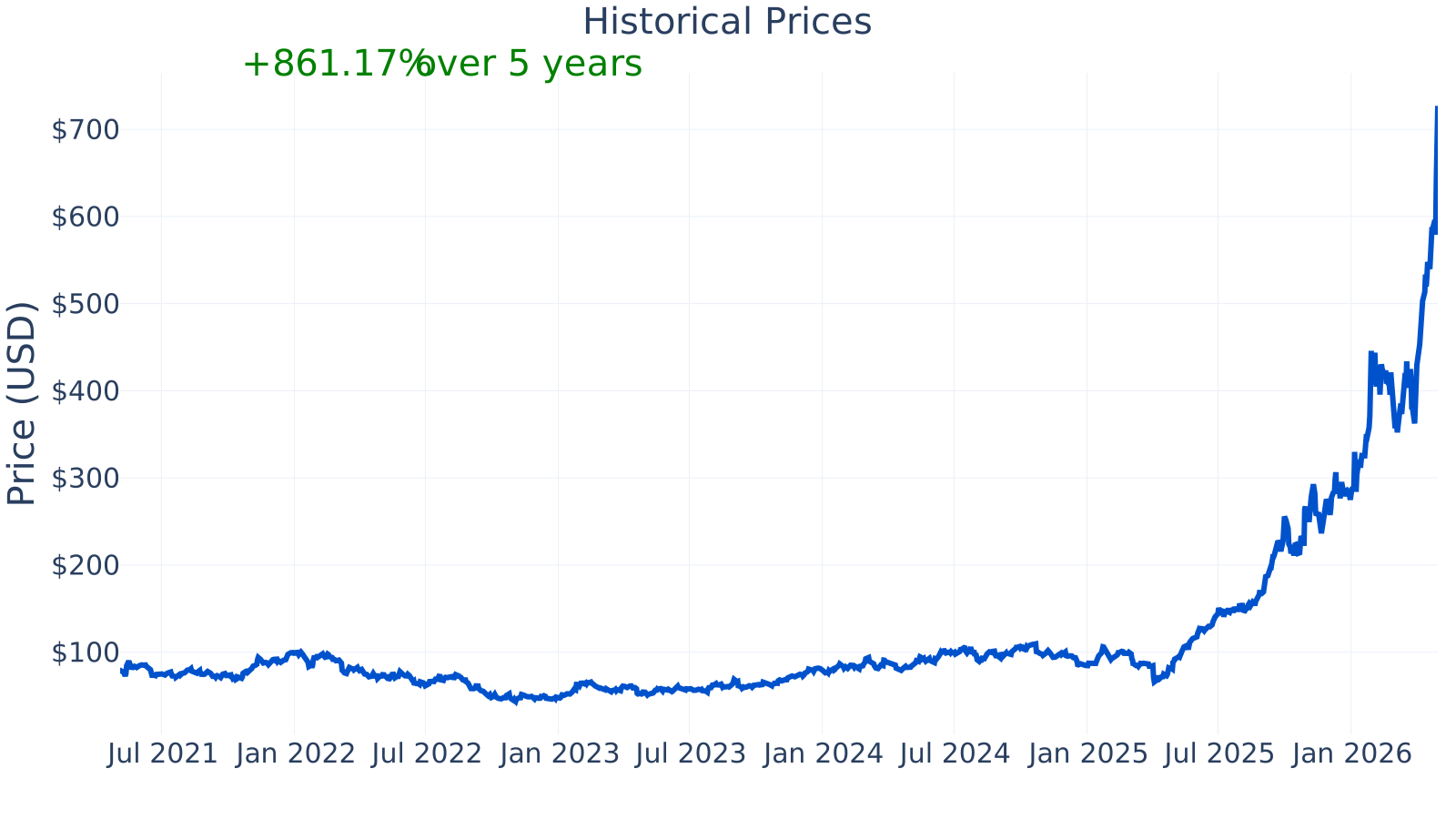
Seagate’s market capitalization is about $163.0B, and the stock’s beta of ~1.63 suggests it has tended to move more than the broader market (higher volatility). The latest P/E ratio is ~69.0, above the industry median of ~25.8, which implies the market is assigning a higher earnings multiple than peers at this point in time. Profitability looks strong in the latest snapshot: profit margin ~21.6% versus an industry median of ~5.1%. Recent growth is also elevated: revenue growth year-over-year ~44.1% compared with an industry median of ~39.5%. Leverage appears higher than typical for the peer set: debt-to-equity ~36% versus an industry median near 5.8%. Trailing twelve-month free cash flow is about $2.63B, reflecting improved cash generation versus the lower levels seen earlier in the cycle.
Growth (Medium)
Seagate operates in the broader data storage industry, where long-term demand is supported by continued growth in digital information. A major structural driver is the expansion of large-scale data centers, since cloud providers and enterprises need cost-effective ways to store massive datasets, including backups and “warm/cold” data that is not accessed constantly but must be retained reliably.
At the same time, the industry is cyclical. Customers (especially large data center buyers) often purchase in waves, and pricing can move quickly when industry supply and demand get out of balance. That means growth is not usually smooth year to year, even if the multi-year direction of data creation is upward.
The year-over-year revenue growth pattern shows this cyclicality clearly: a period of sharp contraction through 2022–2024 followed by a strong rebound, reaching about 44% most recently. For long-term business assessment, this supports the idea that results can recover meaningfully after downcycles, but it also underlines that short-term growth rates can be volatile.
Free cash flow (cash generated after operating needs and capital spending) has also improved over time, rising to about $2.63B in the most recent trailing twelve months. This matters because storage hardware companies must invest consistently in manufacturing capabilities and product development; stronger free cash flow can provide more flexibility for debt service, reinvestment, and shareholder returns (depending on the company’s capital allocation decisions).
Potential catalysts for Seagate typically relate to (1) improving demand and pricing in mass-capacity drives used by cloud customers, (2) successful technology transitions that increase areal density (more data per platter, enabling higher-capacity drives), and (3) normalization after periods of elevated inventory across the supply chain. The company’s filings and presentations are the best source for how management frames these drivers and the timing of product ramps.
Risks (High)
The largest risk for Seagate is the industry’s cyclicality: demand can fall quickly, customers can delay purchases, and pricing pressure can reduce margins. This can lead to sharp earnings swings, as seen in the period where profitability turned negative before rebounding later. A second major risk is technology and competitive execution—storage buyers are highly sensitive to cost per terabyte, reliability, and supply assurance, so product competitiveness and manufacturing efficiency are crucial.
Competition is concentrated. Seagate’s key HDD competitor is Western Digital. In addition, storage spending can shift toward alternatives depending on workload needs—most notably solid-state drives (SSDs) (commonly supplied by companies such as Samsung, Kioxia, and Micron) for performance-sensitive uses. In practice, HDDs and SSDs often serve different roles in data centers (cost-efficient bulk storage vs. high-speed storage), but changes in relative pricing and technology can influence how customers allocate budgets over time.
Seagate’s competitive advantages generally come from scale manufacturing, longstanding customer relationships in the data center supply chain, firmware and reliability know-how, and the ability to deliver high-capacity products at large volumes. However, these advantages do not eliminate the risk of market share shifts or pricing pressure during weaker demand periods.
Leverage is another important consideration. The latest debt-to-equity is about 36%, which is above the industry median (roughly 6%). The longer history shown is unusually volatile, including negative readings in some periods (which can happen when accounting equity is very small or negative). Regardless of the cause, this emphasizes that balance sheet structure can amplify outcomes in downturns and makes it important to track debt levels, maturities, and interest costs in the company’s filings.
Profit margins have also been highly variable. After a period of negative margins (notably around 2023–early 2024), the most recent margin is about 21.6%, well above the industry median near 4.5%–5%. This supports the view that profitability can recover strongly when demand and pricing improve, but it also highlights how quickly margins can deteriorate in a downcycle.
Valuation
Valuation is often discussed using ratios like P/E (price-to-earnings). For a cyclical hardware business, P/E can be tricky because “E” (earnings) may be temporarily depressed in downturns or unusually high during strong parts of the cycle, which can make the ratio jump around and sometimes become less informative for short windows.
Most recently, Seagate’s P/E is about 69.0, notably above the industry median near 25.8. Historically in the period shown, Seagate’s P/E spent time in the low-to-mid teens earlier in the cycle, then later moved higher. A higher-than-peer multiple can be consistent with expectations of stronger future earnings, improving margins, or a belief that the company is entering a more favorable part of its cycle. It can also indicate that the stock price has risen faster than earnings, which increases the importance of monitoring whether profitability improvements persist.
Given the combination of strong recent revenue growth and margin recovery alongside a higher earnings multiple, the key context for valuation is whether current profitability represents a durable step up (supported by product competitiveness and sustained demand) or a cyclical peak that could normalize. The company’s quarterly filings are typically the most direct place to track this through changes in revenue mix, gross margin, operating expenses, and cash flow.
Conclusion
Seagate is a large, established storage company whose results are shaped by two forces that can coexist: a long-term trend of rising global data storage needs, and a pronounced cycle in demand and pricing for storage hardware. The most recent period shows a meaningful rebound in revenue growth (about 44% year over year), stronger free cash flow (about $2.63B trailing twelve months), and improved profitability (about 21.6% net margin).
At the same time, the business carries meaningful risks, including competitive pressure, technology transitions, and balance-sheet sensitivity during downcycles. The valuation picture also reflects the current environment: the latest P/E is materially above the industry median, which places more weight on the durability of the recovery and on execution through the next phases of the cycle.
Sources:
- SEC EDGAR — Seagate Technology PLC filings (Form 10-K, Form 10-Q)
- Seagate Investor Relations — Annual Report materials and shareholder information
- Seagate Investor Relations — Press releases (earnings releases and financial updates)
- Wikipedia — “Seagate Technology” (basic company background)
This article is for informational purposes only and does not constitute financial advice. Some content is AI-generated. See Disclaimer


