Stock Analysis · Adient PLC (ADNT)
Overview
Adient plc (ADNT) is an automotive supplier focused on vehicle seating. In simple terms, it designs, engineers, and manufactures seats and seat components that are installed in passenger vehicles by major automakers. Its work typically spans the full lifecycle of a seat program—from early design and testing to high-volume manufacturing close to where vehicles are assembled.
Because Adient operates in the auto supply chain, its business tends to track global vehicle production levels and automakers’ platform decisions. The company also spends on engineering and development to win future seating “programs,” which can last for years once awarded.
Adient reports revenue by geographic segment in its filings. A simplified view of revenue sources is:
- Seating systems and components supplied to automakers (the core business; the large majority of revenue)
- By geography (reporting segments): the company typically breaks revenue out across regions such as Americas, EMEA (Europe, Middle East & Africa), and Asia (exact percentages vary by fiscal year and are detailed in annual reports)
At a high level, the company’s income statement has been characterized by very high production costs relative to sales (common in large-scale manufacturing), with profitability sensitive to pricing, materials and labor costs, and plant efficiency. Over the last several fiscal years, revenue has stayed in the mid-teens (billions of dollars), while operating income and net income have been more volatile.
Across the periods shown, revenue stays in a similar range (roughly mid-$14B to mid-$15B), while operating income and net income fluctuate meaningfully. This highlights how small changes in manufacturing costs, launch performance, pricing, and other expenses can have an outsized impact on bottom-line results.
Key Figures
| Metric | Value | Industry ⓘ |
|---|---|---|
| Date | Feb 08, 2026 | |
| Context | ||
| Sector | Consumer Cyclical | |
| Industry | Auto Parts | |
| Market Cap ⓘ | $2.09B | |
| Beta ⓘ | 1.59 | |
| Fundamental | ||
| P/E Ratio ⓘ | N/A | 25.56 |
| Profit Margin ⓘ | -2.06% | 3.38% |
| Revenue Growth ⓘ | 4.30% | 4.95% |
| Debt to Equity ⓘ | 137.81% | 66.87% |
| PEG ⓘ | 0.12 | |
| Free Cash Flow ⓘ | $175.00M | |
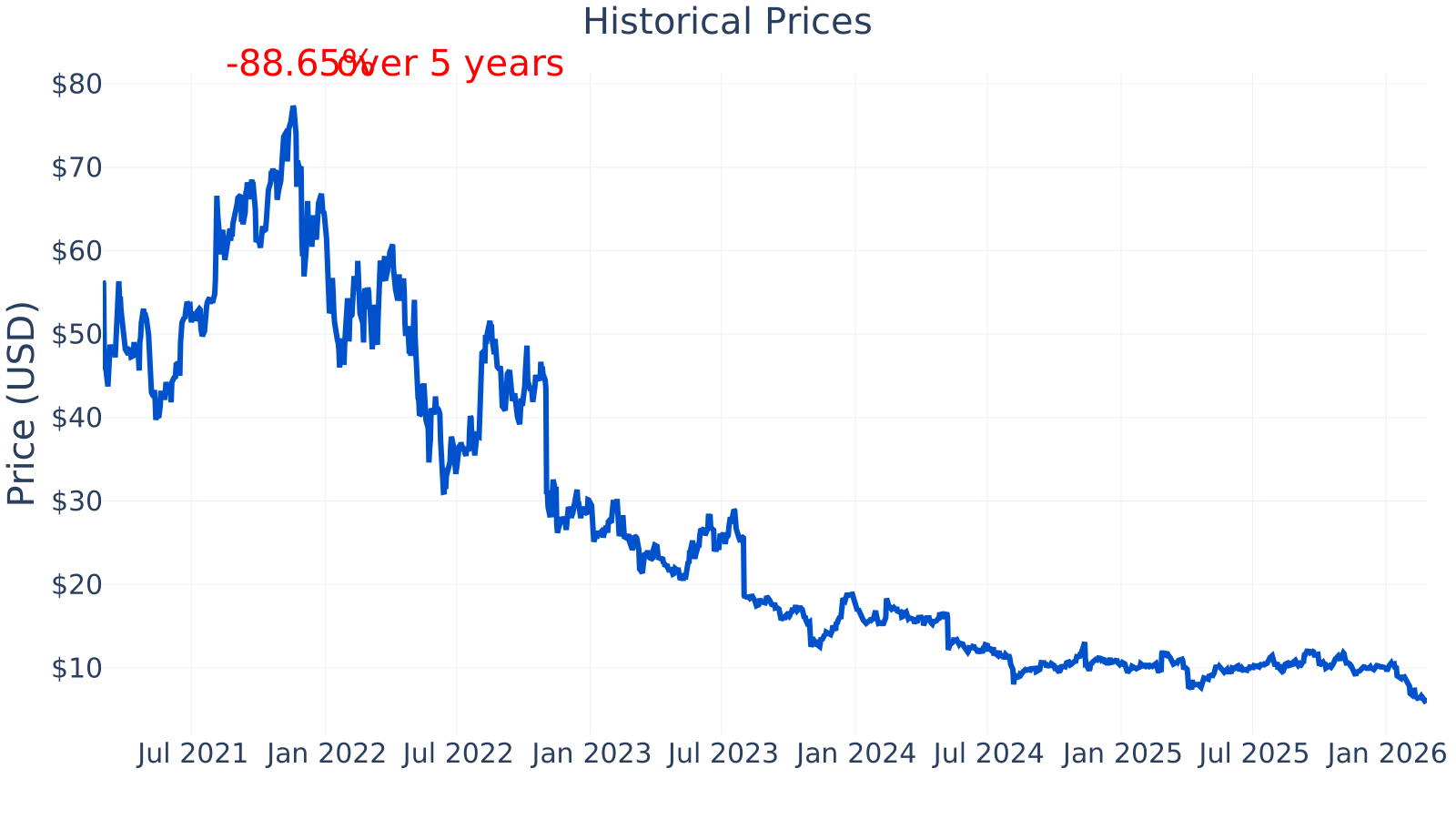
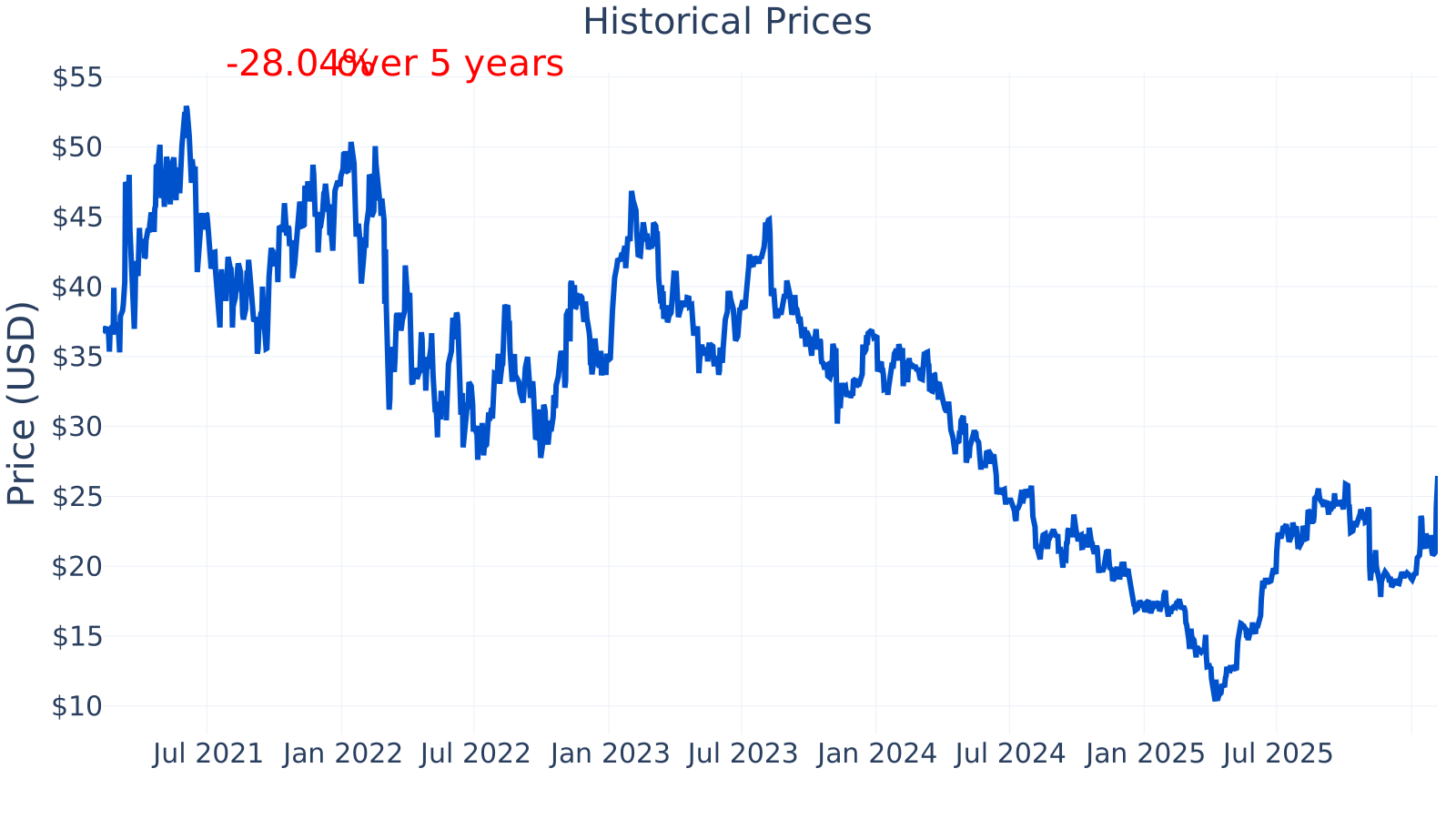
Adient’s market capitalization is about $2.09B, and the stock shows a beta of ~1.60, which indicates higher-than-market sensitivity (bigger swings up and down are more common). Profitability is currently weak: the latest profit margin is about -2.06%, compared with an industry median near 3.38%. Revenue growth is modest: about 4.3% year-over-year versus an industry median around 4.95%. Leverage is elevated with debt-to-equity of ~137.8% versus an industry median near 66.9%. Despite profit pressure, free cash flow (TTM) is about $175M, showing the business has recently produced cash even while reported earnings have been challenged.
Growth (Medium)
Adient operates in the global automotive seating market, which is generally a mature, high-volume manufacturing area rather than a “hyper-growth” tech-like industry. Long-term demand is closely tied to how many vehicles are produced worldwide, plus content trends such as comfort, safety features integrated into seats, and automakers’ evolving interior designs.
From a strategy standpoint, a large seating supplier can grow by:
- Winning new vehicle programs (new platforms and model refreshes)
- Improving pricing and commercial terms on launches and renewals
- Raising manufacturing efficiency (lower scrap, better uptime, smoother launches)
- Aligning footprint and costs with where automakers build vehicles
Recent year-over-year revenue growth has been uneven, shifting from positive periods to a stretch of declines and then returning to low-single-digit growth (about 4.3% in the latest point shown). This pattern is consistent with an auto-supply business where volumes, production schedules, customer launches, and pricing pass-throughs can vary meaningfully from year to year.
Free cash flow improved materially compared with earlier negative periods, reaching a higher level in 2024 and remaining positive more recently (about $175M TTM). For a manufacturer, sustained positive free cash flow can matter because it supports debt service, restructuring efforts, and investment in future programs—though cash generation can also swing with working capital needs and production cycles.
Risks (High)
This article is for informational purposes only and does not constitute financial advice. Some content is AI-generated. See Disclaimer