Stock Analysis · Accenture plc (ACN)
Overview
Accenture plc is a global professional services company focused on helping organizations plan, build, and run technology and business operations. In simple terms, it supports clients with large-scale digital projects (like modernizing software and moving systems to the cloud), improving how work gets done (process redesign and automation), strengthening cybersecurity, and operating certain business functions on an ongoing basis.
Accenture reports its business through five main service areas (these categories are used in its annual filings). Revenue is largely generated from time-and-materials consulting work and longer-term managed service arrangements that run critical IT and business processes for clients.
Main revenue streams are typically described in company filings as:
- Consulting: strategy, digital transformation programs, technology implementation, and organizational change work.
- Managed Services: ongoing operation of clients’ technology and business processes (often multi-year contracts).
- Service areas: Strategy & Consulting, Technology, Operations, Industry X (digital engineering/manufacturing-focused work), and Song (marketing, customer experience, and design).
- Client industries: broad exposure across sectors such as communications/media/technology, financial services, health & public service, products, and resources.
Over the last several fiscal years shown below, total revenue increased from about $50.5B (FY2021) to about $69.7B (FY2025), while net income rose from about $5.9B to about $7.7B. This combination suggests scale growth with profitability maintained, though margins and demand can vary by cycle and mix of work.
From FY2021 to FY2025, revenue rose meaningfully, and operating income and net income increased as well. Costs grew too (as expected for a services business where people-related costs are significant), but the business continued to convert a sizable portion of revenue into operating profit.
Key Figures
| Metric | Value | Industry ⓘ |
|---|---|---|
| Date | Feb 07, 2026 | |
| Context | ||
| Sector | Technology | |
| Industry | Information Technology Services | |
| Market Cap ⓘ | $149.22B | |
| Beta ⓘ | 1.24 | |
| Fundamental | ||
| P/E Ratio ⓘ | 19.31 | 21.13 |
| Profit Margin ⓘ | 10.76% | 4.91% |
| Revenue Growth ⓘ | 6.00% | 6.15% |
| Debt to Equity ⓘ | 26.57% | 54.49% |
| PEG ⓘ | 1.87 | |
| Free Cash Flow ⓘ | $11.51B | |
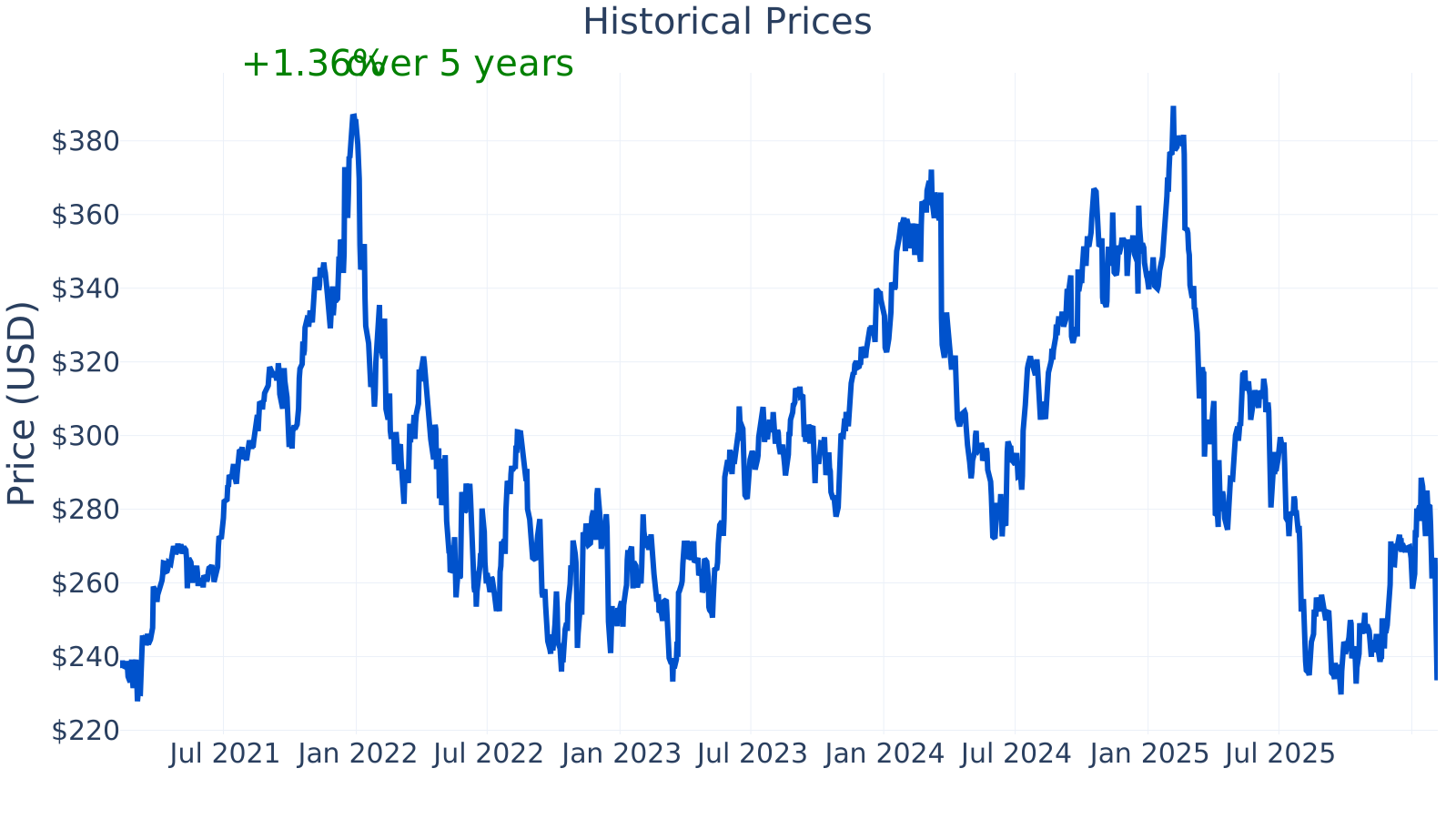
Accenture’s market capitalization is about $149.2B, and its beta of ~1.24 suggests the stock has tended to move somewhat more than the overall market. Profitability stands out versus the industry median: ~10.8% profit margin compared with ~4.9% for the industry median shown. Growth is currently close to the peer midpoint (~6.0% year-over-year revenue growth versus an ~6.2% industry median). Leverage appears lower than typical peers: ~26.6% debt-to-equity compared with an ~54.5% industry median. Trailing twelve-month free cash flow is about $11.5B, reflecting strong cash generation for a services-led model.
Growth (Medium)
Accenture operates in information technology services, which is supported by long-running drivers: cloud adoption, cybersecurity needs, data modernization, enterprise software change, and the ongoing push to automate processes and improve productivity. These needs tend to persist even when clients become cautious in the short term, because many projects are tied to cost reduction, resilience, or regulatory requirements.
The company’s strategy is built around breadth (many industries and geographies), depth (specialized capabilities across cloud, data, security, and industry-specific work), and recurring relationships (a mix of project-based consulting and longer-duration managed services). This structure can support steadier demand than a pure project-only model, but it also means results can depend on large clients’ spending cycles.
Year-over-year revenue growth has fluctuated: it was high in 2021–2022, slowed materially through 2023–2024 (including a brief dip around mid-2024), and then re-accelerated into late 2024 and 2025, with recent readings around the mid-single digits. This pattern is consistent with a large services business that is sensitive to enterprise budgeting cycles but can regain momentum as spending priorities shift.
Free cash flow has remained substantial over time. After a lower point in early 2022 (about $6.8B), it recovered and has been around $8.8B–$9.7B in subsequent years shown, with the latest trailing twelve months at about $11.5B. For long-term business durability, consistent cash generation can matter because it supports reinvestment (training, platforms, acquisitions) and financial flexibility.
Potential catalysts (in a factual, non-predictive sense) are typically tied to the same structural themes: large-scale cloud programs, cybersecurity and regulatory-driven upgrades, and adoption of automation and generative AI tools inside enterprises. The magnitude and timing of these programs can vary, but they represent ongoing categories of work that align with Accenture’s capabilities described in its filings.
Risks (Medium)
This article is for informational purposes only and does not constitute financial advice. Some content is AI-generated. See Disclaimer


