Stock Analysis · TE Connectivity Ltd (TEL)
Overview
TE Connectivity Ltd (TEL) designs and manufactures connectors, sensors, and related components that help power, connect, and protect the flow of data and electricity inside equipment. In simple terms, its products are the “plugs, sockets, and sensing parts” that sit inside cars, airplanes, factory machines, medical devices, and communication equipment. Because these components are used across many industries, TE’s business tends to be diversified, but it can still be influenced by cycles in areas like automotive and industrial production.
The company reports results primarily through two operating segments, which are its main sources of revenue:
- Transportation Solutions (largest): products for automotive and commercial transportation, including high-voltage connectivity and sensor-related content used in electrified and increasingly electronic vehicles.
- Industrial Solutions (second): products used in broad industrial applications, including factory/automation, aerospace/defense, medical, energy, and data-and-devices-related end markets.
Within these segments, revenue is generally driven by (1) the number of units produced by TE’s customers (for example, vehicles built or industrial equipment shipped) and (2) how much TE content is designed into each platform (for example, more connectors and high-voltage components in electric vehicles, or more sensors in automated equipment).
Over the period shown, total revenue is in the mid-to-high teens (in billions), and operating income remains meaningfully positive. Research and development spending is also substantial and has risen over time (from roughly $0.6B to above $0.8B in the years displayed), which is consistent with a strategy of maintaining engineered, application-specific product portfolios rather than competing only on basic commoditized parts.
Key Figures
| Metric | Value | Industry ⓘ |
|---|---|---|
| Date | Apr 27, 2026 | |
| Context | ||
| Sector | Technology | |
| Industry | Electronic Components | |
| Market Cap ⓘ | $62.99B | |
| Beta ⓘ | 1.26 | |
| Fundamental | ||
| P/E Ratio ⓘ | 21.93 | 45.47 |
| Profit Margin ⓘ | 15.54% | 6.11% |
| Revenue Growth ⓘ | 14.50% | 17.40% |
| Debt to Equity ⓘ | 42.73% | 41.32% |
| PEG ⓘ | 1.11 | |
| Free Cash Flow ⓘ | $3.39B | |
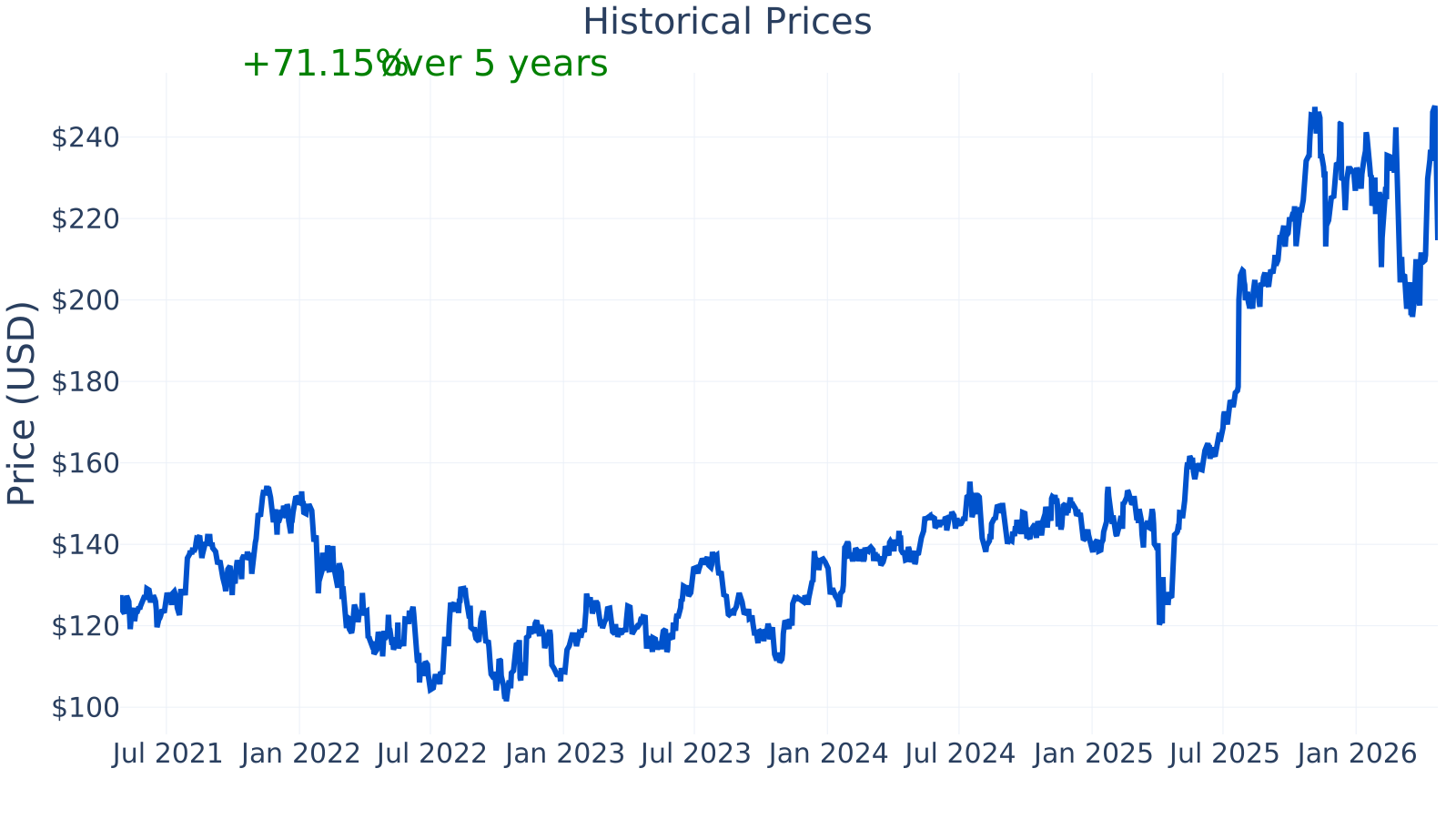
TE Connectivity’s market capitalization is about $63.0B, and the stock’s beta of ~1.26 suggests it has historically moved more than the overall market. The P/E ratio is ~21.9 versus an industry median ~45.5 (Electronic Components peer set shown), while the profit margin is ~15.5% versus an industry median ~6.1%. Year-over-year revenue growth is shown at ~14.5% (industry median ~17.4%). Debt-to-equity is ~42.7% (industry median ~41.3%). Trailing twelve-month free cash flow is about $3.39B.
Growth (Medium)
TE operates in markets tied to long-term themes such as electrification, increasing electronic content in vehicles, factory automation, and higher connectivity needs across equipment. Connectors and sensors are typically a small part of a customer’s total bill of materials, but they can be mission-critical for reliability and safety. This often supports ongoing demand as systems become more complex (more connections, more shielding, more data, more sensing).
The year-over-year revenue growth pattern shown is cyclical: a strong rebound earlier in the period, followed by several quarters of modest or negative growth, and then a return to clearly positive growth more recently (mid-teens in the latest point). This type of profile is consistent with TE’s exposure to end-market cycles (such as automotive build rates and industrial demand) rather than a straight-line growth business.
Free cash flow (a common measure of cash generated after operating needs and capital spending) trends upward across the time frame shown—from about $1.64B (2022) to about $3.39B (latest). For a manufacturing-focused business, sustained cash generation can matter because it provides flexibility for reinvestment (new products and capacity), acquisitions, and shareholder returns, while also helping the company navigate weaker demand periods.
Potential catalysts that can support longer-run growth (without relying on short-term events) include: increasing high-voltage connectivity content per electric or hybrid vehicle, greater sensor usage for safety and efficiency, and continued demand for rugged, high-reliability components in aerospace/defense and medical applications. TE’s ongoing R&D spending also indicates an emphasis on engineered solutions where performance and reliability requirements are higher.
Risks (Medium)
TE’s results can be influenced by economic cycles because many customers operate in cyclical industries (notably automotive and broad industrial). A slowdown in vehicle production, inventory corrections in industrial supply chains, or reduced capital spending by manufacturers can reduce order volumes. Like many global manufacturers, TE also faces risks related to raw material costs, supply chain disruptions, and foreign exchange movements.
Debt-to-equity is around 42.7% in the latest point, near the peer median (~41.3%). The multi-period view shows some fluctuation, including periods where leverage rose above ~50%. This is not necessarily unusual for a large industrial technology manufacturer, but it highlights that capital structure can move over time and should be monitored, especially during demand downturns.
Profit margin is shown at about 15.7% in the latest point, above the peer median (~6.1%) across the period shown. Margins, however, have varied meaningfully—rising above 20% in parts of 2023–2024 and dipping into high single digits during parts of 2025 before recovering. That variability suggests that mix, pricing, volumes, and one-time items can materially affect reported profitability from year to year.
Competitive positioning in connectors and sensors is typically based on engineering depth, qualification history, manufacturing scale, and long-term customer relationships. TE is commonly viewed as a major global player in connectors, with a broad portfolio across end markets. Even so, competition is significant, ranging from large diversified component suppliers to specialized firms, and pricing pressure can be intense in more standardized product categories.
Main competitors depend on the specific product line and end market, but commonly include large interconnect and component manufacturers such as Amphenol, Molex (a Koch Industries company), and Aptiv (notably in automotive electrical architecture), among others. TE’s scale and breadth can be an advantage, while competitors may be stronger in certain niches or customer relationships.
Valuation
On an earnings multiple basis, TE’s latest P/E of ~21.9 is below the industry median of ~45.5 in the peer set shown. Historically in the chart, TE’s P/E has often traded below the peer median, with notable swings over time (including periods in the low-to-mid teens and later periods above 30). A key takeaway is that valuation has not been stable; it has moved with both share price changes and shifts in earnings.
Whether the current valuation is “high” or “low” depends on how sustainable earnings and margins are through a full cycle and how much long-run growth emerges from themes like electrification and automation. The company’s above-median profit margin and rising free cash flow can support higher valuation ranges during stronger periods, while the cyclical nature of several end markets can limit how consistently those levels persist.
Conclusion
TE Connectivity is a large, diversified manufacturer of connectors and sensors that are embedded in many essential products across transportation and industrial markets. The business is tied to long-term technology and electrification trends, while also remaining exposed to cyclical demand patterns. Recent metrics show strong profitability versus peers and expanding free cash flow over time, alongside moderate leverage close to the peer median and a valuation multiple that is below the industry median shown.
The main long-term discussion points are the balance between (1) structural growth drivers such as electrification, connectivity, and automation and (2) the reality that automotive and industrial demand can fluctuate, affecting revenue growth and margins. In that context, TE’s scale, engineering focus, and cash generation are central characteristics to track over time.
Sources:
- TE Connectivity — Form 10-K (Annual Report) (Business segments, risk factors, financial discussion)
- SEC EDGAR — TE Connectivity Ltd filings (10-K, 10-Q) (official financial statements and disclosures)
- TE Connectivity — Investor Relations materials (segment descriptions and company reporting structure)
- Wikipedia — “TE Connectivity” (general company background)
This article is for informational purposes only and does not constitute financial advice. Some content is AI-generated. See Disclaimer