Stock Analysis · Genius Sports Ltd (GENI)
Overview
Genius Sports Ltd is a sports technology company that sits between live sports and the digital products that use sports information. In practical terms, it helps sports leagues, sportsbooks, and media companies collect, verify, and distribute real-time game information (such as official play-by-play), and it also supports products built on top of that information, including betting-related tools and advertising around sports audiences.
The company organizes its business around three main areas described in its SEC filings:
- Betting Technology, Content & Services: supplying official sports information and related services to sportsbooks and betting partners.
- Media Technology, Content & Services: providing sports data and tools used by media and digital publishers to power live experiences.
- Sports Technology & Services: software and technology sold to leagues/teams to help run competitions, manage content, and improve integrity and performance workflows.
Across these areas, revenue typically comes from a mix of (1) recurring fees for access to content/technology, and (2) usage-based or volume-based fees tied to how much content is consumed or how many events are covered, plus services delivered to leagues and partners. The exact revenue mix can shift year to year depending on contract structure and the number of competitions covered.
One clear long-term trend is that total revenue increased materially over the period shown (from about $263M in 2021 to about $669M in 2025). Gross profit also improved from negative in 2021 to positive in later years, indicating cost of revenue has become better aligned with scale. Operating income and net income remained negative in each year shown, reflecting continued spending and other costs relative to current gross profit.
Key Figures
| Metric | Value | Industry ⓘ |
|---|---|---|
| Date | Mar 10, 2026 | |
| Context | ||
| Sector | Communication Services | |
| Industry | Internet Content & Information | |
| Market Cap ⓘ | $1.33B | |
| Beta ⓘ | 1.99 | |
| Fundamental | ||
| P/E Ratio ⓘ | N/A | 19.67 |
| Profit Margin ⓘ | -16.67% | 9.94% |
| Revenue Growth ⓘ | 37.00% | 6.80% |
| Debt to Equity ⓘ | 4.21% | 10.97% |
| PEG ⓘ | N/A | |
| Free Cash Flow ⓘ | $36.54M | |
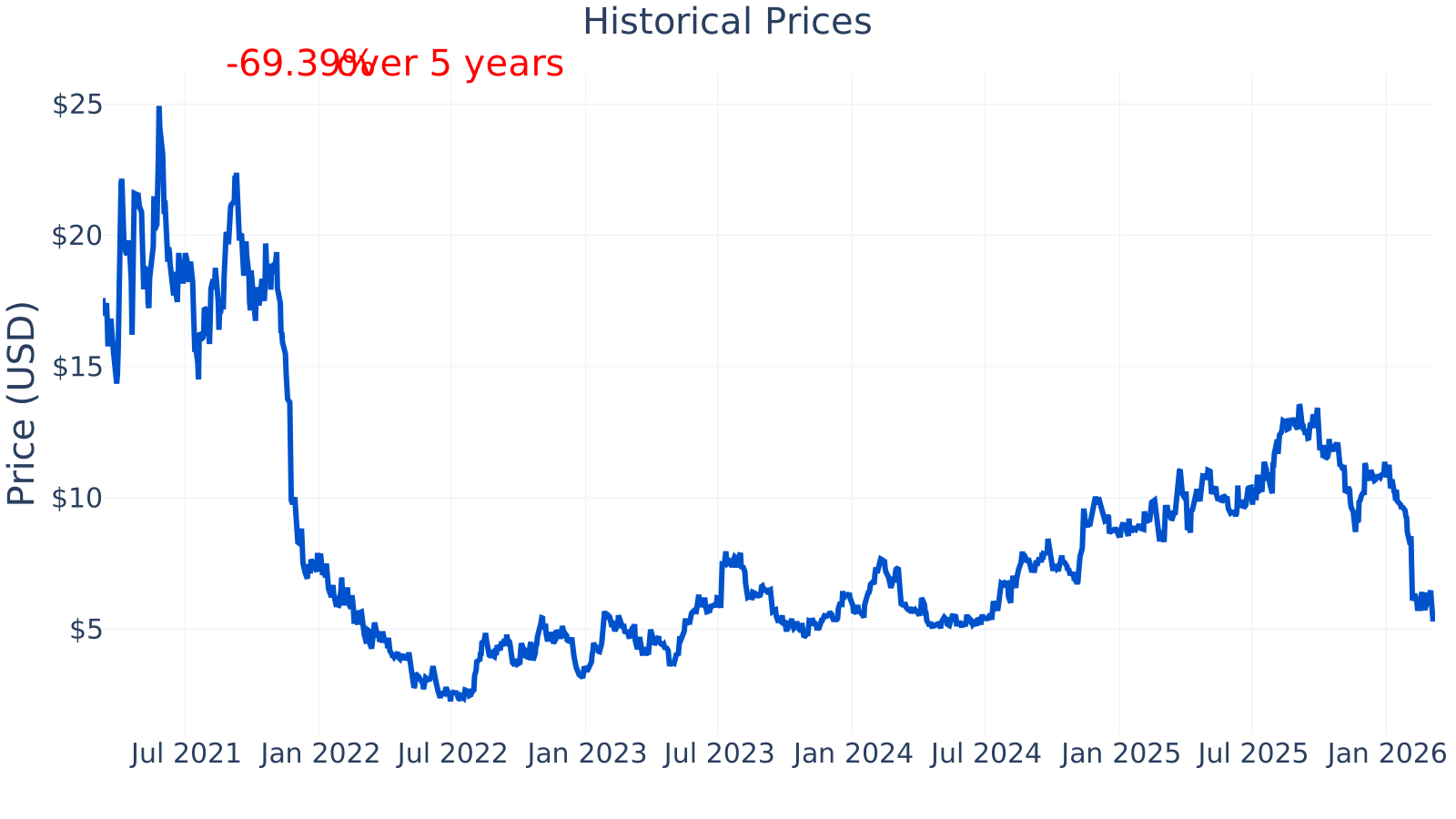
At the latest point shown, market capitalization is about $1.33B. The stock’s beta of ~1.99 indicates it has historically moved more than the broader market (higher volatility). Profit margin is about -16.7% versus an industry median near +9.9%, meaning the company is still unprofitable on a net basis compared with many peers. At the same time, year-over-year revenue growth is ~37%, well above an industry median around 6.8%. Leverage appears modest: debt-to-equity is ~4.2% versus an industry median around 11.0%. Free cash flow (TTM) is shown as $36.5M in the table, while the longer history in the cash flow chart section below shows how cash generation has changed over time.
Growth (Medium)
Genius Sports operates in markets that have benefited from multiple long-running trends: the expansion of legal sports betting in more jurisdictions, the growing demand for real-time sports experiences in apps and broadcasts, and the broader use of data to personalize advertising and fan engagement. These trends can support durable demand for fast, reliable sports information and the technology that delivers it.
The company’s strategy is closely tied to scaling “official” coverage across more competitions and deepening distribution through sportsbooks and media partners. In this type of business, scale can matter: covering more events and distributing them through more partners can improve product value and create recurring relationships, particularly when integrations are embedded into customers’ platforms.
Revenue growth has been consistently positive in the periods shown, with a noticeable acceleration in several quarters (including readings around the high-30% range more recently). This pattern suggests demand has remained resilient, although growth rates have also fluctuated quarter to quarter.
Free cash flow improved meaningfully from deeply negative levels in earlier periods toward much closer to breakeven by 2025 in the history shown. This can indicate better operating efficiency and/or working-capital dynamics, but free cash flow can vary based on timing effects, contract terms, and investment cadence.
Risks (High)
A key risk for Genius Sports is that profitability has remained negative in the periods shown, even as revenue expanded. This means the long-term outcome depends on whether the company can sustainably convert growth into durable earnings and cash generation while continuing to invest in coverage, products, and partner relationships.
Another structural risk is customer and contract concentration. Businesses that supply core sports content and technology often rely on a limited number of large sportsbook operators, media platforms, and league relationships. Changes in contract economics, renewals, or partner strategies can materially affect results. In addition, sports betting is heavily regulated; changes in rules, enforcement, or tax structures in major markets can influence customer activity and overall demand.
Competition is also significant. The broader ecosystem includes other sports data and technology providers and, in some cases, leagues or platforms bringing parts of the workflow in-house. In official-data-driven models, competitive positioning can depend on breadth of rights/relationships, data quality, latency (speed), reliability, and the depth of product integrations. Genius Sports describes itself in filings as a provider of official data and related technology; however, competitive dynamics can vary by sport, geography, and customer segment.
Debt levels look relatively low versus the industry median across the period shown, ending around 4.2% debt-to-equity. Lower leverage can reduce financial risk, but it does not remove execution risk tied to operating losses and investment requirements.
Profit margin has remained negative throughout the timeline shown and is well below the industry median in most periods. There is improvement compared with the extremely negative levels seen earlier in the history, but margins still reflect an unprofitable profile at the net income level.
Valuation
For many companies, a common starting point for valuation discussion is the price-to-earnings (P/E) ratio. In this case, the P/E ratio is not meaningfully shown for the company across the timeline, which is typically what happens when earnings are negative or not comparable. That makes P/E-based comparisons less informative and shifts attention toward other lenses such as revenue scale, gross profit trajectory, cash flow trends, and the path to sustainable profitability.
The industry median P/E displayed on the chart (often in the mid-teens to mid-20s in the period shown) highlights that many peers are valued on positive earnings, while Genius Sports is still in a phase where earnings-based valuation is harder to apply directly.
With a market capitalization around $1.33B and revenue rising over time in the financial flow section, the market’s pricing tends to reflect expectations about continued growth and eventual improvement in profitability. The main question for valuation context is how confidently the business can sustain growth while improving margins, especially given competitive and contract-related risks.
Conclusion
Genius Sports is a sports technology company focused on delivering real-time sports content, betting-related services, and tools for media and leagues. The company has shown substantial revenue expansion over the multi-year period displayed and improved gross profit versus earlier years, which supports the narrative of scaling and operational progress.
At the same time, net profitability has remained negative and profit margins are below the industry median, which keeps execution risk elevated. Financial leverage appears modest based on debt-to-equity levels, but the overall risk profile still depends heavily on contract dynamics, competitive positioning in sports data and technology, and the company’s ability to translate growth into durable earnings and cash generation over time.
Sources:
- SEC EDGAR — Genius Sports Ltd filings (Form 10-K, Form 10-Q, Form 8-K)
- Genius Sports Investor Relations — Annual Report materials and shareholder communications (company-hosted)
- Wikipedia — “Genius Sports” (basic background only)
This article is for informational purposes only and does not constitute financial advice. Some content is AI-generated. See Disclaimer