Stock Analysis · Brightstar Lottery PLC (BRSL)
Overview
Brightstar Lottery PLC (BRSL) operates in the gambling industry within the Consumer Cyclical sector. Based on its financial profile, the business appears to generate revenue primarily from lottery-related gaming activity and associated services (for example, ticket sales channels and gaming operations), where revenue and profitability depend on consumer participation levels and the regulatory environment in the jurisdictions where it operates.
From the available public financial information here, a detailed revenue breakdown by business line (with percentages) is not provided. In general, companies in this space typically earn revenue from a mix such as:
- Lottery and draw-based games (ticket sales and related commissions)
- Instant games / scratch products
- Digital/online distribution (where permitted)
- Gaming services (technology, terminals, or operational services tied to lottery systems)
At a high level, Brightstar’s recent annual revenue shown below indicates a business that has been stable to slightly declining since 2022, with costs and operating expenses that can materially influence earnings from year to year.
Across 2021–2024, total revenue declined from about $4.09B (2021) to about $2.51B (2024). Over the same period, operating income stayed positive (about $735M in 2024), while interest expense remained meaningful (about $214M in 2024), which highlights the importance of financing costs for overall results.
Key Figures
| Metric | Value | Industry ⓘ |
|---|---|---|
| Date | Feb 08, 2026 | |
| Context | ||
| Sector | Consumer Cyclical | |
| Industry | Gambling | |
| Market Cap ⓘ | $3.51B | |
| Beta ⓘ | N/A | |
| Fundamental | ||
| P/E Ratio ⓘ | 157.27 | |
| Profit Margin ⓘ | N/A | 1.42% |
| Revenue Growth ⓘ | N/A | 12.75% |
| Debt to Equity ⓘ | 494.49% | 198.79% |
| PEG ⓘ | N/A | |
| Free Cash Flow ⓘ | $103.05M | |
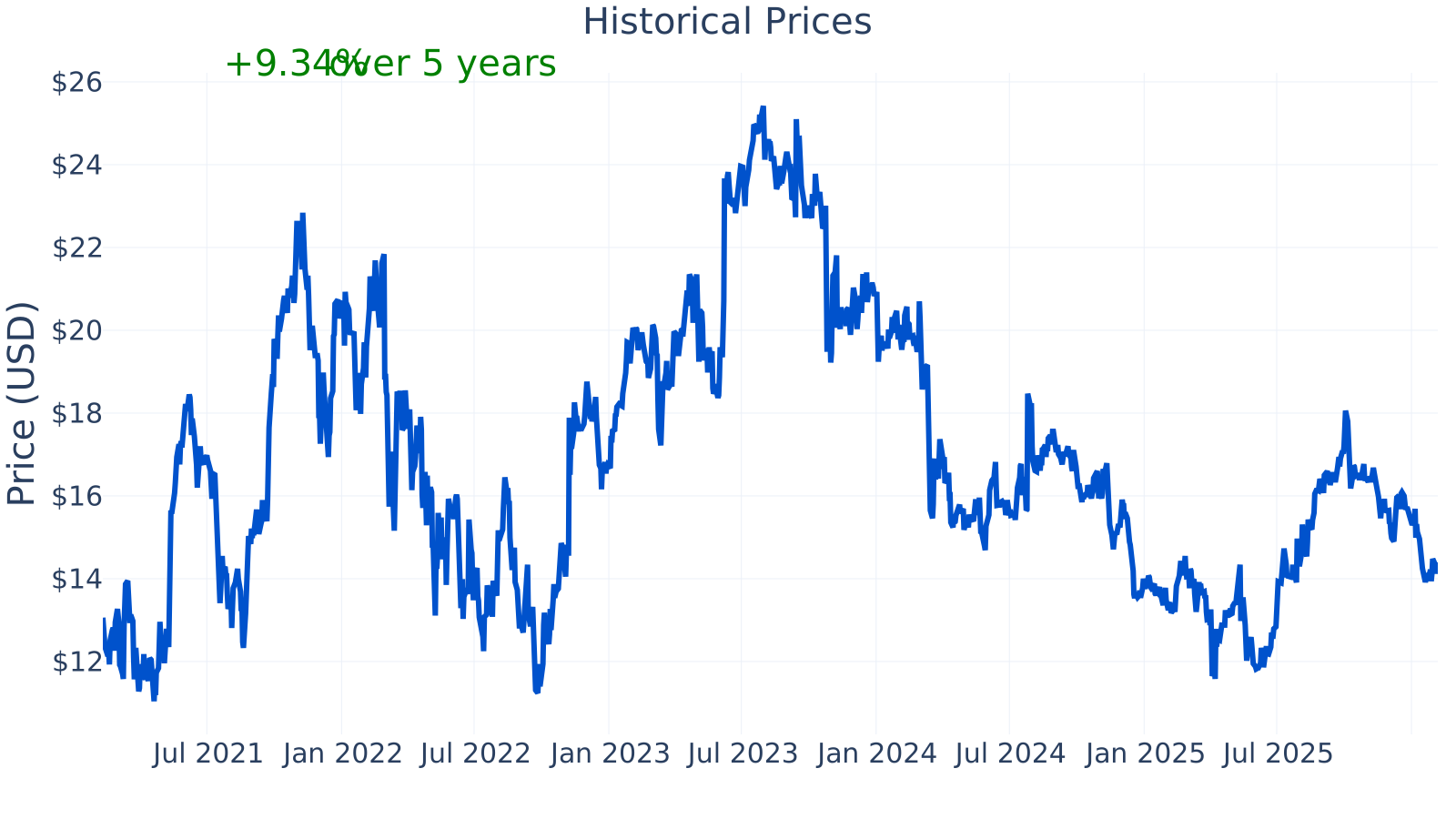
Brightstar’s market capitalization is about $3.51B. The latest P/E ratio shown in the table is 157.27, which is unusually high in most contexts and can happen when earnings are temporarily low or volatile. The table also shows free cash flow (TTM) of about $103.1M. For operational momentum, the table lists 0% revenue growth and 0% profit margin; however, the time-series charts below suggest profitability and growth have moved around materially quarter to quarter, so a single snapshot may not capture the full picture.
Growth (Medium)
Lottery and regulated gaming are generally mature categories, with growth often driven less by brand-new demand and more by factors such as population trends, product innovation (new game formats), digital adoption (where regulation allows), and contract wins/renewals with governments or authorized operators. In other words, the industry can grow, but it often depends on execution and regulatory permissions rather than purely organic market expansion.
Year-over-year revenue growth has recently been mixed: it was negative in late 2024 and early 2025 (about -4.3% and -11.8%), then turned positive by mid-to-late 2025 (about +2.8% and +7.3%). This pattern points to a possible stabilization phase, though it is not a long track record of consistent expansion.
Free cash flow (TTM) is shown near $944M–$969M across the displayed periods, which would typically indicate strong cash generation. This figure is materially higher than the latest table’s TTM value (about $103M), so it is important to reconcile definitions and reporting periods when reviewing official filings (for example, differences in methodology, one-time working-capital swings, or timing of updates). Still, consistent positive free cash flow is often a key support for debt service and long-term reinvestment capacity.
Potential catalysts in this type of business commonly include renewal of major operating agreements, expansion of digital distribution, and new product rollouts that increase participation without materially increasing costs. The strength and timing of these catalysts depend heavily on the company’s contract portfolio and jurisdiction-by-jurisdiction regulation (details typically described in annual reports).
Risks (High)
This article is for informational purposes only and does not constitute financial advice. Some content is AI-generated. See Disclaimer


