Stock Analysis · Logitech International SA (LOGI)
Overview
Logitech International SA designs and sells consumer and business hardware that helps people interact with computers, tablets, smartphones, and game consoles. Its best-known products include computer peripherals (like mice and keyboards), video collaboration equipment (webcams and conference-room devices), and gaming gear (under the Logitech G brand). The company typically outsources manufacturing and focuses on product design, software/firmware, brand building, and distribution through retailers and e-commerce.
Logitech’s revenue mainly comes from selling physical devices and accessories. Based on how the company presents its business, the largest revenue drivers are generally:
- Pointing devices (mice, trackballs, presentation remotes)
- Keyboards and keyboard-related products
- Gaming (Logitech G headsets, mice, keyboards, controllers/accessories)
- Video collaboration (webcams, conference-room cameras and systems)
- Other categories (such as tablets accessories and additional peripherals, depending on the period)
Because Logitech is a hardware company, sales can be influenced by product cycles, consumer demand, business spending, and retail inventory levels.
The profitability profile shown below highlights how much of each revenue dollar remains after product costs and operating expenses, and how that has shifted over time.
Over the periods shown, total revenue declined from its 2022 level and then stabilized, while net income fell sharply in 2023 and later recovered. Research and development spending stayed meaningful across the years, reflecting an ongoing focus on new product design and platform updates.
Key Figures
| Metric | Value | Industry ⓘ |
|---|---|---|
| Date | Feb 07, 2026 | |
| Context | ||
| Sector | Technology | |
| Industry | Computer Hardware | |
| Market Cap ⓘ | $13.48B | |
| Beta ⓘ | 0.68 | |
| Fundamental | ||
| P/E Ratio ⓘ | 18.66 | 25.91 |
| Profit Margin ⓘ | 14.94% | 3.74% |
| Revenue Growth ⓘ | 6.10% | 21.50% |
| Debt to Equity ⓘ | 3.94% | 4.92% |
| PEG ⓘ | 1.24 | |
| Free Cash Flow ⓘ | $903.56M | |
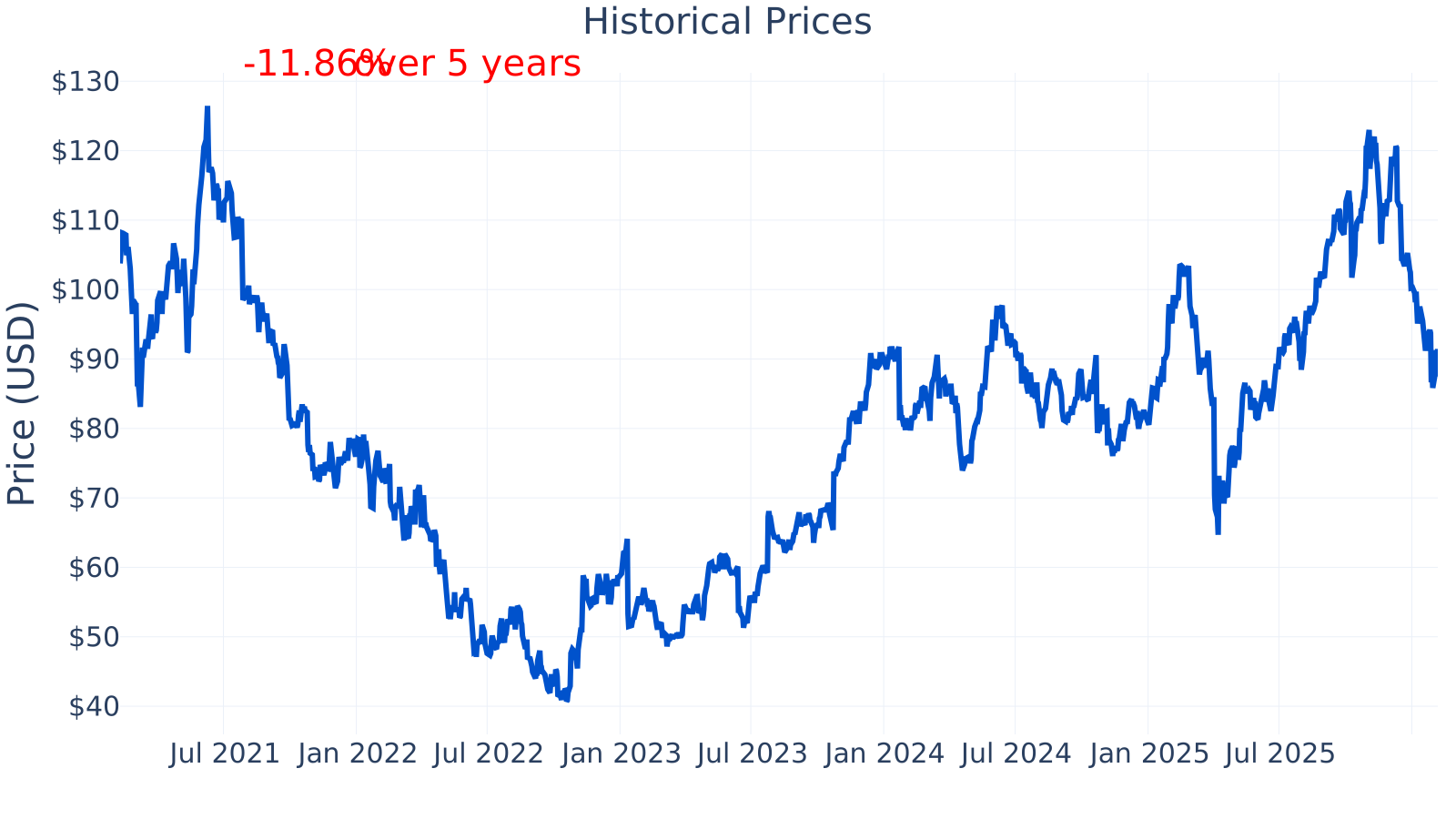
Logitech’s market capitalization is about $13.5B, placing it in the mid-cap range. The stock’s beta of 0.68 indicates it has historically moved less than the broader market on average (though this can change over time). Profitability stands out: a ~14.9% net profit margin versus an industry median near ~3.7%. Recent year-over-year revenue growth is ~6.1%, which is below the industry median shown (~21.5%), suggesting Logitech’s segment mix and/or market conditions have been more moderate than some peers. Balance-sheet leverage appears low with debt-to-equity around ~3.9%. Trailing twelve-month free cash flow is about $904M, indicating the business has continued to generate cash after operating needs and capital spending.
Growth (Medium)
Logitech participates in several long-running demand areas: personal computing accessories, gaming peripherals, and video-enabled communication for hybrid work. These are not purely “one-time” markets; devices wear out, standards change (wireless protocols, connectivity, video quality), and users often upgrade for comfort and performance. However, these categories can still be cyclical: after a surge in device purchases, demand can cool as customers keep products longer.
Recent revenue growth has improved from the declines seen in 2022–2023 to positive territory in 2024 and 2025. That pattern is consistent with a normalization phase after a prior demand spike and subsequent downturn.
Cash generation matters for long-term business resilience because it funds new product development, marketing, supply chain flexibility, and potential shareholder returns. Logitech’s free cash flow has been positive over the periods shown, with a notable drop in 2022 and improvement afterward.
Potential catalysts over time typically include successful product refresh cycles in core categories (mice, keyboards, gaming gear), expansion of enterprise video collaboration deployments, and maintaining strong brand positioning in premium peripherals. The company’s ability to introduce differentiated products at higher price points is important because it can support margins even if overall unit demand is uneven.
Risks (Medium)
This article is for informational purposes only and does not constitute financial advice. Some content is AI-generated. See Disclaimer


