Stock Analysis · Magna International Inc (MGA)
Overview
Magna International Inc. is a global automotive supplier. In simple terms, it makes many of the key systems and parts that go into vehicles (for example: body structures, chassis, exterior parts, seating, and powertrain-related components), and it also supports automakers with engineering and manufacturing services. Magna sells primarily to large automakers, so its business tends to move with global vehicle production volumes and model launches.
Based on how Magna reports its business in its public filings, revenue is mainly generated through two broad activities:
- Parts and systems supply (the largest source): manufacturing and supplying components and complete systems to automakers across multiple vehicle areas.
- Complete vehicle engineering/manufacturing services (smaller, but meaningful): helping automakers design, engineer, and in some cases manufacture whole vehicles or major vehicle programs through specialized operations.
Magna’s customer concentration is typically centered on major global automakers, which can be beneficial (large, long-running programs) but also increases exposure to automaker production decisions and platform changes.
Across recent years, total revenue has been relatively stable in the low-to-mid $40B range. A large share of revenue is consumed by production costs, which is typical in auto parts manufacturing. Profitability has fluctuated meaningfully, with net income moving up and down even when revenue is relatively steady—highlighting how sensitive results can be to costs, pricing, and production efficiency.
Key Figures
| Metric | Value | Industry ⓘ |
|---|---|---|
| Date | May 05, 2026 | |
| Context | ||
| Sector | Consumer Cyclical | |
| Industry | Auto Parts | |
| Market Cap ⓘ | $16.21B | |
| Beta ⓘ | 1.85 | |
| Fundamental | ||
| P/E Ratio ⓘ | 25.66 | 24.76 |
| Profit Margin ⓘ | 1.59% | 3.56% |
| Revenue Growth ⓘ | 3.10% | 5.40% |
| Debt to Equity ⓘ | 56.24% | 69.29% |
| PEG ⓘ | 0.35 | |
| Free Cash Flow ⓘ | $2.79B | |
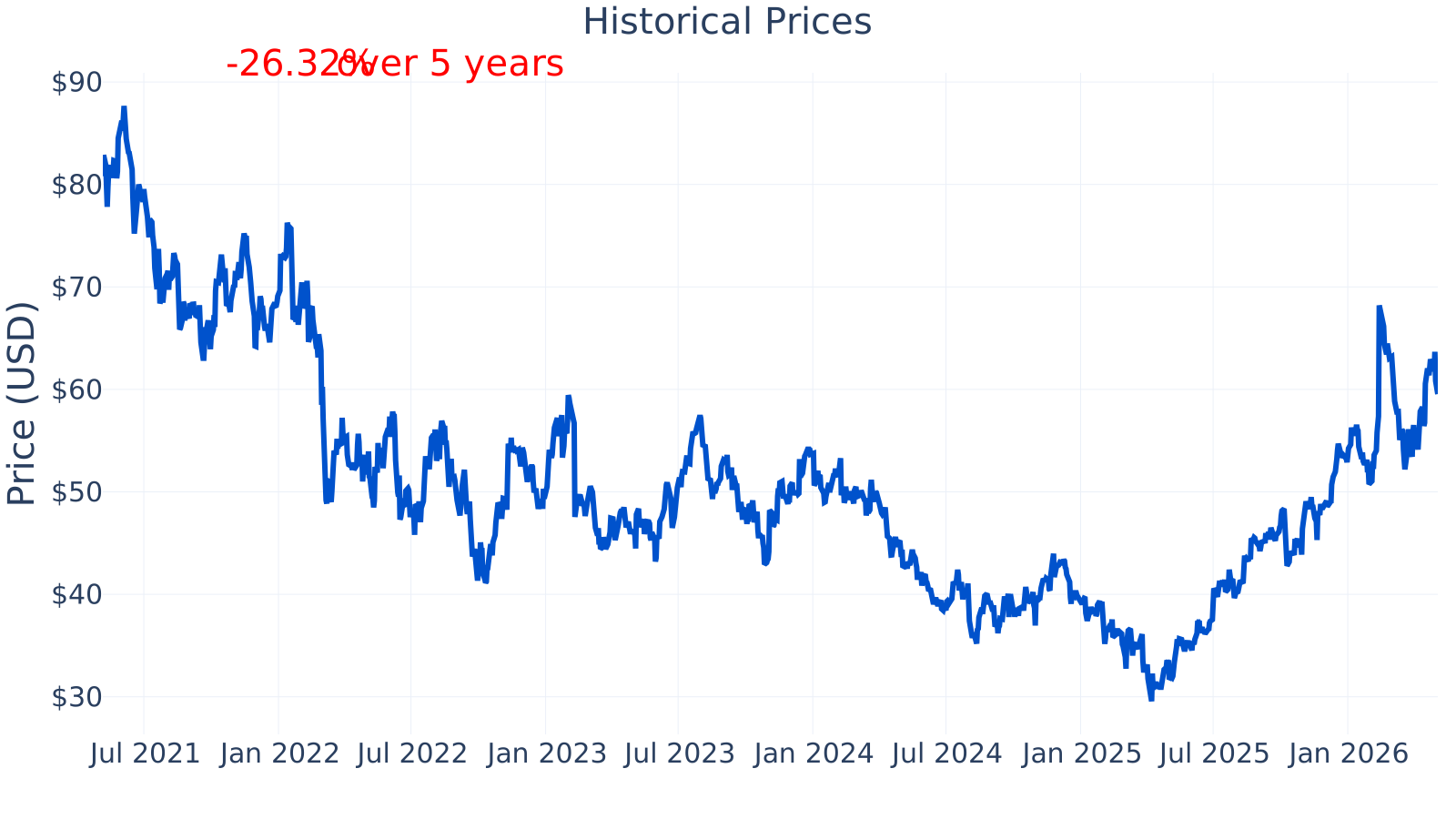
Magna’s market capitalization is about $16.2B. The stock’s beta of 1.85 suggests it has historically moved more than the broader market (higher price swings up and down). The current P/E ratio is 25.66, close to the industry median of 24.76. Profitability is currently thinner than the typical peer: profit margin ~1.59% versus an industry median near 3.57%. Year-over-year revenue growth is also below the peer median: ~3.1% versus ~5.4%. Balance-sheet leverage (as measured here) is somewhat lower than the industry median: debt-to-equity ~56% vs ~69%. Trailing twelve-month free cash flow is about $2.79B, which is a key metric for financial flexibility (funding operations, investment, debt service, and shareholder returns).
Growth (Medium)
Magna operates in the auto parts industry, which is mature overall and tightly linked to global vehicle production. That said, the industry is also undergoing major technology and product shifts—especially electrification, software/content growth in vehicles, and ongoing design changes aimed at efficiency and safety. For a large supplier, growth often comes from winning new vehicle programs, increasing “content per vehicle” (selling more value per car), expanding capabilities that automakers outsource, and executing well across global manufacturing footprints.
Recent year-over-year revenue growth has been uneven, including several negative quarters and several strong positive quarters, which is consistent with a cyclical, program-driven business. The latest reading is around 1.67% year-over-year, which indicates modest top-line momentum in the most recent period shown.
Free cash flow has improved sharply over the period displayed, rising from about $0.25B to about $2.79B in trailing twelve-month terms. For long-term business building, sustained free cash flow matters because it can support reinvestment in new programs and technologies while also helping manage debt and other long-term obligations.
Potential catalysts (in a neutral, factual sense) generally come from the same areas for a supplier like Magna: stronger-than-expected global production volumes, successful launches of new customer programs, improved pricing/cost recovery versus inflation, and improved operational efficiency across plants.
Risks (High)
Magna’s core risks are closely tied to the structure of the automotive supply chain. Vehicle production is cyclical, and automakers can adjust volumes quickly based on demand, inventory, and macroeconomic conditions. As a result, suppliers can face sudden shifts in schedules, utilization rates, and profitability. In addition, the industry is highly competitive, and pricing pressure is common—especially when contracts renew or when cost inflation is difficult to pass through.
Debt-to-equity has generally been below the industry median in most periods shown, though it has moved around over time. The latest value is about 56% (vs an industry median around 69%). Lower leverage than peers can provide more flexibility during downturns, but it does not remove the operating risks of a cyclical manufacturing business.
Profit margin has trended down materially from levels above 5% in 2021 to around 1.58% in the most recent period shown. While it has recovered from some of the lowest points, it remains below the industry median in most quarters. For long-term business quality, this is important because thin margins can leave less room for unexpected costs, warranty issues, program inefficiencies, or weaker production volumes.
From a competitive-position standpoint, Magna is widely recognized (based on its scale and breadth described in its filings) as a large, diversified supplier rather than a narrow niche player. Its competitive strengths typically come from manufacturing scale, a broad product portfolio, deep integration into customer platforms, and engineering/manufacturing capabilities that can be difficult to replicate quickly. However, the competitive environment remains intense, with large global peers across specific categories and systems.
Main competitors (examples of large global auto suppliers) include companies such as Linamar (Canada), American Axle & Manufacturing, Gentex (more specialized), and other major global suppliers that compete across seating, interiors, chassis, electronics, and powertrain-related systems. Competitive positioning often depends less on “one overall leader” and more on winning specific programs, executing launches, meeting quality standards, and managing costs across regions.
Valuation
Magna’s P/E ratio has varied significantly over time, moving from low double-digits in several periods to higher levels at other points. The most recent P/E shown is about 19.49, which is close to the industry median of about 19.21 at the same date. The latest snapshot metric shows a P/E around 25.66, also close to the industry median around 24.76. In other words, based on this common valuation measure, the stock has recently been valued broadly in line with typical peers.
Interpreting that valuation requires context: margins are currently below the peer median, revenue growth is also below the peer median, and the business is cyclical. Offsetting that, free cash flow has recently been strong in the period displayed and leverage (by debt-to-equity) has been somewhat lower than the peer median. A peer-like P/E multiple alongside lower-than-median margins can imply that the market is factoring in expectations of margin normalization, continued cash generation, or other improvements; it can also reflect the normal variability of earnings in cyclical industries.
Conclusion
Magna International is a large, diversified automotive supplier with revenue tied to global automaker production and vehicle program cycles. Recent revenue has been relatively steady at a high level, while profitability has fluctuated and margins have compressed compared with typical industry levels. At the same time, trailing free cash flow has improved significantly in the period shown, and leverage appears modest relative to the industry median.
For long-term analysis, the most important facts to track over time are whether margins stabilize or recover, whether free cash flow remains consistently positive through different parts of the auto cycle, and whether the company continues winning and executing new programs as vehicle technology and platforms evolve. The main counterweight is the industry’s cyclicality and competitive pricing dynamics, which can pressure results even when sales remain sizable.
Sources:
- SEC EDGAR — Magna International Inc. filings (Form 10-K, Form 10-Q)
- Magna International Inc. Investor Relations — Annual Report materials and SEC filing copies (company-hosted)
- Wikipedia — “Magna International” (basic company background)
This article is for informational purposes only and does not constitute financial advice. Some content is AI-generated. See Disclaimer