Stock Analysis · Magna International Inc (MGA)
Overview
Magna International Inc. is a global automotive supplier. In simple terms, it helps automakers build vehicles by providing complete systems (like seating, body structures, and electronics) as well as many individual parts. Magna also operates a contract manufacturing business that can assemble entire vehicles for automakers, which is less common among suppliers.
Because Magna sells mostly to automakers, its activity is closely linked to global vehicle production volumes and model launches. Its business is typically described through major operating groups that cover the main vehicle “building blocks” (body & chassis, seating, power & vision/electronics, and complete vehicle manufacturing).
Magna reports revenue primarily through these operating segments (largest to smallest may vary by year):
- Body Exteriors & Structures (vehicle body structures and exterior systems)
- Power & Vision (lighting, mirrors/cameras, driver-assistance-related electronics, and power technologies)
- Seating Systems (complete seating systems and seat components)
- Complete Vehicles (vehicle engineering and contract manufacturing/assembly)
The company’s consolidated revenue in recent years has been in the low-to-mid $40B range, reflecting Magna’s position as a large, diversified supplier rather than a single-product specialist.
From 2021 to 2024, revenue increased from about $36.2B to about $42.8B. Over the same period, costs to produce those goods remained the dominant expense line, which is typical in auto supply. Research and development spending rose meaningfully from roughly $0.63B (2021) to roughly $0.83B (2024), indicating continued investment in new programs and technologies. Net income moved lower versus 2021 and remained more volatile year to year, highlighting how sensitive profitability can be to production levels, pricing, and input costs.
Key Figures
| Metric | Value | Industry ⓘ |
|---|---|---|
| Date | Feb 07, 2026 | |
| Context | ||
| Sector | Consumer Cyclical | |
| Industry | Auto Parts | |
| Market Cap ⓘ | $15.28B | |
| Beta ⓘ | 1.72 | |
| Fundamental | ||
| P/E Ratio ⓘ | 14.80 | 25.56 |
| Profit Margin ⓘ | 2.47% | 3.38% |
| Revenue Growth ⓘ | 1.80% | 4.95% |
| Debt to Equity ⓘ | 59.35% | 66.87% |
| PEG ⓘ | 0.51 | |
| Free Cash Flow ⓘ | $2.04B | |
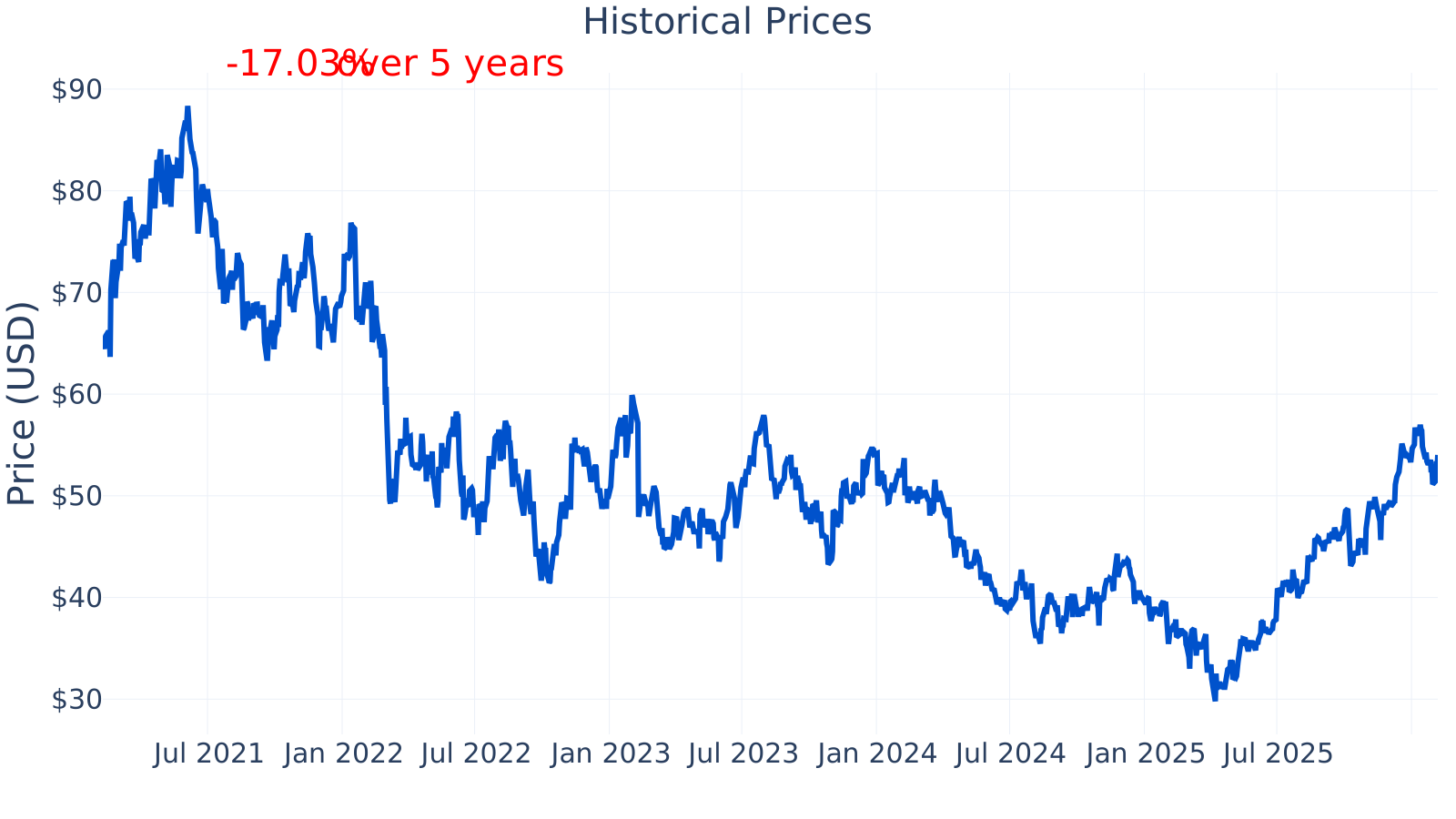
Magna’s market capitalization is about $15.3B. The stock’s beta of 1.72 suggests it has tended to move more than the overall market, which is consistent with a cyclical business tied to vehicle production. The P/E ratio is 14.8 versus an industry median around 25.6, while the profit margin is about 2.47% versus an industry median near 3.38%. Year-over-year revenue growth is about 1.8% versus an industry median near 5.0%. Debt-to-equity is about 59%, somewhat below the industry median near 67%. Trailing twelve-month free cash flow is about $2.04B.
Growth (Medium)
The auto parts industry is generally mature, but it can still grow through two main forces: (1) long-term changes in vehicle technology (more electronics, more content per vehicle), and (2) shifts in how automakers outsource systems and engineering to large suppliers. Magna’s broad product coverage positions it to benefit if “content per vehicle” rises, even when overall vehicle unit volumes grow slowly.
Strategically, Magna’s diversification across multiple vehicle systems can reduce reliance on any single product category. At the same time, it increases execution complexity: results depend on many programs ramping up on time across many plants and regions. Continued R&D spending (visible in the overview) suggests the company is trying to stay relevant as vehicles adopt more advanced driver assistance features, sensors/cameras, lighting technologies, and electrified power-related components.
Revenue growth has been uneven. It was strong during parts of 2022–2023, but it slowed and turned negative in several quarters across 2024–2025 before returning to modestly positive growth most recently (around 1.8% year over year). This pattern fits an industry influenced by production scheduling changes, customer inventory adjustments, and shifting model mix rather than steady, predictable demand.
Free cash flow has also been volatile over time, dropping sharply after 2021 and then recovering. The most recent trailing twelve-month free cash flow is about $2.04B, up versus the lower levels seen around 2023–2024. For long-term owners, free cash flow matters because it is the pool of cash that can support reinvestment, debt reduction, or shareholder returns (depending on management’s choices and business conditions).
Risks (High)
This article is for informational purposes only and does not constitute financial advice. Some content is AI-generated. See Disclaimer


