Stock Analysis · Descartes Systems Group Inc (DSGX)
Overview
Descartes Systems Group Inc. is a software company focused on helping organizations move goods and related information more efficiently. Its products are used to plan, execute, and monitor logistics activities such as shipping, customs and trade compliance, carrier connectivity, route planning, and visibility across supply chains. In simple terms, it sells tools that help businesses reduce friction in transportation and international trade—areas where delays, paperwork, and coordination problems can create real costs.
The company generally earns money by providing software subscriptions and related services. Based on how Descartes describes its business in its annual filings, the main revenue streams are typically:
- Services (primarily subscription/SaaS and ongoing service revenue) — usually the largest portion, reflecting recurring fees for using Descartes’ solutions
- Professional services and other — implementation, training, and related support work that helps customers deploy and expand usage
The business model is often described as recurring-revenue oriented, because customers commonly pay over time to keep using the platform rather than making a one-time purchase.
From FY2022 to FY2026 (fiscal years ending around January), total revenue increased from about $425M to about $745M. Over the same period, operating income rose from about $102M to about $241M, and net income increased from about $86M to about $167M. Research and development spending also trended upward (about $63M to about $108M), indicating continued investment in product development while profitability expanded.
Key Figures
| Metric | Value | Industry ⓘ |
|---|---|---|
| Date | Mar 16, 2026 | |
| Context | ||
| Sector | Technology | |
| Industry | Software - Application | |
| Market Cap ⓘ | $6.23B | |
| Beta ⓘ | 0.27 | |
| Fundamental | ||
| P/E Ratio ⓘ | 40.71 | 24.69 |
| Profit Margin ⓘ | 22.47% | 7.69% |
| Revenue Growth ⓘ | 15.10% | 16.65% |
| Debt to Equity ⓘ | 0.52% | 25.08% |
| PEG ⓘ | 1.61 | |
| Free Cash Flow ⓘ | $261.28M | |
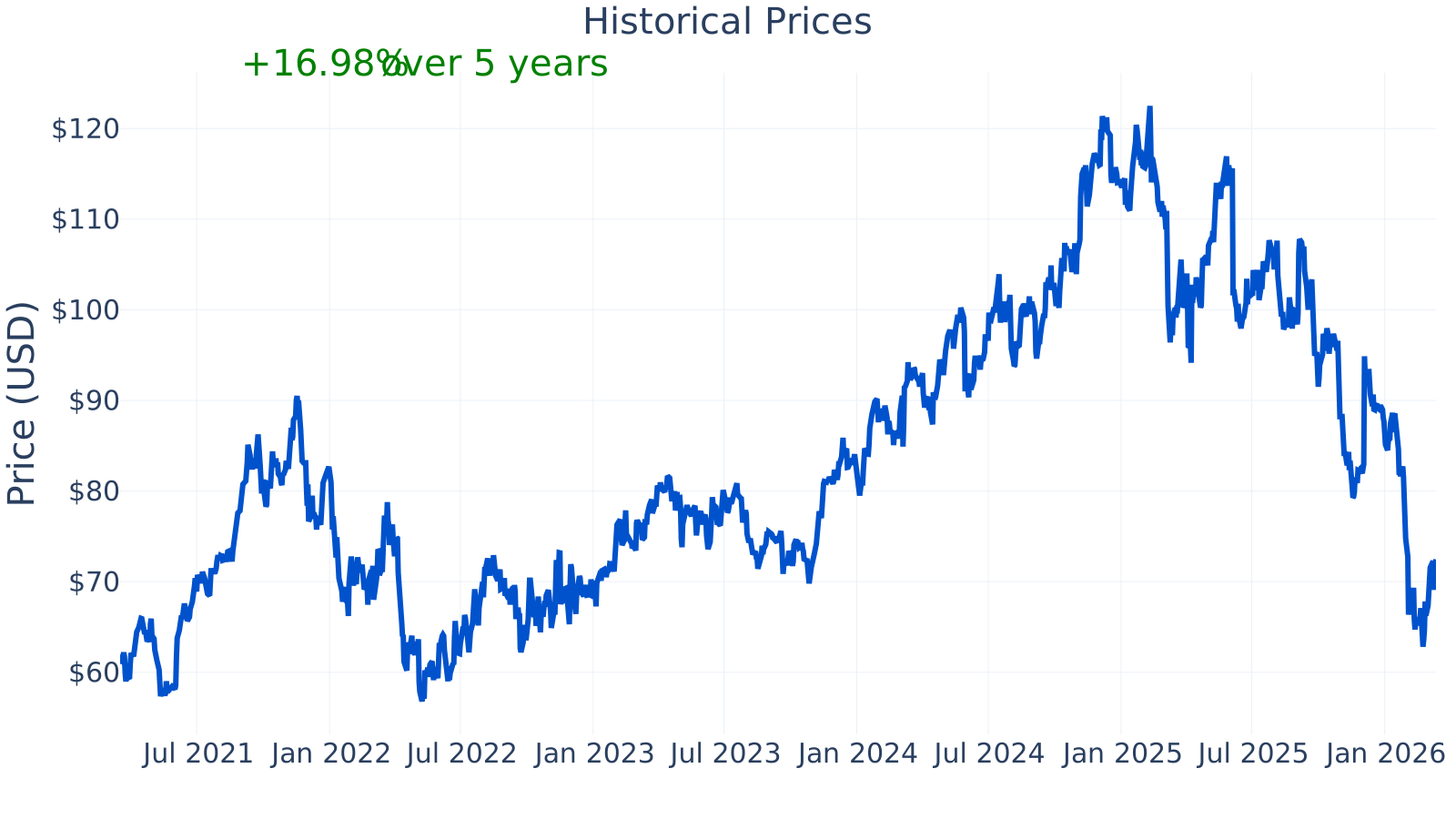
At the latest point shown, Descartes has a market capitalization of about $6.23B and a low beta (~0.27), which indicates the share price has historically moved less than the broader market on average (though it can still decline). Profitability is a notable feature: profit margin ~22.5% versus an industry median around 7.7%. Year-over-year revenue growth is shown at about 15.1% (industry median ~16.7%). Leverage appears very limited with debt-to-equity ~0.5% compared with an industry median around 25.1%. The company also shows ~$261M of trailing twelve-month free cash flow.
Growth (medium)
Descartes operates in logistics and global trade enablement software—an area supported by long-term trends such as cross-border e-commerce, increasing supply-chain complexity, and growing regulatory/compliance requirements for international shipments. These structural forces tend to encourage companies to invest in systems that improve visibility, automate documentation, and reduce costly exceptions (missed delivery windows, customs delays, incorrect filings, or inefficient routing).
A strategy often emphasized by the company in its filings is building a broad set of connected logistics capabilities and expanding through both product development and acquisitions. The logic is that once a customer relies on a platform for core shipping and trade workflows, it can be costly and operationally risky to replace, which can support renewals and account expansion over time.
The year-over-year revenue growth shown is generally in the low-to-mid teens for much of the period, with a more recent reading around 17.2%. This profile suggests steady expansion rather than highly volatile “boom-bust” growth.
Free cash flow increased from about $171M (FY2022) to about $261M (FY2026). For a software business, sustained cash generation can matter because it can help fund acquisitions, product investment, and resilience during weaker economic periods.
Risks (medium)
A key business risk is that logistics activity is linked to economic conditions. When global trade volumes slow or customers reduce spending, software expansions can take longer and new customer wins may be more challenging. Even if recurring revenue provides stability, growth rates can still compress in downcycles.
Competition is another important risk. Descartes operates across several niches (transportation management, trade compliance, logistics visibility, and related connectivity). Competitors can include large enterprise software vendors, specialized logistics software providers, and in some cases internal tools built by large shippers or logistics companies. In practice, competitive positioning often depends on specific workflow needs (e.g., customs filing vs. last-mile routing) and integration requirements with carriers, brokers, and partners.
Acquisition execution also matters. If growth relies partly on acquiring and integrating other software businesses, there is risk around overpaying, integration complexity, or failing to achieve expected synergies. A related factor is that software products in logistics often require strong reliability and uptime; service disruptions, cybersecurity incidents, or data issues could harm customer relationships.
The company’s debt-to-equity ratio is extremely low (about 0.5% at the latest point), and it has stayed far below the industry median through the period shown. Lower leverage can reduce financial risk, particularly if the macro environment weakens or interest rates are elevated.
Profit margins appear consistently high relative to peers, with the latest value around 22.5% versus an industry median near 8.2%. This can be interpreted as evidence of operating discipline and/or differentiated products, but it also creates a risk: if pricing pressure rises or costs increase (including R&D, cloud infrastructure, or customer acquisition costs), margin compression could have an outsized effect on market expectations.
Valuation
The latest P/E ratio shown is about 40.7, compared with an industry median around 24.7. Over the historical period displayed, Descartes’ P/E ratio generally remained above the industry median. This pattern indicates the market has often valued the company at a premium to peers, which commonly happens when a business shows a combination of steady growth, high margins, and strong cash generation.
A higher valuation multiple can be justified by durable profitability and predictable cash flows, but it can also increase sensitivity to disappointments. If revenue growth slows, if acquisition results fall short, or if margins compress, a premium multiple can contract even if the business remains profitable. The PEG ratio shown (about 1.61) suggests the valuation is not only about current earnings, but also about expectations for continued growth.
Conclusion
Descartes Systems Group is a logistics and trade-focused software provider with a business profile characterized by recurring revenue orientation, strong profitability, and rising free cash flow over time. Financial leverage appears minimal, which reduces balance-sheet risk. Growth has been steady rather than explosive, and the company operates in areas supported by long-term supply-chain complexity and compliance demands.
At the same time, the valuation metrics shown reflect a sustained premium versus the broader application software peer set. That premium places more weight on continued execution—especially maintaining margins, delivering consistent growth, and integrating acquisitions effectively—while operating in a competitive landscape tied in part to global trade activity.
Sources:
- SEC EDGAR — Descartes Systems Group Inc. filings (Annual Report on Form 10-K; Quarterly Reports on Form 10-Q)
- Descartes Systems Group — Investor Relations materials (annual report materials and shareholder communications, as published by the company)
- Wikipedia — “Descartes Systems Group” (basic company background)
This article is for informational purposes only and does not constitute financial advice. Some content is AI-generated. See Disclaimer


