Stock Analysis · Canadian Solar Inc (CSIQ)
Overview
Canadian Solar Inc. (CSIQ) is a global solar company that primarily manufactures solar products and also develops solar and energy storage projects. In simple terms, it makes and sells solar panels and related equipment, and it also participates in building and managing larger solar-and-storage installations that utilities, businesses, or other investors can own or operate.
For long-term context, this is a business that tends to be shaped by large industry cycles: demand for solar equipment, changes in government policy, interest rates (which affect project financing), and pricing pressure in global manufacturing.
Main revenue sources are typically organized around (1) selling solar modules and related products and (2) project-related activities (development, EPC/services, and/or sales of projects and storage solutions). The exact mix can shift meaningfully from year to year depending on the timing of large project sales and market conditions. Percentages are usually disclosed in the company’s annual report by business segment and geography.
The recent multi-year income flow shows how quickly profitability can change in this industry: total revenue rose from about $5.28B (2021) to $7.61B (2023), then fell to about $5.99B (2024). Over the same period, net income moved from about $95M (2021) to $274M (2023), then dropped sharply to about $36M (2024). This pattern is consistent with a solar manufacturing environment where pricing and costs can swing rapidly.
Key Figures
| Metric | Value | Industry ⓘ |
|---|---|---|
| Date | Feb 08, 2026 | |
| Context | ||
| Sector | Technology | |
| Industry | Solar | |
| Market Cap ⓘ | $1.33B | |
| Beta ⓘ | 1.30 | |
| Fundamental | ||
| P/E Ratio ⓘ | N/A | |
| Profit Margin ⓘ | 0.27% | 0.27% |
| Revenue Growth ⓘ | -1.30% | 33.90% |
| Debt to Equity ⓘ | 257.96% | 139.55% |
| PEG ⓘ | 0.16 | |
| Free Cash Flow ⓘ | -$1.73B | |
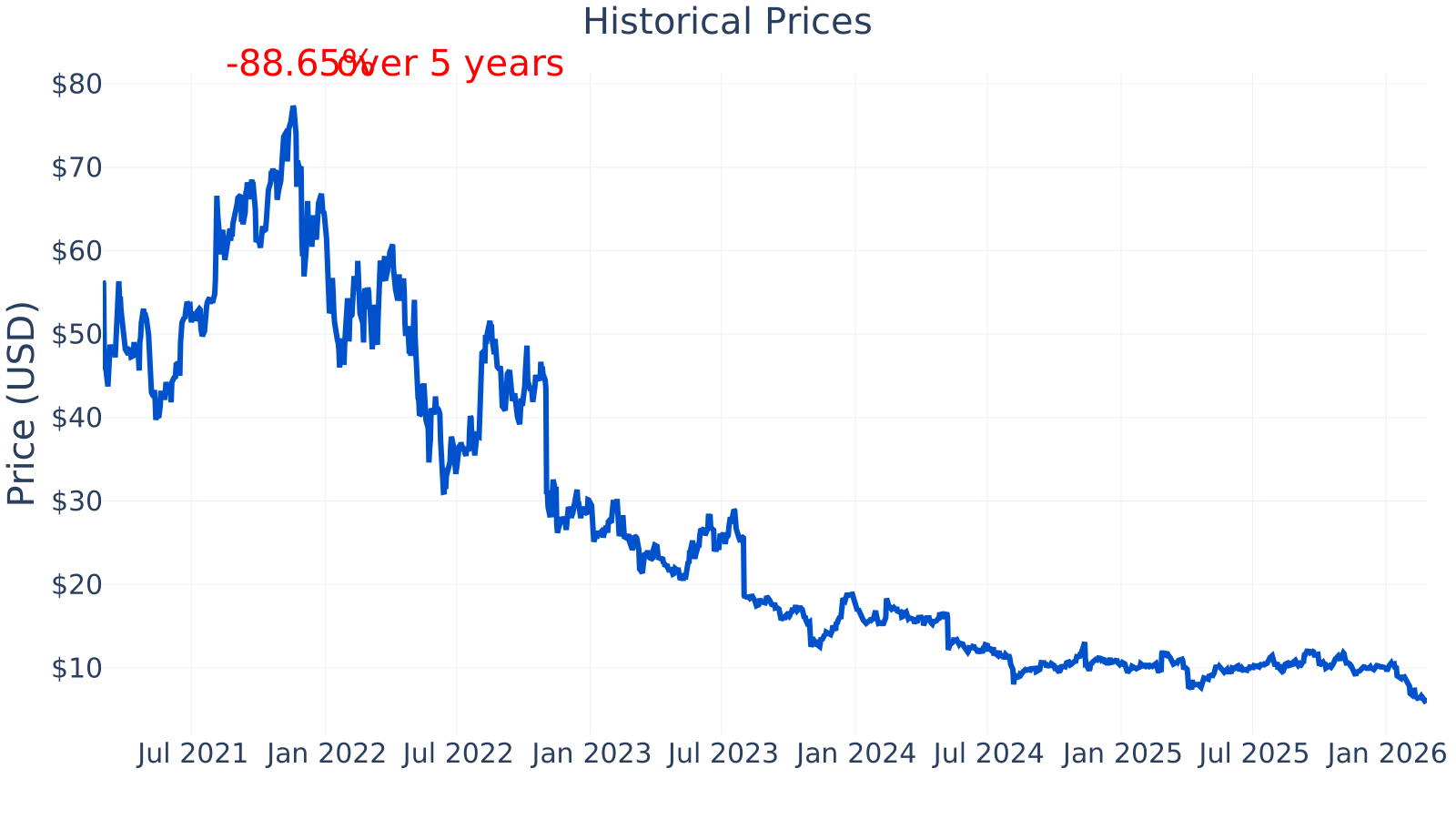
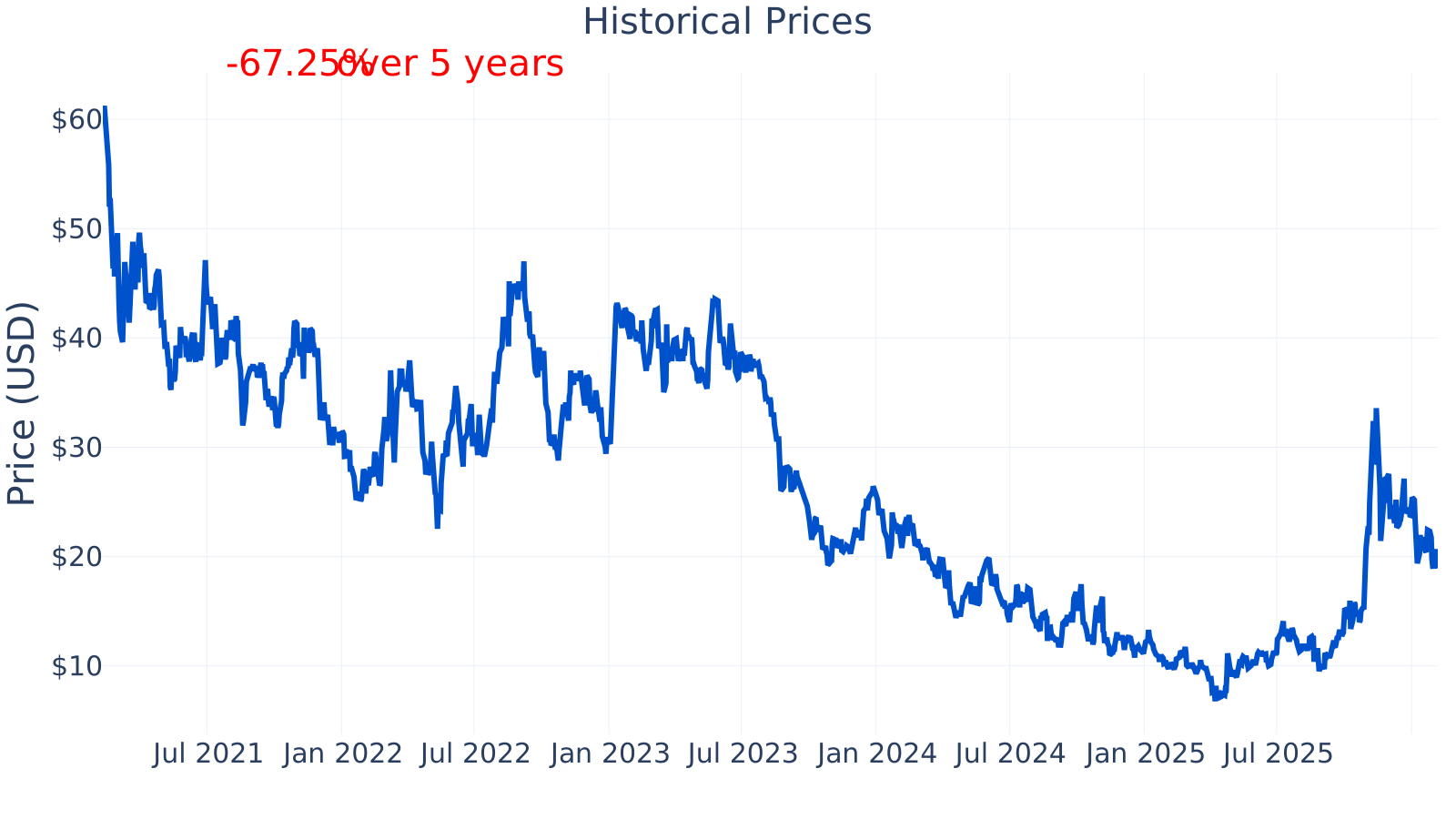
At the latest point shown, Canadian Solar’s market capitalization is about $1.33B. The stock’s beta (~1.30) suggests it has tended to move more than the broader market (higher volatility). Recent profitability is very thin: profit margin ~0.27% (in line with the shown industry median of ~0.27%). Growth has been weak recently: year-over-year revenue growth ~-1.34% versus an industry median of ~33.9%. Leverage is elevated with debt-to-equity ~258% versus an industry median of ~140%. Free cash flow over the trailing twelve months is shown as negative (~-$1.73B), which indicates cash outflows exceeded inflows over that period (often influenced by working capital swings, investment spending, and project timing).
Growth (Medium)
Solar is generally considered a long-term growth industry because many countries and companies are adding renewable electricity capacity. The “why” is straightforward: solar is modular, deployable at many scales (from rooftops to utility-scale), and it continues to benefit from improvements in efficiency and manufacturing scale.
That said, the near-to-medium-term growth experience for a solar manufacturer can differ from the long-term adoption trend. Module pricing and demand can move quickly, and reported revenue can be heavily affected by shifts in average selling prices and the timing of project-related revenue.
The year-over-year revenue growth trend illustrates this cyclicality. Growth was very strong in parts of 2021–2022, then turned negative through much of 2023–2025, with the most recent point around -1.34%. This kind of pattern often reflects price pressure and changing market conditions rather than a simple “solar demand is rising” story.
Free cash flow has been negative across the periods shown and worsened materially by early 2025 (around -$2.66B at the 2025-03-31 point). For long-term business durability, sustained negative free cash flow can matter because it may increase reliance on debt or equity financing—though in project-heavy businesses, cash flow can also be lumpy due to inventory builds, receivables, and project construction cycles.
Potential catalysts for improvement (in a general, non-predictive sense) typically include a stabilization of module pricing, easing supply/demand imbalances, improvement in financing conditions for projects, and successful execution in energy storage and project monetization. Whether and when those occur depends on market conditions and company execution.
Risks (High)
This article is for informational purposes only and does not constitute financial advice. Some content is AI-generated. See Disclaimer