Stock Analysis · Liberty Latin America Ltd (LILA)
Overview
Liberty Latin America Ltd (LILA) is a telecommunications operator focused on consumer and business connectivity across parts of Latin America and the Caribbean. In practical terms, it sells “connectivity bundles” that can include home internet, mobile service, and video/TV, and it also provides network and connectivity services to businesses.
Telecom is typically a recurring-revenue business: customers pay monthly subscriptions, and the company invests heavily in networks (cable/fiber, mobile infrastructure) to keep service competitive and reliable. That mix often creates stable demand, but it also means ongoing capital spending and, for many telecom groups, meaningful debt levels.
Main revenue streams (high-level) are usually centered on:
- Fixed internet (broadband) subscriptions (monthly access fees)
- Mobile service (postpaid/prepaid plans and data)
- Video/TV services (legacy cable TV and related fees)
- Business-to-business (B2B) connectivity and related services
- Equipment/installation and other (devices, set-up fees, and ancillary items)
The company’s recent income statement profile shows a large, steady revenue base (around $4.5–$4.8B annually in the last few years), with profitability heavily influenced by operating costs, depreciation/amortization typical of telecom networks, and interest expense from borrowing.
Over 2021–2024, total revenue trends slightly downward (from about $4.81B in 2022 to about $4.46B in 2024). Operating income improved from 2021 to 2023 (reaching about $539M in 2023) but fell sharply in 2024 (near break-even operating result), while interest expense increased over time (about $527M in 2021 to about $628M in 2024). Net income stayed negative in each of these years, with a particularly large loss in 2024.
Key Figures
| Metric | Value | Industry ⓘ |
|---|---|---|
| Date | Feb 08, 2026 | |
| Context | ||
| Sector | Communication Services | |
| Industry | Telecom Services | |
| Market Cap ⓘ | $1.62B | |
| Beta ⓘ | 1.01 | |
| Fundamental | ||
| P/E Ratio ⓘ | N/A | 15.18 |
| Profit Margin ⓘ | -16.57% | 6.18% |
| Revenue Growth ⓘ | 2.10% | 2.10% |
| Debt to Equity ⓘ | 1399.36% | 113.97% |
| PEG ⓘ | 3.61 | |
| Free Cash Flow ⓘ | $312.95M | |
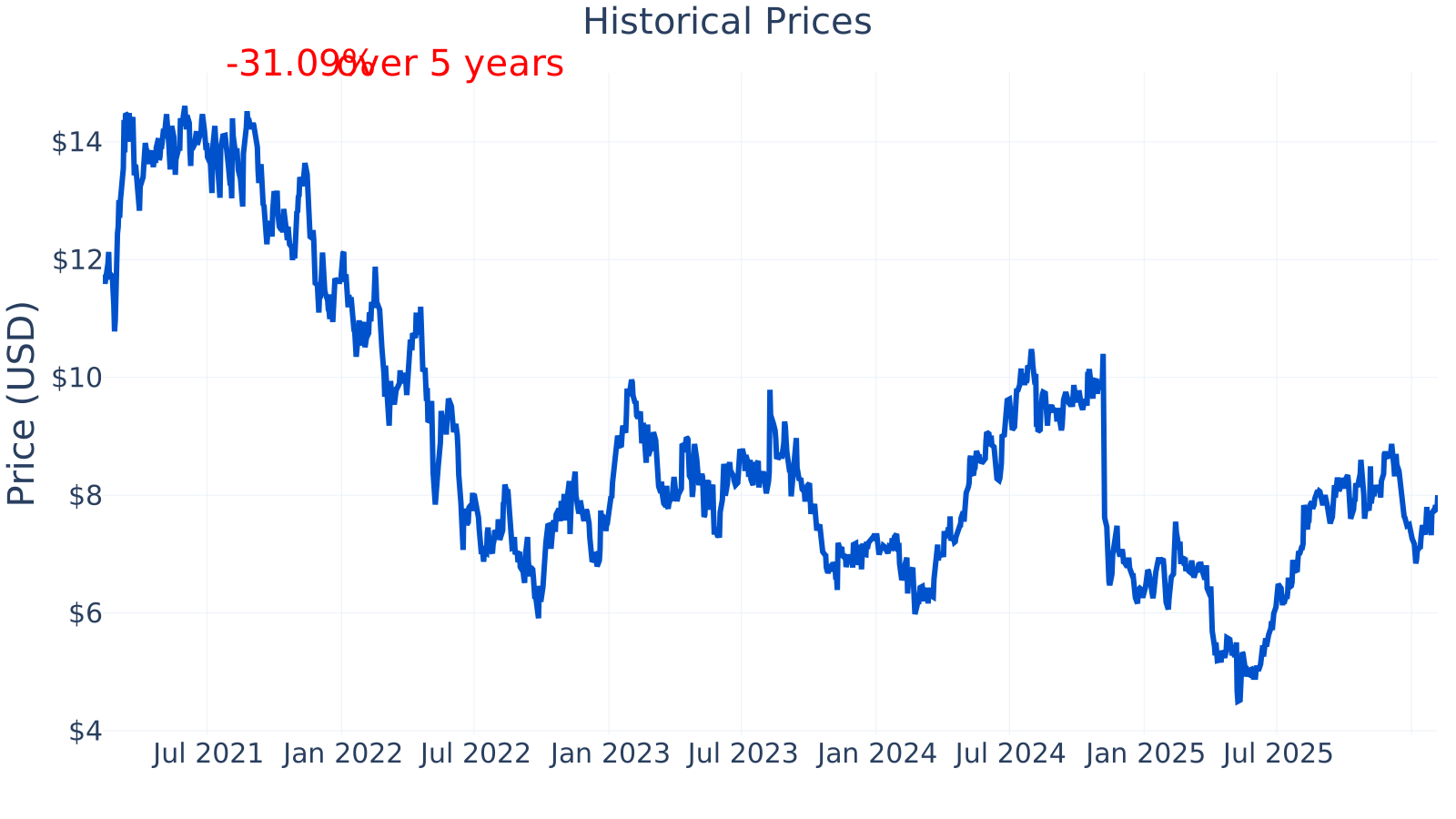
As of the latest figures provided, Liberty Latin America has an equity market value of about $1.62B and a beta near 1.0, which indicates its share price has tended to move roughly in line with the broader market (though company-specific events can still dominate). Profitability stands out: the profit margin is about -16.6%, versus an industry median near +6.2%. Revenue growth year-over-year is about +2.1%, in line with the industry median. The most notable balance sheet signal is leverage: debt-to-equity is about 1,399% (very high) versus an industry median around 114%. Despite accounting losses, trailing twelve-month free cash flow is about $313M, showing the business has recently generated cash after operating needs and capital spending. The P/E ratio is not shown as meaningful here (often the case when earnings are negative or volatile).
Growth (Low to Medium)
Telecom services (internet and mobile data in particular) benefit from long-term demand drivers: households and businesses use more data over time, and reliable broadband is increasingly essential. However, telecom is also a mature, competitive industry in many markets, where growth often comes from gaining share, upgrading customers to faster plans, or adding mobile lines—not from explosive category expansion.
For Liberty Latin America, the recent growth pattern looks modest. The latest year-over-year revenue growth is about +2.1%, and the multi-quarter pattern shows that growth has been uneven—stronger earlier in the period and later flattening, including several quarters of slight declines before a small return to positive growth most recently.
A positive element for long-term operating flexibility is cash generation. Free cash flow (cash left after capital spending) has increased over time in the series shown, from roughly $176.5M (2021) to about $322.9M (2025), which can help fund network upgrades, manage debt, or support strategic initiatives.
Potential catalysts (in a neutral, informational sense) in telecom typically include: improved network quality leading to lower customer churn, successful product “bundles” that raise average revenue per customer, and refinancing or debt reduction that lowers interest costs. For LILA specifically, the financial statements highlight that interest expense is a major factor; therefore, any sustained improvement in financing costs or leverage could materially affect future results.
Risks (High)
This article is for informational purposes only and does not constitute financial advice. Some content is AI-generated. See Disclaimer