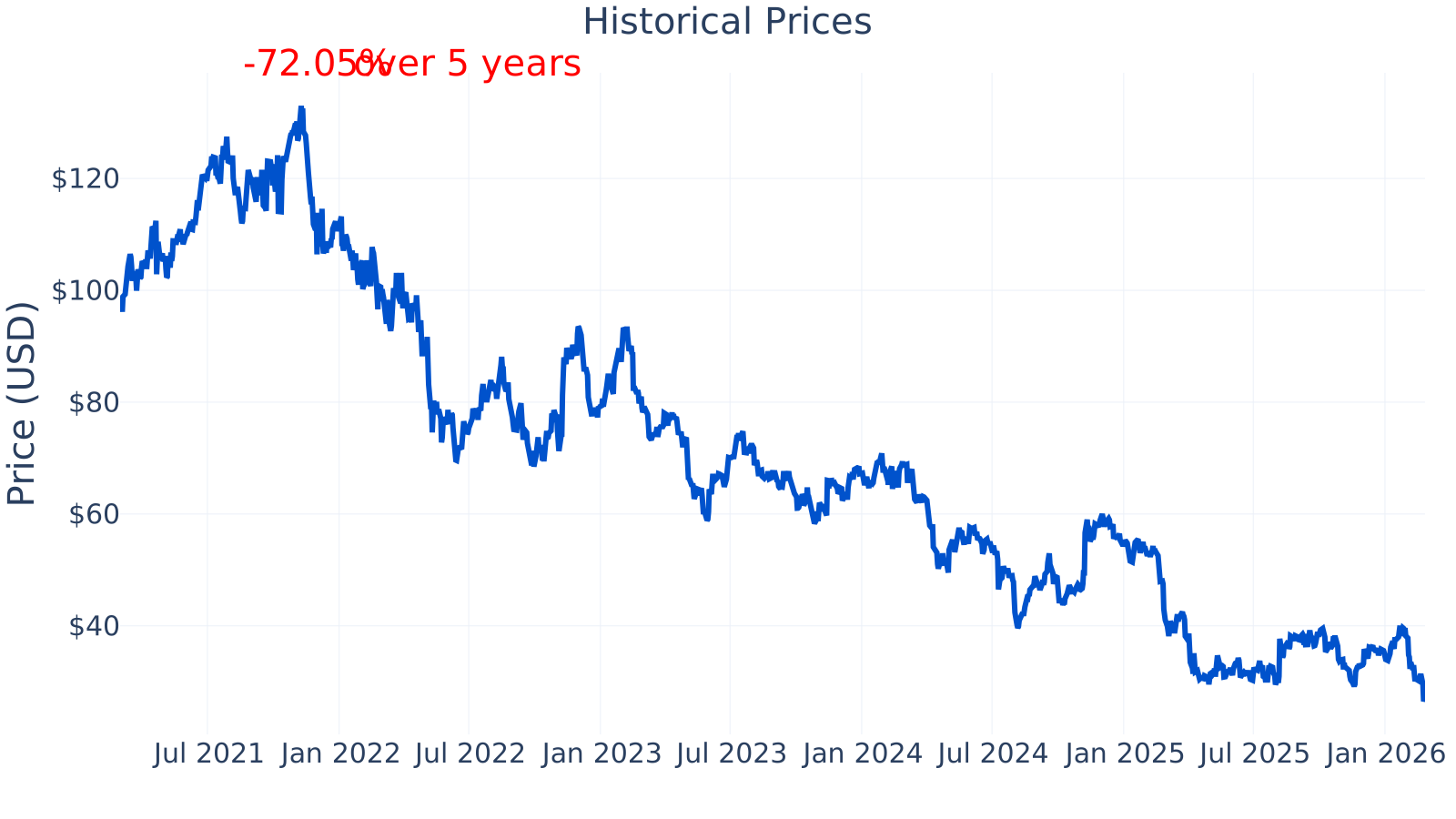
Stock Analysis · ZoomInfo Technologies Inc (GTM)
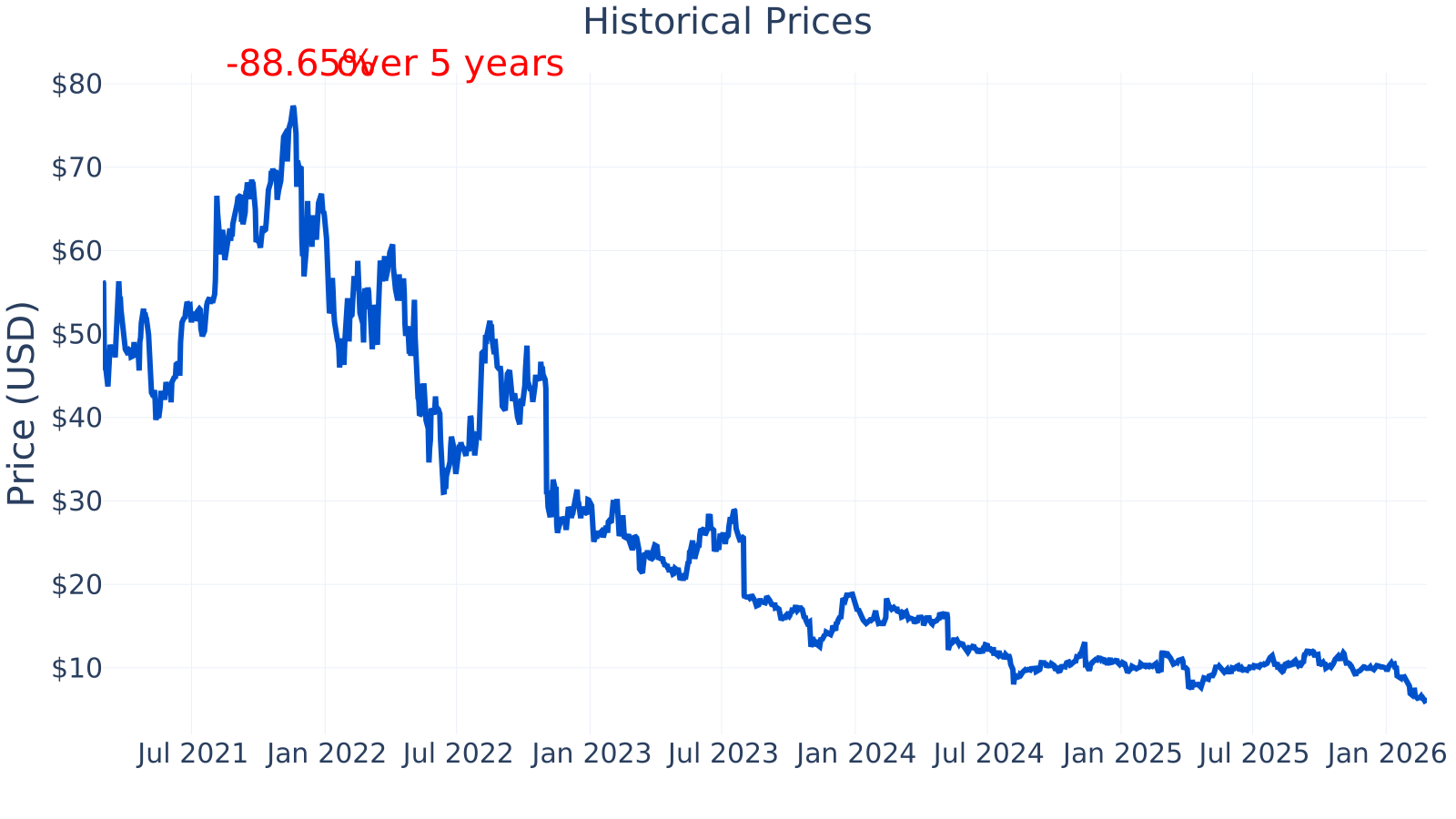
Overview
ZoomInfo Technologies Inc. is a software company that helps businesses find and connect with potential customers. In simple terms, it sells tools that support “go-to-market” work—sales teams looking for the right companies and people to contact, marketing teams targeting the right audiences, and recruiting or operations teams that need reliable business contact and company information.
The company’s products are typically delivered as cloud software (online access), and customers usually pay on a subscription basis. This model tends to create recurring revenue, because customers pay to keep access over time rather than purchasing a one-time product.
In its SEC filings, ZoomInfo describes revenue primarily coming from subscriptions to its platform and related offerings. Public filings commonly discuss revenue by product families and customer categories, but specific percentage splits can vary by reporting period. At a high level, the main revenue drivers are:
- Subscription access to ZoomInfo’s platform (core products used by sales and marketing teams)
- Add-on modules and workflows (tools that extend the platform into additional use cases)
- Other services (typically smaller, may include professional services or other ancillary items depending on the period)
Across recent years, the business has shown strong gross profit relative to cost of revenue, which is typical for software: for example, total revenue was about $1.25B in 2025 with cost of revenue around $219M, leaving gross profit around $1.03B.
Looking across the last several years in the operating line items, revenue grew from about $747M (2021) to about $1.25B (2025). Operating income, however, has been more uneven (for example, about $434M in 2023, falling to about $71M in 2024, then rising to about $266M in 2025). This kind of swing can happen when expenses, one-time items, or accounting impacts change meaningfully year to year, and it is something long-term readers often track closely in the company’s filings.
Key Figures
| Metric | Value | Industry ⓘ |
|---|---|---|
| Date | Feb 27, 2026 | |
| Context | ||
| Sector | Technology | |
| Industry | Software - Application | |
| Market Cap ⓘ | $1.95B | |
| Beta ⓘ | 1.06 | |
| Fundamental | ||
| P/E Ratio ⓘ | 16.84 | 24.39 |
| Profit Margin ⓘ | 9.94% | 7.59% |
| Revenue Growth ⓘ | 3.20% | 15.90% |
| Debt to Equity ⓘ | 119.86% | 25.08% |
| PEG ⓘ | N/A | |
| Free Cash Flow ⓘ | $388.80M | |
ZoomInfo’s market capitalization is about $2.0B, and the stock’s beta is about 1.06, which suggests price moves somewhat close to the broader market on average (though any single stock can still move sharply in either direction). The company’s P/E ratio is about 16.8 versus an industry median near 24.4. Profit margin is about 9.94%, which is above the industry median near 7.59%. The most notable gap versus the industry median is in revenue growth (about 3.2% year-over-year versus an industry median near 15.9%) and debt-to-equity (about 120% versus an industry median near 25%). Trailing twelve-month free cash flow is about $388.8M.
Growth (Medium)
ZoomInfo operates in business-to-business software markets tied to sales, marketing, and data-driven prospecting. These areas can benefit from long-term shifts toward digital buying journeys, automation in outreach, and tighter measurement of marketing and sales effectiveness. In that sense, the company is positioned in an industry where many customers continue to modernize how they find leads and manage pipelines.
That said, the company’s recent growth rate appears much slower than it was earlier in the decade. The year-over-year revenue growth trend moved from very high levels in 2021–2022 to low single digits more recently, including a period of negative growth in 2024 before returning to modestly positive growth in 2025.
One practical way to interpret this pattern is that ZoomInfo’s market may be more mature than before, or customers may be optimizing software spending more tightly. For future expansion, the company’s strategy described in filings typically emphasizes increasing product adoption within existing customers (selling more modules), improving product capabilities, and expanding use cases beyond the initial “find contacts” workflow.
Cash generation is another important part of long-term durability. ZoomInfo’s trailing twelve-month free cash flow has been meaningfully positive over time, although it has fluctuated (rising into 2024 and then easing in 2025 based on the values shown).
In many software businesses, consistently positive free cash flow can support flexibility—such as paying down debt, investing in product development, or repurchasing shares—though the specific choice depends on management decisions and balance sheet constraints.
Risks (High)
This article is for informational purposes only and does not constitute financial advice. Some content is AI-generated. See Disclaimer